Vaccines After Transplant: What You Need to Know
When you’ve had an organ transplant, a medical procedure where a failing organ is replaced with a healthy one from a donor. Also known as solid organ transplant, it saves lives—but it also changes how your body handles infections and medicines. Because your immune system is deliberately suppressed to prevent rejection, your body can’t respond to vaccines the way it used to. That’s why vaccines after transplant, immunizations given to transplant recipients to protect against preventable diseases aren’t just optional—they’re essential, but timing and type matter more than ever.
Most transplant patients can’t get live vaccines at all. That means no MMR, no chickenpox, no nasal flu spray. These vaccines contain weakened viruses that could cause real illness in someone with a dampened immune system. Instead, doctors rely on inactivated vaccines, vaccines made from killed viruses or parts of viruses that can’t cause disease like the shot version of flu, Tdap, pneumococcal, and hepatitis B. These are safe, but they might not work as well. Studies show that up to half of transplant patients don’t build strong antibody responses even after full doses. That’s why timing is everything: vaccines are usually given before transplant, if possible, or at least 3–6 months after, once the strongest immunosuppressants are lowered. Waiting too long? You risk catching something preventable. Getting them too soon? You might get no protection at all.
It’s not just about the vaccine itself. It’s about what you’re taking alongside it. immunosuppressants, medications that reduce immune system activity to prevent organ rejection like tacrolimus, mycophenolate, or steroids can block vaccine response. Some drugs, like rituximab, wipe out B-cells for months—making vaccines useless if given during treatment. That’s why your transplant team needs to know every pill you’re on. And it’s why family members should be up to date on their shots too. If you’re surrounded by people who are protected, you’re safer—even if your own immune system isn’t fully working.
There’s no one-size-fits-all schedule. A kidney transplant patient’s plan looks different from a liver or heart recipient’s. And if you’re on a waiting list, your prep starts long before surgery. You’ll likely get a full vaccine review months in advance. After transplant, you’ll need boosters. You’ll need to check your antibody levels. You’ll need to avoid crowds during flu season. And yes, you’ll still need to get the COVID-19 vaccine—even if you’ve had it before. The data shows repeat doses help, especially when spaced out from drug cycles.
This isn’t about fear. It’s about smart, informed protection. The goal isn’t to be perfectly immune—it’s to lower your risk enough to live without constant hospital visits or life-threatening infections. Every vaccine you get after transplant is a shield. Not perfect, but better than nothing. And with the right timing, the right drugs, and the right team, you can build layers of safety around your new organ.
Below, you’ll find real-world insights from transplant patients, doctors, and clinical guidelines—covering what works, what doesn’t, and what no one tells you until it’s too late.
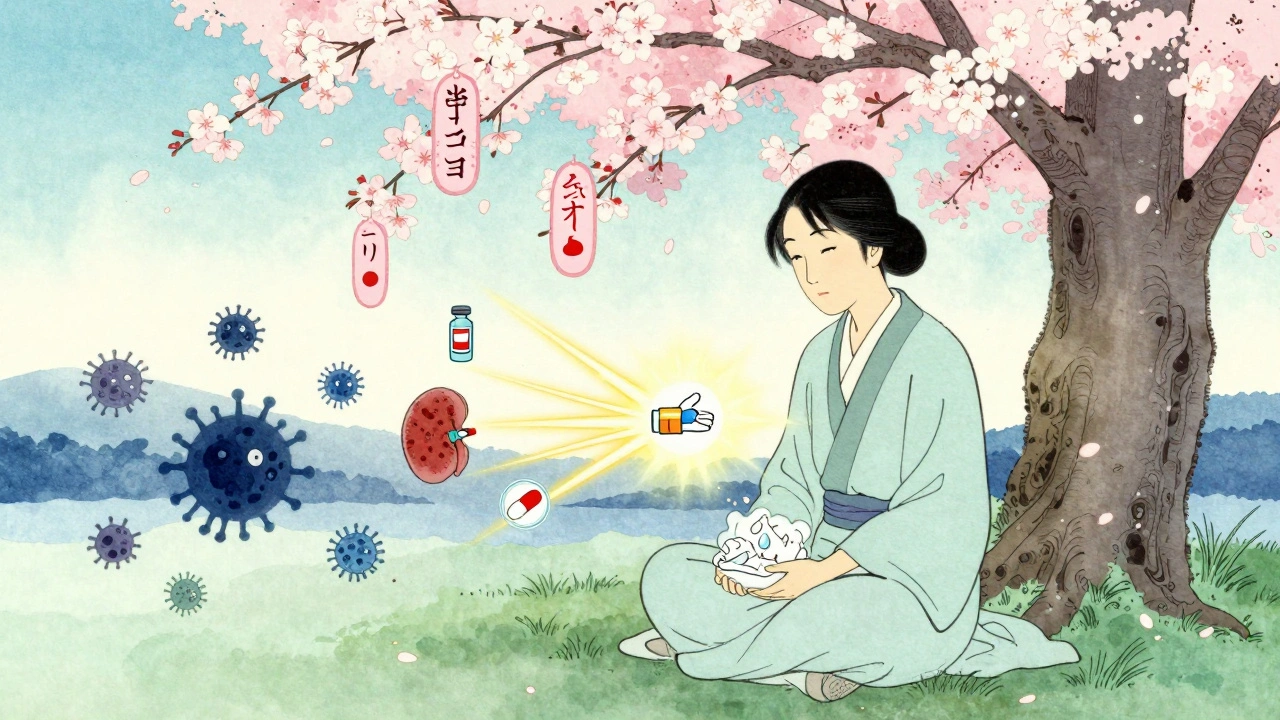
After a kidney transplant, infections are a major threat-but preventable. Learn how vaccines, antiviral meds, daily habits, and monitoring can protect your new organ and save your life.