Dementia Types: What They Are, How They Differ, and What You Need to Know
When people talk about dementia, a group of brain disorders that cause memory loss, confusion, and trouble with daily tasks. Also known as cognitive decline, it’s not a single disease—it’s a collection of conditions that damage the brain in different ways. You might hear "dementia" used like it’s one thing, but the truth is, each type has its own cause, symptoms, and progression. Some come on slowly, others strike fast. Some affect memory first, others change personality or movement before memory even starts to slip.
The most common type is Alzheimer’s disease, a progressive brain disorder marked by plaques and tangles that destroy brain cells. It accounts for 60 to 80% of cases. Then there’s vascular dementia, caused by reduced blood flow to the brain, often after strokes or small vessel damage. This one can show up suddenly after a major stroke, or creep in slowly with multiple tiny ones. Lewy body dementia, linked to abnormal protein deposits in the brain, often brings hallucinations, sleep issues, and tremors that look like Parkinson’s. And frontotemporal dementia, which targets the front and sides of the brain, usually hits younger people—sometimes in their 50s—and changes behavior or language before memory fails.
These aren’t just medical labels—they shape how someone lives, what treatments might help, and how families plan care. Someone with Lewy body dementia might react badly to common antipsychotics, while someone with vascular dementia might benefit more from managing blood pressure than memory drugs. And while Alzheimer’s has no cure, knowing the exact type helps avoid wrong turns in treatment. Some people even have mixed dementia—Alzheimer’s plus vascular, for example—which is more common than you’d think.
What you’ll find in the posts below aren’t general overviews. These are real, practical breakdowns of how medications, symptoms, and side effects play out in people living with these conditions. You’ll see how drugs for one type can hurt someone with another, how weight changes or yeast infections can be side effects of treatments, and how Medicare coverage affects access to the right care. There’s no fluff—just facts that help you make better choices, whether you’re caring for someone or managing your own health.
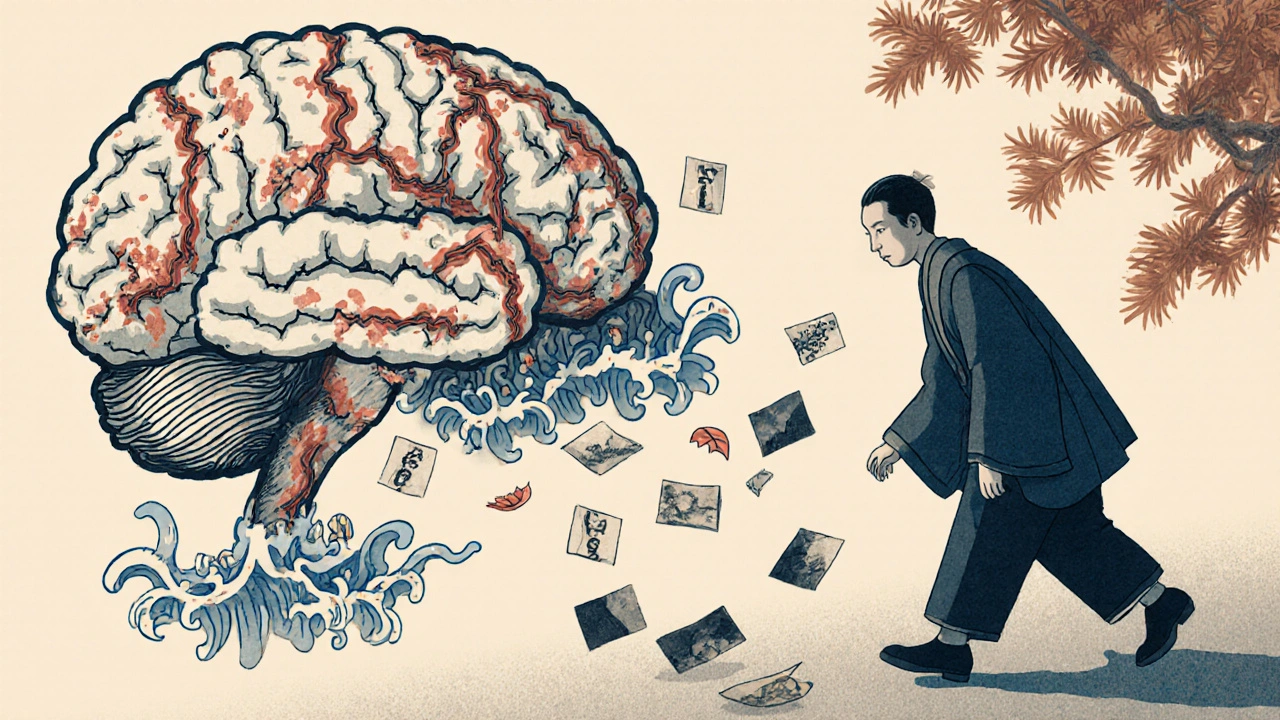
Vascular, frontotemporal, and Lewy body dementia are three distinct brain disorders with different causes, symptoms, and treatments. Learn how they differ and why correct diagnosis matters for safety and care.