
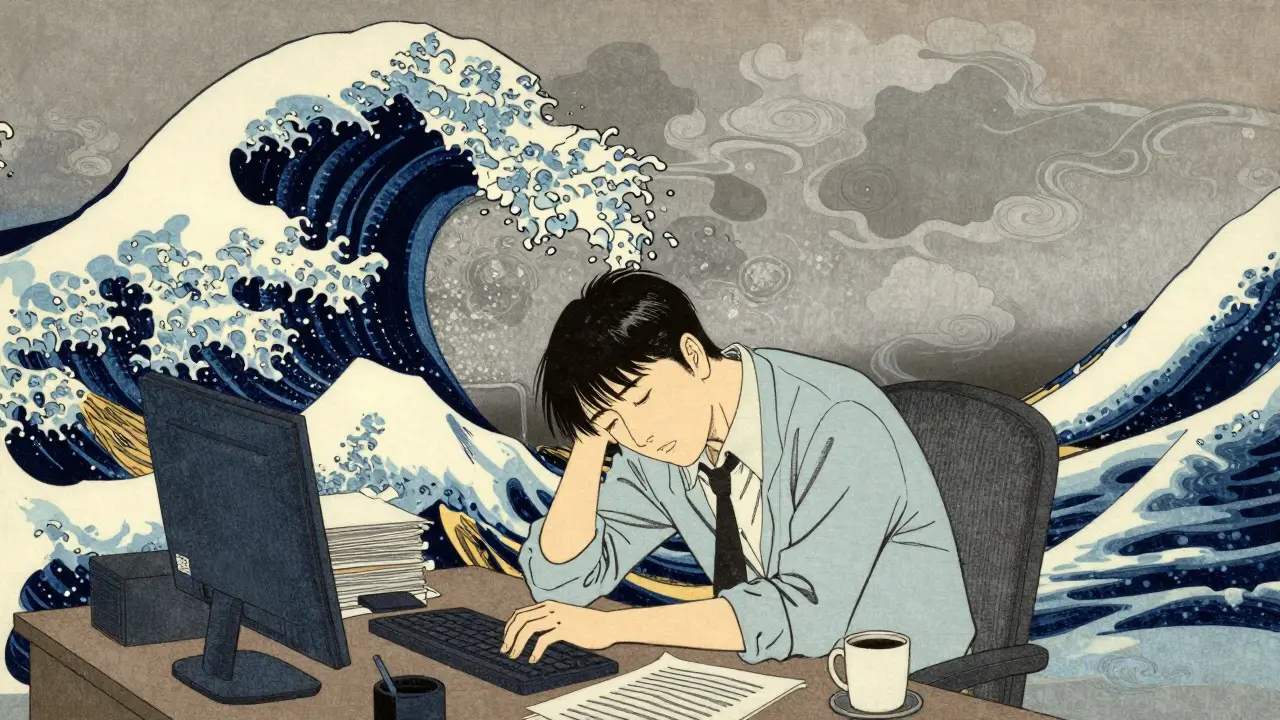
It starts with a headache that won't go away. Then it’s the dreading of Monday mornings, followed by a sense of cynicism toward colleagues who used to be friends. You might think you’re just tired, but if this feeling persists, you could be experiencing workplace burnout, which is a state of emotional, physical, and mental exhaustion caused by excessive and prolonged stress. In 2019, the World Health Organization officially recognized burnout as an occupational phenomenon in its ICD-11 classification system (code QE1A.0). It isn’t just about being busy; it is defined by three specific dimensions: feelings of energy depletion, increased mental distance from one's job, and reduced professional efficacy.
The stakes are high. According to Gallup’s 2023 State of the Global Workplace report, 44% of employees worldwide experienced considerable daily stress, with 23% reporting they were burned out "very often" or "always." This isn't just a personal struggle; it costs the United States alone $322 billion annually in stress-related workplace issues. Understanding how to prevent and recover from burnout is no longer optional-it is essential for your health and career longevity.
Identifying the Signs Before It’s Too Late
Burnout rarely happens overnight. It creeps in through subtle symptoms that we often ignore because we are too focused on getting work done. The most reliable way to identify burnout is through the Maslach Burnout Inventory (MBI), developed by Christina Maslach at UC Berkeley. This tool measures emotional exhaustion, depersonalization, and personal accomplishment.
If you don't have access to a formal assessment, look for these concrete indicators:
- Chronic Fatigue: Feeling drained even after a full night's sleep. Gallup data shows 63% of burned-out employees report this symptom.
- Cognitive Difficulties: Trouble concentrating or making decisions. About 57% of affected employees experience impaired concentration.
- Insomnia: Difficulty falling or staying asleep, affecting 42% of stressed workers according to the American Psychological Association (APA).
- Cynicism: Developing a negative attitude toward your job, colleagues, or clients. You start viewing your work as meaningless.
Recognizing these signs early allows you to intervene before they become entrenched patterns. If you notice yourself snapping at coworkers or feeling indifferent about projects you once loved, pause and assess your current workload and support systems.
Organizational Strategies for Prevention
While individual habits matter, research consistently shows that burnout is largely a systemic issue. Dr. Christina Maslach emphasizes that burnout is not an individual failure but a systems failure. Therefore, organizations must take primary responsibility for prevention.
Effective organizational strategies include:
- Quarterly Workload Audits: Instead of annual reviews, conduct quarterly audits to identify and redistribute excessive demands. Gallup recommends this approach to prevent 78% of burnout cases related to workload.
- Flexible Work Arrangements: Implementing flexible start times or remote work options can reduce burnout by 27%. Pollack Peacebuilding’s case studies show that allowing employees to work during their peak productivity hours significantly improves well-being.
- Digital Sunset Policies: Enforce automatic system shutdowns or policies that discourage after-hours communication. Neurobloom Colorado found that such policies lead to a 31% reduction in after-hours work emails and a 26% lower burnout rate.
- Psychological Safety: Create environments where employees feel safe to speak up without fear of retribution. Teams with high psychological safety scores experience 47% less burnout, according to Spring Health’s 2024 research.
Companies like Salesforce and Microsoft have seen success using AI-assisted workload distribution systems, reducing burnout by 32% in pilot programs. These tools help managers visualize team capacity and adjust assignments proactively.
The Role of Managers in Burnout Prevention
Managers play a pivotal role in either preventing or exacerbating burnout. Gallup’s Chief Workplace Scientist Jim Harter notes that managers account for 70% of the variance in employee engagement scores. To effectively support their teams, managers should engage in five specific coaching conversations:
- Focusing on strengths
- Discussing purpose
- Checking on wellbeing
- Supporting growth
- Providing recognition
Teams led by managers who conduct these conversations see 41% lower burnout rates. Additionally, implementing weekly 1:1 check-ins where mental health is explicitly discussed can reduce burnout by 35%. This shifts the dynamic from purely task-oriented to holistic employee support.
However, accountability is key. Only 30% of managers currently have wellbeing metrics included in their performance reviews. Organizations aiming for sustainable change should make manager effectiveness in supporting mental health a formal part of their evaluation criteria.
Individual Actions for Resilience
While you cannot control your organization’s culture entirely, you can build personal resilience through boundary setting and self-care practices. Here are evidence-based strategies individuals can adopt:
| Strategy | Implementation | Impact |
|---|---|---|
| Boundary Setting | No emails after 6:00 PM | 39% lower burnout rates |
| Time-Blocking | Schedule focused work blocks | 28% improvement in task completion |
| Micro-Breaks | 5-10 minute breaks every 90 minutes | 17% decrease in burnout markers |
| Physical Movement | Walking meetings or desk stretches | 27 minutes less sedentary time/day |
Establishing clear work hours is crucial. Research cited by the APA shows that employees who strictly adhere to no-email-after-work policies experience significantly lower stress levels. Similarly, incorporating micro-breaks into your day helps reset cognitive focus. Harvard Business Review found that taking short breaks increases productivity by 13% while reducing burnout symptoms.
Don't underestimate the power of physical wellness. Companies offering protein-rich snacks and hydration stations report 19% fewer fatigue-related absences. Simple acts like standing up, stretching, or taking a walk can disrupt the cycle of chronic stress.
Recovery: Getting Back on Track
If you are already experiencing burnout, recovery requires a structured approach. Gallup outlines a three-phase process: recognition, intervention, and restoration.
- Recognition: Acknowledge the problem. Use tools like the Q12 engagement survey to identify risk factors.
- Intervention: Immediately adjust your workload. This might mean temporary role modification or taking time off.
- Restoration: Return to work gradually with protected time for recovery activities.
A critical component of recovery is strategic disengagement. The APA recommends complete digital detox periods of 48-72 hours, which show a 63% improvement in emotional exhaustion markers. During this time, avoid checking work emails or thinking about tasks.
Utilize available mental health benefits promptly. Spring Health’s research indicates that employees who seek help within 14 days of reporting symptoms recover 82% faster than those who delay treatment. Incorporate gratitude practices and "accomplished lists"-tracking what you’ve completed rather than what’s left to do-to rebuild a sense of efficacy.
Future Trends in Workplace Wellbeing
The landscape of burnout prevention is evolving rapidly. By 2025, AI-driven burnout prediction systems are expected to be adopted by 65% of Fortune 500 companies. These systems analyze email patterns and calendar metrics to identify at-risk employees with 82% accuracy, allowing for proactive interventions.
We are also seeing the rise of the "boundary economy," where companies like Basecamp and Shopify implement four-day workweeks. This trend is projected to grow from 12% of tech companies in 2023 to 37% by 2025. Regulatory pressures, such as the EU’s Work-Life Balance Directive, are further pushing organizations to respect employees' right to disconnect.
Neuroscience-based interventions are emerging as well. Heart Rate Variability (HRV) monitoring has shown 29% greater burnout reduction compared to traditional methods in pilot programs at Google and Intel. As technology advances, expect more personalized, data-driven approaches to maintaining mental health at work.
Is burnout considered a medical condition?
Yes, the World Health Organization classified burnout as an occupational phenomenon in the ICD-11 in 2019. While not a disease itself, it is recognized as a syndrome resulting from chronic workplace stress that has not been successfully managed.
How long does it take to recover from burnout?
Recovery timelines vary, but utilizing mental health benefits within 14 days of symptom onset can speed up recovery by 82%. Structured recovery programs incorporating gratitude practices and workload adjustments typically accelerate return-to-productivity timelines by 3.2 weeks on average.
Can self-care alone prevent burnout?
No. The American Psychiatric Association states that self-care programs address only 20% of burnout causes. Meaningful impact requires workplace policy changes, such as workload management and boundary enforcement.
What are the main causes of workplace burnout?
Primary causes include excessive workload (67%), lack of control (49%), insufficient rewards (42%), breakdown of community (38%), absence of fairness (34%), and conflicting values (29%), according to the Job Demands-Resources model.
How can managers help prevent burnout in their teams?
Managers can conduct five specific coaching conversations focusing on strengths, purpose, wellbeing, growth, and recognition. They should also implement weekly 1:1 check-ins discussing mental health and enforce boundary-setting policies like digital sunsets.
9 Comments
Great post. We need more of this in the workplace. Simple steps help.
This is a very comprehensive overview of the systemic issues at play here. It is crucial to note that while individual resilience strategies are helpful, they are often insufficient without organizational buy-in. The data regarding quarterly workload audits is particularly compelling, as it shifts the burden from the employee to the management structure. I have seen firsthand how flexible work arrangements can reduce stress levels significantly, allowing employees to work during their most productive hours rather than forcing them into a rigid schedule that may not align with their natural rhythms. Furthermore, the concept of psychological safety cannot be overstated; when employees feel safe to speak up, they are less likely to suffer from the silent erosion of morale that leads to burnout. It is also worth mentioning that managers must be trained specifically on these five coaching conversations, as many lack the necessary skills to support their teams effectively. Without proper training, well-intentioned managers can inadvertently exacerbate the problem by focusing solely on output rather than holistic wellbeing. The integration of AI-assisted workload distribution systems is a promising development, but it must be implemented with caution to ensure privacy and trust are maintained. Overall, this article provides a solid foundation for understanding the multifaceted nature of burnout and offers actionable steps for both individuals and organizations to take.
The idea of burnout as a systems failure really resonates with me. It’s not just about working hard; it’s about working in an environment that doesn’t support you. I think we need to rethink our relationship with work altogether. Maybe it’s time to embrace a slower pace and prioritize mental health over constant productivity. What do you all think about the four-day workweek trend?
I totally agree with the point about digital sunset policies! Its so hard to disconnect when your phone is always buzzing with emails. I tried setting a rule for myself no emails after 6pm and it was a game changer. My sleep improved and i felt way less anxious the next morning. But my boss keeps sending messages late at night which makes it tricky. How do yall handle that pressure?
Boring read. Just tell us to take a break already.
It is imperative that we address the root causes of workplace burnout rather than merely treating the symptoms. The article rightly points out that self-care alone is insufficient, as it addresses only a fraction of the underlying issues. Organizations must adopt a more proactive approach by implementing structural changes such as workload audits and flexible work arrangements. Additionally, the role of managers in fostering psychological safety cannot be understated. They must be held accountable for the wellbeing of their teams, with metrics included in their performance evaluations. This shift in perspective is essential for creating a sustainable and healthy work environment.
This is a very insightful article. I found the section on individual actions for resilience particularly useful. Time-blocking has been a great tool for me to stay focused and avoid distractions. I also make sure to take micro-breaks every hour or so, which helps reset my mind. It’s important to remember that small changes can make a big difference over time. I hope more companies start adopting these practices to support their employees better.
OMG yes!! The part about chronic fatigue hit home so hard. I am literally drained even after sleeping 8 hours. And the cynicism? Ugh, I used to love my job but now I just feel numb. Thank god for this article because I didnt know what was wrong with me. I’m gonna try the boundary setting stuff right away. No more emails after 6pm for me!! Let’s gooo!
You guys need to listen to this. Burnout is real and its killing us. Stop pretending you’re fine when you’re not. Set boundaries or get fired. I don’t care if your boss hates it. Your health matters more than their deadlines. Wake up people.