

Imagine you have a leak in your roof. You patch it every morning at 8 AM. But one day, you’re late and patch it at 2 PM. The next day, you skip it entirely because the rain stopped. By Friday, your living room is flooded. This isn’t just about being tidy; it’s about structural integrity. Your body works the same way when it comes to prescription medication, which is pharmaceutical treatment designed to maintain specific chemical balances in the bloodstream. Skipping doses or taking them at random times doesn’t just lower effectiveness-it can actively harm you.
We often treat pills like optional accessories rather than critical tools. We take them when we remember, or stop when we feel better. But for many conditions, especially chronic ones, this casual approach is dangerous. Understanding why timing matters-and how to stick to it-can be the difference between managing a condition and ending up in the hospital.
The Invisible Clock Inside Your Body
To understand why you shouldn’t skip doses, you need to look at what happens inside your blood after you swallow a pill. It’s not magic; it’s chemistry. When you take a medication, your body absorbs it, processes it, and eventually eliminates it. During this cycle, the drug concentration in your bloodstream rises and falls.
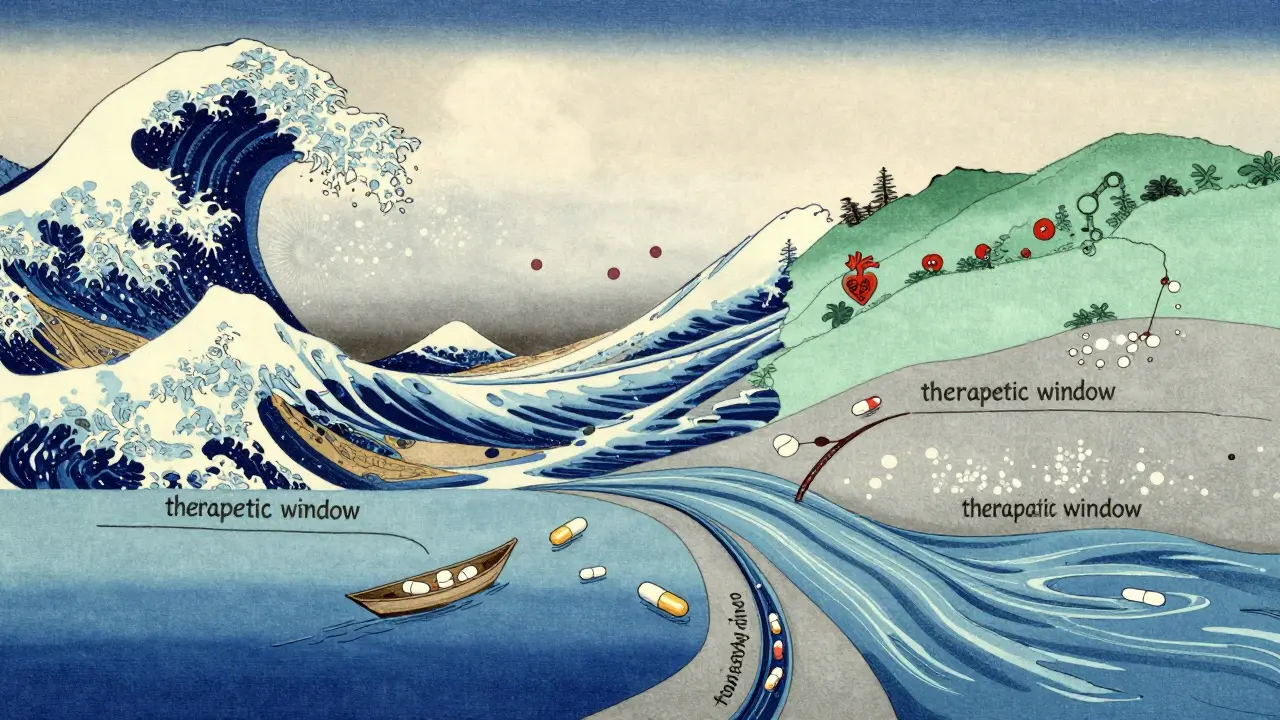
Doctors prescribe medications based on maintaining a therapeutic window. This is the sweet spot where the drug concentration is high enough to work but low enough to avoid toxicity. Think of it like keeping a car engine at a steady RPM. If the RPM drops too low, the car stalls (the medicine stops working). If it spikes too high, the engine redlines (you get side effects).
- Absorption: The time it takes for the drug to enter your bloodstream.
- Distribution: How the drug spreads through your tissues.
- Metabolism: How your liver breaks down the drug.
- Excretion: How your kidneys remove the waste products.
If you take a dose early, you might spike the levels dangerously. If you wait too long, the levels drop below the therapeutic threshold. For some drugs, like antibiotics, this drop allows bacteria to survive and mutate. For others, like heart medications, it allows blood pressure to surge silently.
When Timing Is Life or Death
Not all medications are created equal. Some have wide margins for error, while others demand military precision. Knowing which category your meds fall into helps you prioritize.
| Medication Class | Consequence of Missed Dose | Timing Sensitivity |
|---|---|---|
| Antibiotics | Bacteria survive, leading to resistance and recurrent infection. | High - Must complete full course (7-14 days) |
| Anticoagulants (e.g., Warfarin) | Risk of stroke (clotting) or severe bleeding. | Critical - Requires consistent daily INR monitoring |
| Immunosuppressants | Organ rejection in transplant patients. | Critical - Narrow therapeutic index |
| Hypertension Drugs | Silent damage to heart, kidneys, and brain vessels. | Medium-High - Prevents fluctuations |
| Diabetes Medications | Hypoglycemia (low blood sugar) or hyperglycemia. | High - Must align with meal timing |
Take antibiotics, for example. Many people stop taking them as soon as they feel better. That’s a mistake. The Centers for Disease Control and Prevention emphasize that you must finish the entire prescribed course, usually 7 to 14 days. Stopping early leaves the strongest bacteria alive. They multiply, become resistant to the drug, and cause an infection that is much harder to treat next time.
For those on warfarin or similar blood thinners, consistency is non-negotiable. These drugs prevent clots, but if you miss a dose, your blood might clot too easily, risking a stroke. If you take two doses close together, you might bleed uncontrollably from a minor cut. This is why patients on these meds have their INR checked every 2 to 4 weeks-to ensure the timing and dosage are hitting that narrow target zone.
Why We Forget (And Why It’s Not Just Laziness)
If skipping doses were simply a matter of willpower, we’d all be perfect patients. But human behavior is messy. According to experts like Chad Worz, PharmD, BCGP, CEO of the American Society of Consultant Pharmacists, compliance is the biggest challenge older adults face. And it’s not just seniors. Everyone struggles.
Here are the real reasons people mess up their schedules:
- Forgetfulness: Life gets busy. Work calls, kids’ activities, and traffic eat up mental bandwidth.
- Complex Regimens: Taking four different pills at three different times is hard. Research shows that each additional daily dose decreases adherence by approximately 16%.
- Feeling Better: Especially with hypertension or cholesterol meds, there are no immediate symptoms. If you don’t feel sick, why take the pill?
- Fear of Side Effects: Worrying about potential issues makes people hesitate.
- Confusion: Instructions like "take with food" or "on an empty stomach" are often misunderstood.
Dr. Arif Nazir, MD, CMD, notes that for many older adults, medications are essential for day-to-day survival. Yet, a significant number of patients admit their primary reason for incorrect usage is simply not understanding the instructions. This communication gap between provider and patient is a massive public health issue.
Practical Strategies to Master Your Schedule
You don’t need a degree in pharmacology to manage your meds. You just need systems. Here is how to build a routine that sticks.
1. Use the "Teach-Back" Method
Before you leave your doctor’s office, repeat the instructions back to them. Say, "So I take this blue pill every morning with breakfast, and the white one at night before bed?" If the doctor corrects you, great-you caught a misunderstanding before it became a health crisis. This simple step reduces errors significantly.
2. Pair Meds with Existing Habits
Don’t rely on memory alone. Anchor your medication to something you already do automatically.
- Morning coffee? Take your blood pressure med then.
- Brushing teeth at night? Take your statin then.
- Feeding the dog? Take your antibiotic then.
3. Leverage Technology
Your phone is a powerful tool. Set recurring alarms labeled with the medication name. Better yet, use apps specifically designed for medication tracking. Some smart pill bottles even open only at the scheduled time, providing a physical barrier against double-dosing or forgetting.
4. Simplify Your Regimen
Talk to your pharmacist or doctor about simplifying. Can multiple pills be taken at once? Are there combination drugs available that reduce the number of tablets? Reducing complexity directly improves adherence.
5. Weekly Pill Organizers
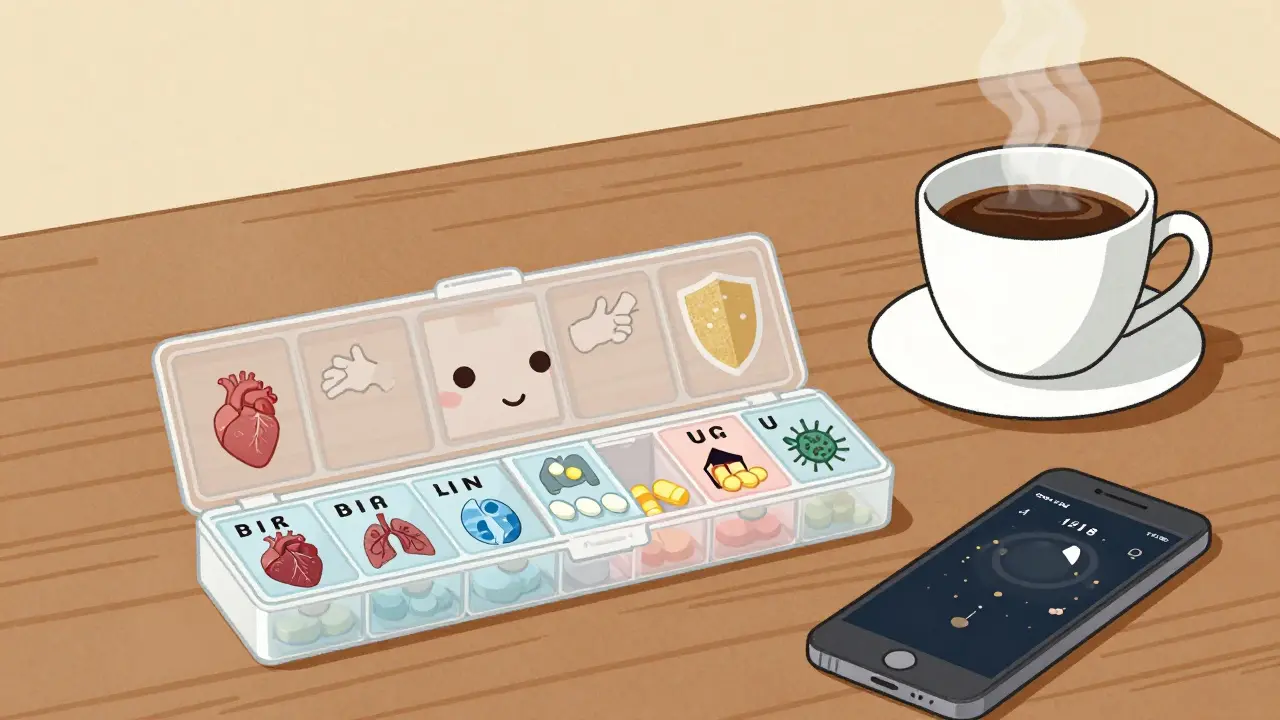
Old school but effective. A weekly pillbox removes the guesswork. Did you take your Tuesday morning dose? Look in the box. If it’s empty, yes. If it’s full, no. This visual confirmation prevents accidental double-dosing, which is a common risk when people panic about a missed dose later in the day.
What To Do When You Miss a Dose
Life happens. You will miss a dose. The key is knowing how to react without panicking. General rules apply, but always check your specific prescription label or call your pharmacist.
- Check the Time: If it’s still within a few hours of your scheduled time, take it immediately.
- Close to Next Dose?: If it’s almost time for your next scheduled dose, skip the missed one. Do not take two doses at once to "catch up." This can lead to toxic levels in your blood.
- Read the Leaflet: Most packaging inserts have a specific section on "Missed Doses." Follow those instructions precisely.
- Monitor Symptoms: Pay attention to how you feel over the next 24 hours. Note any changes and report them to your doctor at your next visit.
Never double up unless explicitly instructed by a healthcare professional. The risk of overdose often outweighs the benefit of catching up.
The Big Picture: Adherence Saves Lives
Medication non-adherence isn’t just an inconvenience; it’s a killer. Historical data suggests it contributes to hundreds of thousands of deaths annually and accounts for 10-25% of hospital admissions. Initiatives like the U.S. Department of Health and Human Services' Million Hearts campaign focus heavily on this issue because fixing adherence prevents heart attacks and strokes more effectively than developing new drugs.
By respecting the timing of your prescriptions, you aren’t just following orders. You are actively participating in your own survival. You are keeping your blood pressure stable, your blood thin enough to flow but thick enough to clot, and your infections eradicated completely. It’s a small daily act with massive long-term rewards.
Is it okay to split my pills to make them last longer?
No, never split pills unless your doctor or pharmacist explicitly says it is safe. Many medications are "extended-release" or "enteric-coated," meaning splitting them destroys the mechanism that controls how the drug is released into your body. This can cause a sudden, dangerous spike in medication levels.
What does "take on an empty stomach" mean?
It typically means taking the medication at least one hour before eating or two hours after eating. Food can interfere with absorption, making the drug less effective or causing unpredictable blood levels.
Can I drink alcohol with my prescription medication?
It depends on the medication. Alcohol can interact dangerously with many drugs, including painkillers, antidepressants, and blood pressure meds. Always ask your pharmacist about specific interactions for your regimen.
Why do some meds need to be taken at bedtime?
Some medications cause drowsiness as a side effect, so taking them at night helps you sleep. Others, like certain statins, work best when your body is naturally producing cholesterol at night. Follow the specific timing instructions for your drug.
How can I tell if my medication is actually working?
For some conditions, like pain, you’ll feel relief quickly. For others, like hypertension or high cholesterol, there are no immediate feelings. You need regular lab tests and check-ups to verify effectiveness. Don’t assume lack of symptoms means the drug isn’t needed.