

What Is Ulnar Neuropathy?
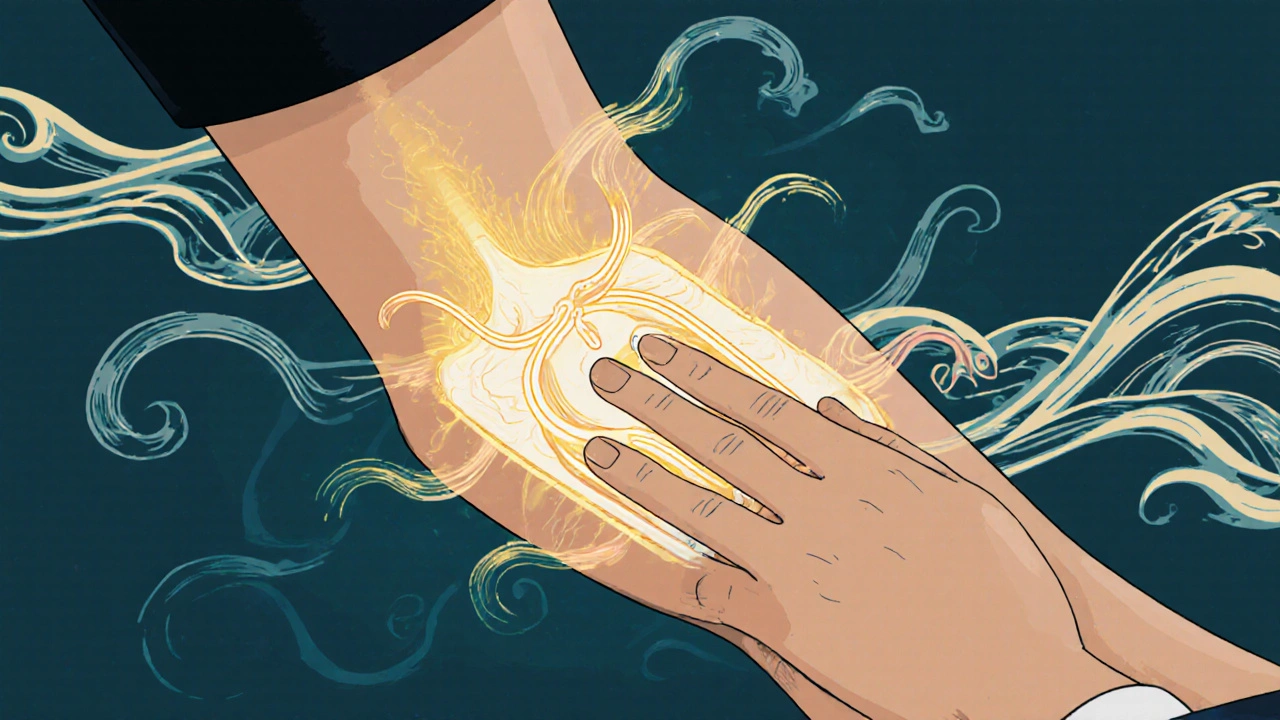
Ulnar neuropathy is a condition where the ulnar nerve gets compressed or pinched, leading to numbness, tingling, and weakness in the hand. This nerve runs from your neck down to your hand, passing through a narrow space behind your inner elbow called the cubital tunnel. It’s the second most common nerve compression issue after carpal tunnel syndrome, affecting about 9% of all nerve entrapment cases.
The ulnar nerve controls sensation in your little finger and half of your ring finger. It also powers small muscles in your hand that let you grip things, pinch, and spread your fingers. When it’s squeezed-often at the elbow or wrist-those functions start to break down. Left untreated, this can lead to permanent muscle wasting and loss of hand strength.
Where Does the Nerve Get Trapped?
There are two main spots where the ulnar nerve gets compressed:
- Cubital tunnel syndrome - This happens at the elbow. The nerve sits right under the bony bump on the inside of your elbow (medial epicondyle), with almost no padding. Leaning on your elbow, sleeping with your arm bent, or holding a phone for long periods can squish it.
- Guyon’s canal syndrome - This occurs at the wrist. The nerve passes through a tight tunnel near the base of your palm, right next to the bone. Here, it’s often pinched by a ganglion cyst, repetitive pressure (like from bike handlebars), or trauma.
Over 80% of cases happen at the elbow. About 40% of wrist cases are caused by cysts, while the rest have no clear cause (idiopathic). Men between 35 and 64 are more likely to develop it, especially if their job involves repeated elbow bending-plumbers, mechanics, and call center workers are at higher risk.
What Are the Symptoms?
Symptoms don’t show up all at once. They creep in slowly and get worse over time.
- Early stage: You feel tingling or numbness in your ring and little fingers, especially when your elbow is bent-like when you’re talking on the phone or driving. Many people wake up at night with their hand "asleep."
- Moderate stage: The numbness becomes constant. You might feel a burning sensation or sharp pain along the inner forearm. Hand strength starts to fade. You may drop things more often or struggle to open jars.
- Advanced stage: Muscles in your hand begin to shrink (atrophy). You might notice a visible dip between your thumb and index finger. Your ring and little fingers start to curl inward into a "claw hand" position. The "Froment sign" appears-you can’t hold a piece of paper between your thumb and finger without using your palm.
These symptoms often get worse at night or after long periods of elbow flexion. People frequently report that shaking their hand out gives temporary relief, but the problem keeps coming back.
When Should You See a Doctor?
You don’t need to wait until your hand looks deformed. If you’ve had numbness or tingling in your fingers for more than two weeks-especially if it’s waking you up at night or affecting your grip-it’s time to get checked.
Early diagnosis is critical. Research from the NIH shows that people who get treated within the first few months have a much better chance of full recovery. Once muscle wasting starts, recovery becomes harder and sometimes incomplete.
How Is It Diagnosed?
Your doctor will start with a physical exam. They’ll tap along the nerve at your elbow (Tinel’s sign) and check your finger strength and sensation. They might ask you to hold your elbow bent for a minute to see if symptoms return.
For confirmation, they’ll likely order nerve conduction studies (NCS) and electromyography (EMG). These tests measure how fast electrical signals move through the nerve and how well the muscles respond. They can pinpoint exactly where the nerve is compressed and how badly it’s damaged.
Ultrasound is also becoming more common. It can show swelling or movement of the nerve as you bend your elbow-something X-rays can’t do. In some cases, an MRI is used if a cyst or tumor is suspected.
Non-Surgical Treatment: What Works?
For mild to moderate cases, surgery isn’t the first step. About 90% of people with early symptoms improve without it.
- Activity changes: Avoid leaning on your elbows. Don’t sleep with your arms bent under your pillow. Use a headset instead of holding your phone. Take breaks if you’re typing or using tools that require gripping.
- Elbow splinting: Wearing a padded brace at night keeps your elbow straight. Studies show this reduces symptoms in most patients within 4-6 weeks. Some people need to wear it during the day too if symptoms are severe.
- NSAIDs: Ibuprofen or naproxen can help reduce swelling around the nerve, especially if symptoms started recently.
- Physical therapy: A therapist will teach you nerve gliding exercises-gentle movements that help the nerve slide smoothly through its tunnel. Do them 3-4 times a day. They also work on strengthening hand muscles and improving wrist flexibility.
- Corticosteroid injections: If inflammation is a big factor, a shot around the nerve at the elbow or wrist can reduce swelling. This isn’t a cure, but it can buy time for other treatments to work.
- Medications for nerve pain: Gabapentin or pregabalin may be prescribed if you have burning or shooting pain. These don’t fix the compression but help manage discomfort.
Conservative treatment works for about 50% of all patients. But if you already have muscle weakness or atrophy, your chances drop to under 40%. That’s why timing matters.
Surgery: When and Why?
If symptoms last longer than 3-6 months, get worse despite conservative care, or involve muscle loss, surgery is usually recommended.
There are three main procedures:
- Simple decompression: The surgeon cuts the ligament over the nerve at the elbow to give it more space. It’s the least invasive option. Recovery takes 6-12 weeks. About 85% of patients report good results.
- Decompression with anterior transposition: The nerve is moved from behind the elbow to the front. This prevents it from getting stretched when you bend your arm. It’s often used for more severe cases or when the nerve keeps sliding out of place. Recovery takes 3-6 months. Risk of infection is slightly higher.
- Medial epicondylectomy: The bony bump on the inside of the elbow is partially removed to create more room for the nerve. This avoids moving the nerve and has a lower risk of scar tissue buildup.
Studies show simple decompression and transposition have similar success rates for idiopathic cases. But transposition has a higher infection risk. The choice depends on your anatomy, symptom severity, and surgeon preference.
After surgery, you’ll start hand therapy in 2-3 weeks. Full recovery can take up to six months. About 12.5% of patients have symptoms return if the root cause-like poor posture or repetitive motion-isn’t addressed.
Emerging Treatments and Future Options
Science is moving beyond traditional methods. Ultrasound-guided hydrodissection-injecting fluid to gently separate the nerve from surrounding tissue-is showing promise for select patients who don’t respond to other treatments.
Researchers are also testing platelet-rich plasma (PRP) injections to help nerve healing. But right now, evidence is limited to small studies. It’s not standard care yet.
Endoscopic surgery for ulnar nerve release is being developed. Early results suggest less pain, smaller scars, and faster recovery than open surgery. It’s still mostly done in specialized centers but could become more common in the next few years.
Doctors are also using the QuickDASH questionnaire more often to measure progress. It tracks how much the condition affects your daily life-from typing to holding a coffee cup. This helps make treatment decisions more personal and precise.
What’s the Prognosis?
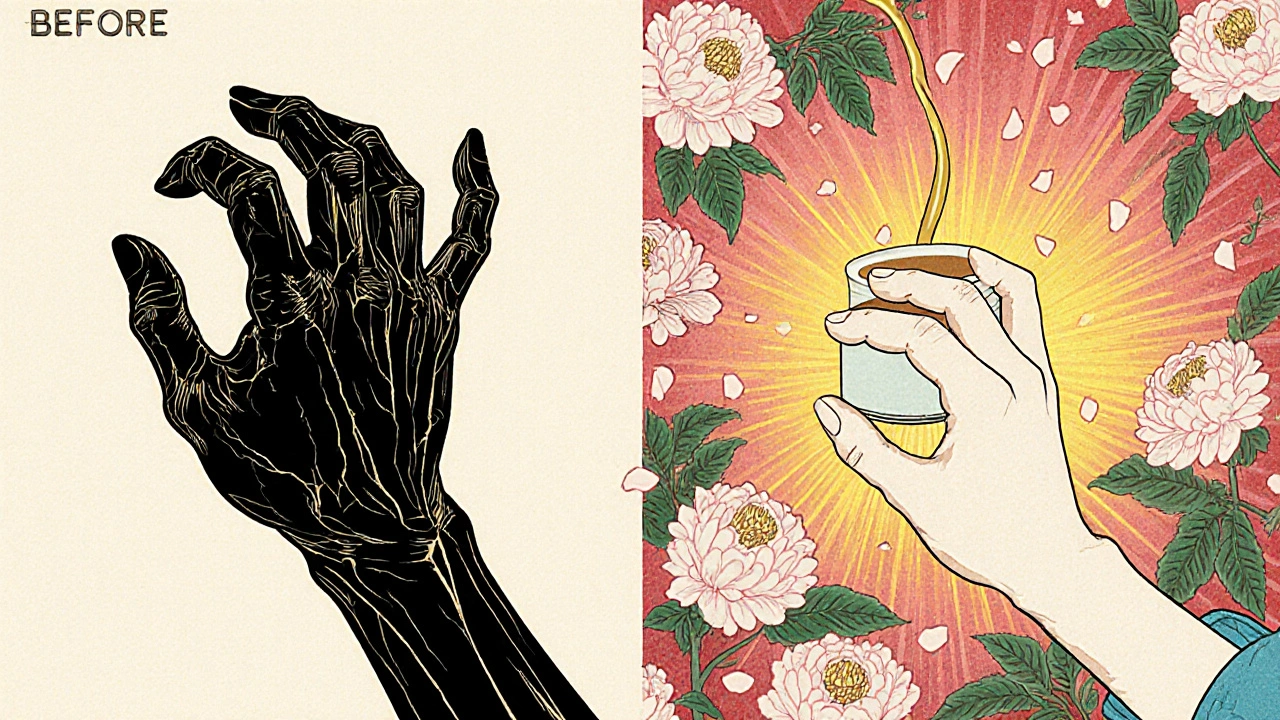
With the right treatment, 85-90% of people recover well and avoid permanent damage. The key is catching it early.
People who act fast-before muscle loss-often regain full strength and sensation. Those who delay may have lasting weakness, even after surgery. That’s why ignoring nighttime numbness isn’t harmless. It’s your body’s warning sign.
Workplace changes can make a big difference. Switching to an ergonomic keyboard, adjusting your chair height, or using a headset can prevent recurrence. Even small habits-like not resting your elbow on your desk-add up.
How to Prevent It
Prevention is easier than treatment:
- Don’t rest your elbows on hard surfaces for long periods.
- Keep your elbows slightly bent when sleeping-use a pillow to support your arm.
- Take breaks every 30 minutes if you’re typing, driving, or using tools.
- Stretch your wrists and arms regularly.
- Use padded gloves if you ride a bike or handle vibrating tools.
It’s not always preventable, especially if you’ve had prior injury or anatomy that naturally crowds the nerve. But being aware of triggers helps you catch it before it becomes serious.
What Happens If You Ignore It?
Ignoring ulnar neuropathy doesn’t just mean more numbness. It means your hand muscles will slowly die. Once they’re gone, they won’t come back-even with surgery. You might lose the ability to pinch, write, or button a shirt. That’s not just inconvenient. It’s life-changing.
Dr. Mohit Gilotra, an orthopedic surgeon, warns that untreated ulnar nerve compression leads to irreversible damage. That’s why waiting to see if it "goes away on its own" is a dangerous gamble.
Can ulnar neuropathy go away on its own?
Sometimes, yes-if it’s mild and you change your habits right away. Avoiding elbow pressure, using a splint at night, and doing stretches can help symptoms fade within weeks. But if numbness or weakness lasts longer than a month, it’s unlikely to resolve without treatment. Delaying care increases the risk of permanent nerve damage.
Is cubital tunnel syndrome the same as carpal tunnel?
No. Carpal tunnel affects the median nerve at the wrist and causes numbness in the thumb, index, and middle fingers. Ulnar neuropathy affects the ulnar nerve at the elbow or wrist and targets the ring and little fingers. They’re different nerves, different locations, and different symptoms-though both are nerve compression syndromes.
How long does recovery take after surgery?
It depends on the procedure. Simple decompression usually takes 6-12 weeks to heal. If the nerve is moved (transposition), recovery can take 3-6 months. Hand therapy starts 2-3 weeks after surgery. Strength returns slowly. Full sensation may take up to a year to return, especially if the nerve was badly damaged before surgery.
Can I still play sports with ulnar neuropathy?
It depends on the sport and severity. Golf, tennis, and cycling can worsen symptoms because they involve repeated elbow bending or pressure on the inner elbow. If you’re in the early stages, modifying your technique or using padded gloves may help. But if you have muscle weakness or clawing, you should avoid high-impact or repetitive motions until you’ve been treated.
Are there any home remedies that help?
Yes-but they’re supportive, not curative. Ice packs on the elbow for 10 minutes can reduce swelling. Gentle stretching and nerve glides (like slowly bending and straightening your elbow while keeping your wrist relaxed) can help. Avoid sleeping on your arm. Use a rolled towel to keep your elbow slightly bent at night. These won’t fix the problem, but they can ease symptoms while you wait for professional care.
Next Steps If You Suspect Ulnar Neuropathy
If you’re having numbness in your ring and little fingers, start by tracking your symptoms. Note when they happen, how long they last, and what makes them better or worse. Then see your GP or a neurologist. Don’t wait for pain to get worse.
Bring a list of your daily activities-especially those involving your arms and hands. That helps your doctor spot patterns. Ask about nerve conduction tests. If they suggest a splint or therapy, stick with it for at least 4-6 weeks before considering surgery.
Remember: early action saves function. Your hand is more than just fingers-it’s how you hold your coffee, type, shake hands, and care for yourself. Don’t let a compressed nerve steal that away.
14 Comments
This is why you don't lean on your elbow like a lazy sack of potatoes. I used to rest my arm on the desk all day at my desk job and woke up with my ring finger permanently numb. Took me six months to realize it wasn't 'just a weird sensation'.
Stop being a zombie and move your damn arms. Splints work. I wore one for three weeks and my hand stopped feeling like a dead fish.
I find it appalling that people treat nerve damage like a minor inconvenience. You don't just 'shake it out' and expect your muscles to magically rewire themselves. This isn't a bad dream you can wake up from. Ignoring this is a luxury only the ignorant afford.
I work in a call center and my elbow started going numb after 3 hours. I tried the headset and it helped but honestly i just started putting my phone on speaker and keeping my arm straight. No splint no meds just changed how i hold my phone. Its been 3 months and no more tingling
I've seen this too many times. People ignore symptoms until they can't grip a coffee cup. Then they panic. Then they blame the doctor. Then they wonder why they're still weak. This isn't a mystery. It's biology. And biology doesn't care how busy you are.
I had this last year and I was so scared. The first time I couldn't hold my toothbrush properly I cried. But the splint and the nerve glides? Game changer. I still do them every morning. It's like stretching for your soul. 🙏
It's funny how we ignore our bodies until they scream. We'll sit for hours slumped over a keyboard but won't adjust a pillow. The body doesn't lie. It just gets quieter the longer you ignore it.
You know what they don't tell you? It's not just your elbow. It's your whole life. You stop lifting things. You stop playing guitar. You stop hugging people right. It's like your hand gets lonely. And then one day you realize you're not just numb-you're disconnected.
This is all part of the corporate agenda. Ergonomic chairs? Splints? Nerve glides? They want you to think it's your fault. But why do so many people in tech and call centers get this? Coincidence? Or is Big Tech pushing us to bend our arms until they break? The government knows. They just won't say it.
While I appreciate the thoroughness of this article, I must note that the term 'muscle wasting' is clinically imprecise. The correct terminology is 'denervation atrophy', and the use of 'claw hand' is outdated. Furthermore, the reference to QuickDASH lacks citation. This undermines the entire credibility of the piece.
You don't say 'tingling'. You say 'paresthesia'. You don't say 'numbness'. You say 'hypoesthesia'. If you're going to write about neurology, at least use the words the field actually uses. This isn't a blog post for your aunt's book club.
I think the real issue here is that we live in a world that rewards suffering. They make you sit for 8 hours. They make you type. They make you hold your phone like a prisoner. Then they give you a splint and call it a solution. But what if the problem isn't your elbow? What if it's the system?
Surgery works. Splints work. But nobody wants to hear that. They want magic. They want a pill. They want to believe it'll go away. It won't. Fix your posture or pay the price. Simple.
Hey everyone! I'm a physio assistant in Delhi and I've seen over 300 cases of this in the last 3 years. The biggest mistake? Waiting. People come in with clawed fingers and say 'I thought it was just tired'. But guess what? With consistent nerve glides and wrist stretches, even advanced cases can improve. Don't give up. You got this! 💪✨
I had surgery last year and yeah it sucked. But I'm back lifting weights and playing guitar. The only thing worse than the surgery? Waking up one day and realizing you can't hold your kid. That's not a choice. That's a tragedy. Do the work. Don't be a coward.