
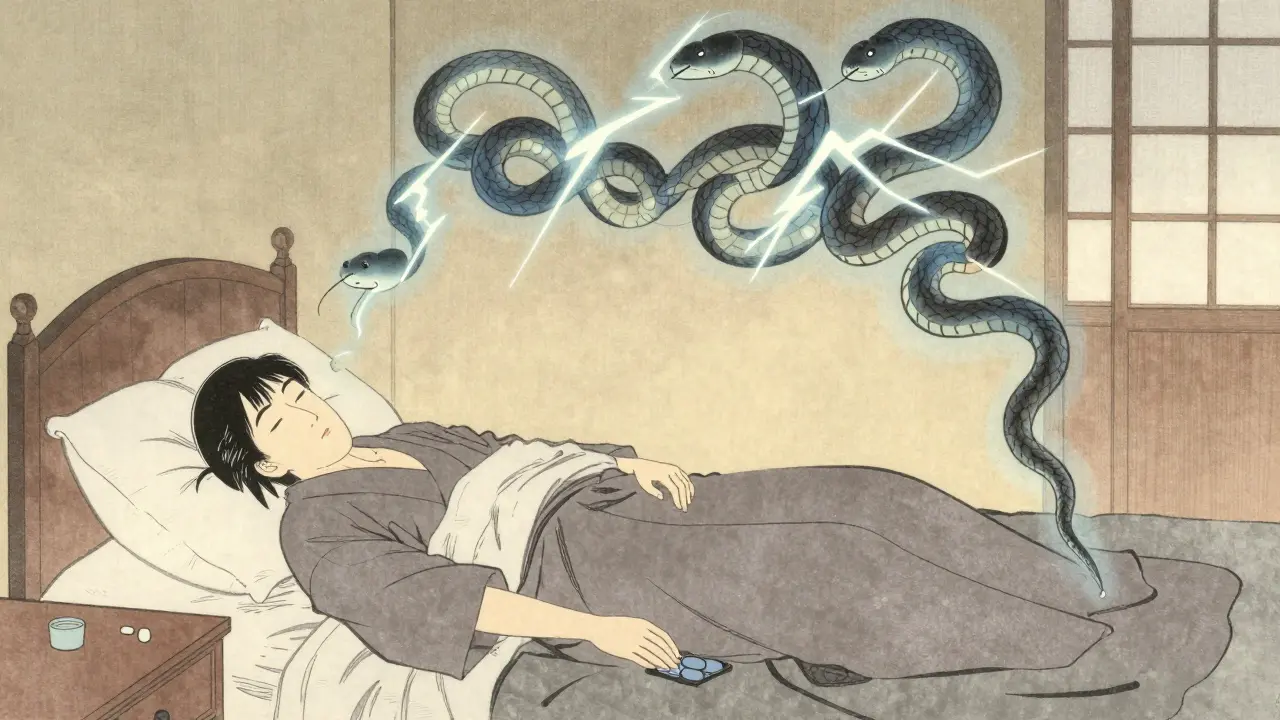
Tramadol is often prescribed for moderate to severe pain, but if you have a history of seizures or epilepsy, it could be dangerous-even at normal doses. This isn’t just a theoretical concern. Real patients, taking tramadol exactly as directed, have had seizures. And it’s not only about overdosing. The risk is built into how the drug works in your brain.
Why Tramadol Can Trigger Seizures
Tramadol doesn’t act like typical opioids such as morphine or oxycodone. It has two main ways of working: it gently activates opioid receptors, and it also blocks the reuptake of serotonin and norepinephrine. That second part is the problem. By increasing serotonin and norepinephrine in the brain, tramadol disrupts the natural balance between excitation and inhibition. This makes neurons more likely to fire uncontrollably, leading to seizures.Research shows that tramadol’s metabolite, M1, also plays a role. It interferes with GABA, the brain’s main calming neurotransmitter. Less GABA means less control over electrical activity in the brain. That’s why even people on a standard 75 mg daily dose have had seizures-no overdose needed.
Studies confirm this isn’t rare. One 3-year analysis of 28 cases found that 89% of seizures happened within the first 24 hours after taking tramadol. And in over half of those cases, patients were also taking other medications like antidepressants, antipsychotics, or alcohol-making the risk even higher.
Who’s at Highest Risk?
If you’ve ever had a seizure, epilepsy, or a brain injury that caused seizures, tramadol is not safe for you. Major medical guidelines, including those from UCSF Pain Management, explicitly say: don’t use it.But risk isn’t limited to people with diagnosed seizure disorders. Other factors raise the danger:
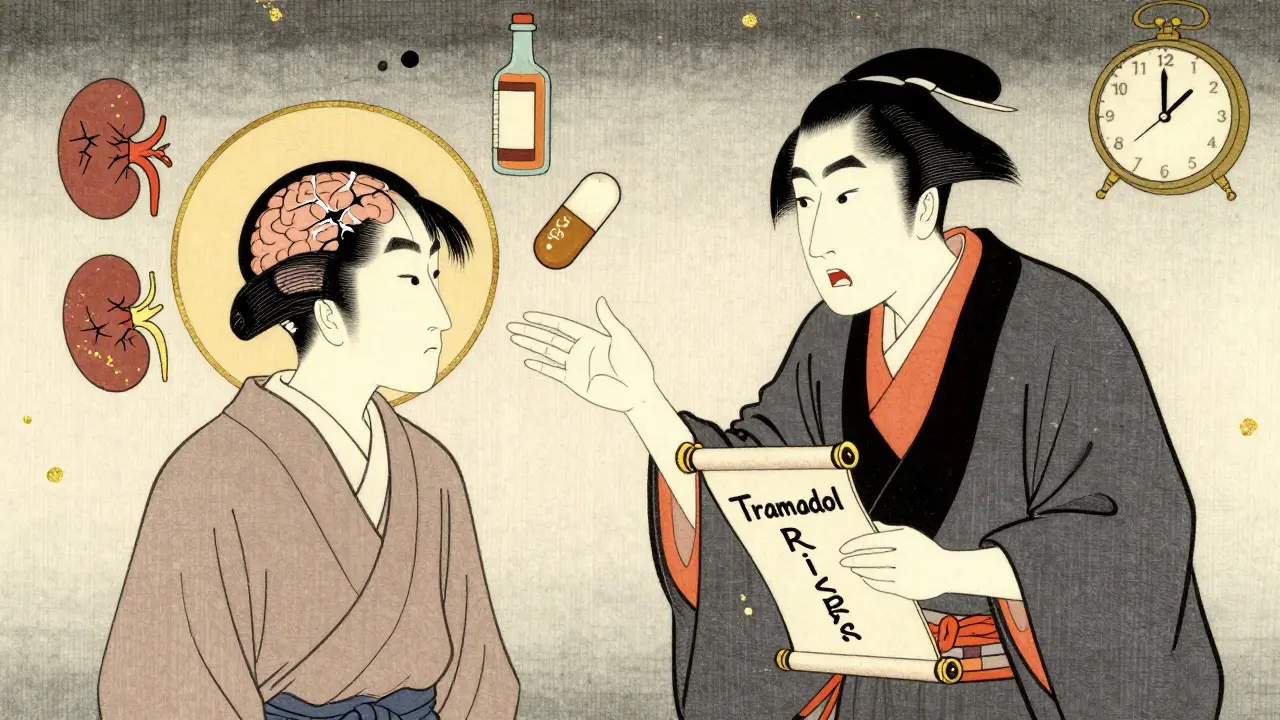
- Renal impairment - If your kidneys aren’t filtering well, tramadol builds up in your system. One patient with kidney failure had a seizure after just 300 mg IV.
- Drug interactions - Tramadol mixed with SSRIs, SNRIs, tricyclic antidepressants, or antipsychotics can push your brain past its limit. Three patients in one study had seizures after combining tramadol with tricyclic antidepressants.
- Alcohol or illicit drugs - These lower the seizure threshold on their own. Add tramadol, and the risk multiplies.
- Dose escalation - Even if you’ve taken tramadol safely before, increasing the dose can trigger a seizure. One patient had four seizures only after their dose was raised.
Men between 20 and 35 years old make up most reported cases, but women are still at risk. One study found 7% of tramadol-related seizures occurred in females. Age and gender aren’t protective-you can’t assume you’re safe just because you don’t fit the profile.
Tramadol vs. Other Opioids
Most opioids don’t lower the seizure threshold the same way. Morphine, for example, can actually suppress seizures at low doses. But tramadol is different. Its dual action on serotonin and norepinephrine gives it a unique seizure risk profile.Between 2008 and 2013, tramadol prescriptions in the U.S. jumped 88%. At the same time, emergency visits for tramadol-related problems rose 250%. That’s not a coincidence. As more doctors prescribed it, more people had bad reactions. In New Zealand, tramadol was the most common drug linked to reported seizures between 2001 and 2006.
Because of this, the FDA reclassified tramadol from an unscheduled drug to a Schedule IV controlled substance in 2014. That change reflected growing awareness-not just of addiction risk, but of neurological dangers too.
What Happens During a Tramadol-Induced Seizure?
Most tramadol-related seizures are brief, tonic-clonic episodes-meaning the body stiffens, then jerks. They usually stop on their own within a few minutes. But that doesn’t mean they’re harmless. Even short seizures can cause injury from falls, breathing problems, or brain stress.EEGs taken within 24 hours of a seizure often show abnormal brain wave patterns. But here’s something important: in 96% of cases, those abnormalities disappeared within a week. That means the brain usually recovers quickly after the drug is stopped. Still, the immediate danger is real. You don’t get a second chance if the seizure causes a fall, car crash, or drowning.
Brain scans rarely show lasting damage. Only one out of 28 patients in a major study had visible white matter lesions. So while the seizure itself is alarming, long-term brain injury from tramadol alone is uncommon.
What Should You Do Instead?
If you have a seizure disorder and need pain relief, tramadol is off the table. But you still have options:- Acetaminophen (paracetamol) - Safe for most people with epilepsy, even at higher doses.
- NSAIDs like ibuprofen or naproxen - Effective for inflammation-related pain. Avoid if you have kidney issues or stomach ulcers.
- Non-opioid nerve pain meds - Gabapentin or pregabalin are often used for neuropathic pain and are generally safe in seizure disorders (and may even help control seizures).
- Physical therapy and non-drug approaches - Heat, cold, massage, and TENS units can reduce pain without any drug risk.
Your doctor may also consider safer opioids like oxycodone or hydrocodone-but only if absolutely necessary and under close supervision. Even then, they’ll weigh the risks carefully.
Red Flags to Watch For
If you’re prescribed tramadol and have any history of seizures, tell your doctor immediately. But even if you’ve never had one, be alert for these warning signs:- Sudden muscle twitching or jerking, especially in the face or arms
- Feeling unusually dizzy, confused, or disoriented
- Unexplained nausea or vomiting after starting tramadol
- Increased heart rate or sweating without physical exertion
These can be early signs that your brain is becoming unstable. Stop taking tramadol and call your doctor right away. Don’t wait for a full-blown seizure.
Bottom Line
Tramadol isn’t just another painkiller. For people with seizure disorders-or even those with risk factors like kidney problems or drug interactions-it’s a ticking time bomb. The science is clear: it lowers your seizure threshold, even at normal doses. The FDA, medical societies, and clinical case reports all agree: avoid it if you have a history of seizures.There are safer alternatives for pain relief. Talk to your doctor about them. Don’t assume tramadol is harmless because it’s prescribed. Your brain’s electrical balance is too important to gamble with.
15 Comments
Man, I wish more doctors knew this. I had a buddy take tramadol for a back injury and he had a seizure right after his first dose. No overdose, no mixing - just pure bad luck with a drug that’s way too casually prescribed.
His neurologist later said he should’ve been given gabapentin from day one. We got lucky he didn’t hit his head on the tile floor.
Tramadol’s not your grandpa’s painkiller. It’s a sneaky little beast.
Bro this is so real. I’m a PT in Mumbai and we’ve seen 3 cases in 2 yrs where patients on tramadol for chronic back pain had tonic-clonic episodes. One guy was on 100mg daily, no other meds, no alcohol - just pure tramadol neurotoxicity.
Doc thought it was ‘stress-induced’ till EEG showed spike-wave discharges. Now I always ask: ‘Any history of seizures?’ before even mentioning opioids.
Gabapentin’s the real MVP here. Safe, effective, and doesn’t make your brain do the electric boogaloo.
TRAMADOL IS A TRAP. I got prescribed this after my ACL surgery and my cousin told me to drop it like hot garbage. 2 days later I had this wild muscle spasm that felt like my whole body got plugged into a wall socket.
Turns out I was on sertraline too. Classic combo. Docs don’t warn you. They just hand you the script like it’s Advil.
Stop the madness. Use ice, PT, and acetaminophen. Your brain will thank you.
they’re hiding this from us. i know people who got seizures after tramadol and then the hospital said it was ‘unexplained’
but the pharma companies know. they just don’t care. they make billions. your brain is just collateral
It’s fascinating how the pharmacological profile of tramadol - a dual reuptake inhibitor with weak mu-opioid affinity - creates a uniquely pro-convulsant environment. The serotonergic and noradrenergic disinhibition, coupled with GABAergic suppression via M1 metabolite, is a perfect storm for neuronal hyperexcitability.
Most clinicians still treat it like a ‘mild’ opioid. They’re dangerously misinformed.
There’s something deeply unsettling about how we normalize drugs that quietly sabotage the brain’s electrical equilibrium.
Tramadol doesn’t scream danger - it whispers it. And we’re too busy chasing pain relief to listen.
Our culture treats the nervous system like a machine you can tweak with a pill, not a symphony that can be shattered by one wrong note.
Maybe the real epidemic isn’t pain - it’s our refusal to accept that some things can’t be fixed with chemistry.
why is everyone acting like this is news? i’ve seen this in VA hospitals since 2010. it’s not rocket science.
and why are we still letting americans take this? europe banned it in some countries for this exact reason.
we’re just too lazy to do real pain management. give me ibuprofen and a nap.
I just want to say thank you for writing this. I’m a caregiver for my mom who’s had epilepsy since she was 16. She was prescribed tramadol for arthritis pain last year and the doctor didn’t even blink. Thank god I caught it before she took it.
She cried when I told her it could trigger a seizure. Said she just wanted to walk without pain.
We switched to gabapentin and she’s doing better. No seizures. No panic. Just quiet relief.
If you’re reading this and you or someone you love has seizures - please, please, don’t take tramadol. There are safer ways. You deserve to be safe.
My grandma in rural Tennessee got tramadol after hip surgery. She’d never had a seizure in her life. Three days later, she went rigid and started shaking in the kitchen. EMS said it was ‘drug-induced’.
Turns out she was on a low-dose SSRI for depression. No one asked about meds.
Now my whole family asks ‘what are you on?’ before any new script. It’s not paranoia. It’s survival.
tramadol is not a painkiller it’s a brain glitch. i had a friend take it for a toothache and she had a seizure at the grocery store. no one knew why. the hospital said ‘maybe stress’
turns out she was on cymbalta. classic combo.
just use tylenol. your brain is worth more than a quick fix
Oh, so now we’re treating pain like it’s a moral failing? How quaint. Let me guess - next you’ll tell us to ‘meditate our way out of sciatica’?
Tramadol is a tool. Like a hammer. If you hit your thumb with it, that’s not the hammer’s fault - it’s your poor technique.
Maybe the real issue is that patients are too lazy to learn non-pharmacological pain management.
Or maybe, just maybe, doctors are too lazy to explain the risks properly.
Either way, blaming the drug is the lazy person’s cop-out.
Does anyone have data on how many of these seizures happened in patients with subclinical seizure disorders? Like, undiagnosed EEG abnormalities? I’ve seen cases where people had a single seizure and were told ‘it was a one-off’ - but they had a genetic predisposition.
Tramadol might just be the trigger, not the cause.
I am absolutely appalled that this is even still on the market. The FDA’s reclassification into Schedule IV was a mere gesture - a PR move to appease the public while the pharmaceutical-industrial complex continues to profit from neurological catastrophe.
Tramadol should be banned outright. Not just restricted. Banned.
And every doctor who prescribes it to a patient with a seizure history should be held criminally liable.
It is not ‘off-label’ - it is negligent. It is murderous.
While I appreciate the clinical depth of this post, I must respectfully challenge the assertion that tramadol is universally contraindicated in seizure disorders. There are documented cases - albeit rare - where patients with well-controlled epilepsy have tolerated low-dose tramadol without incident, particularly when co-administered with antiepileptics that enhance GABAergic tone.
Perhaps the issue isn’t the drug per se, but the lack of individualized risk stratification. A blanket prohibition may be overly cautious, potentially depriving patients of effective analgesia when alternatives are inadequate or contraindicated.
Moreover, the cited studies predominantly involve polypharmacy or renal impairment - confounding variables that dilute the direct causal inference.
Let us not confuse correlation with causation, nor replace nuanced clinical judgment with dogma.
Wow. So now we’re treating every single seizure as if it’s tramadol’s fault? Let me guess - next you’ll blame caffeine for migraines and sunlight for sunburns.
Tramadol is one of dozens of drugs that lower seizure threshold. So is bupropion. So is tramadol’s cousin, tapentadol. So is ciprofloxacin. So is the damn withdrawal from alcohol.
Stop acting like this is unique. You’re just creating fear-based medicine.
And by the way - your ‘safer alternatives’ like gabapentin? Also cause seizures in withdrawal. So what now? No pain meds at all?
Let’s stop the panic. Let’s start thinking.