
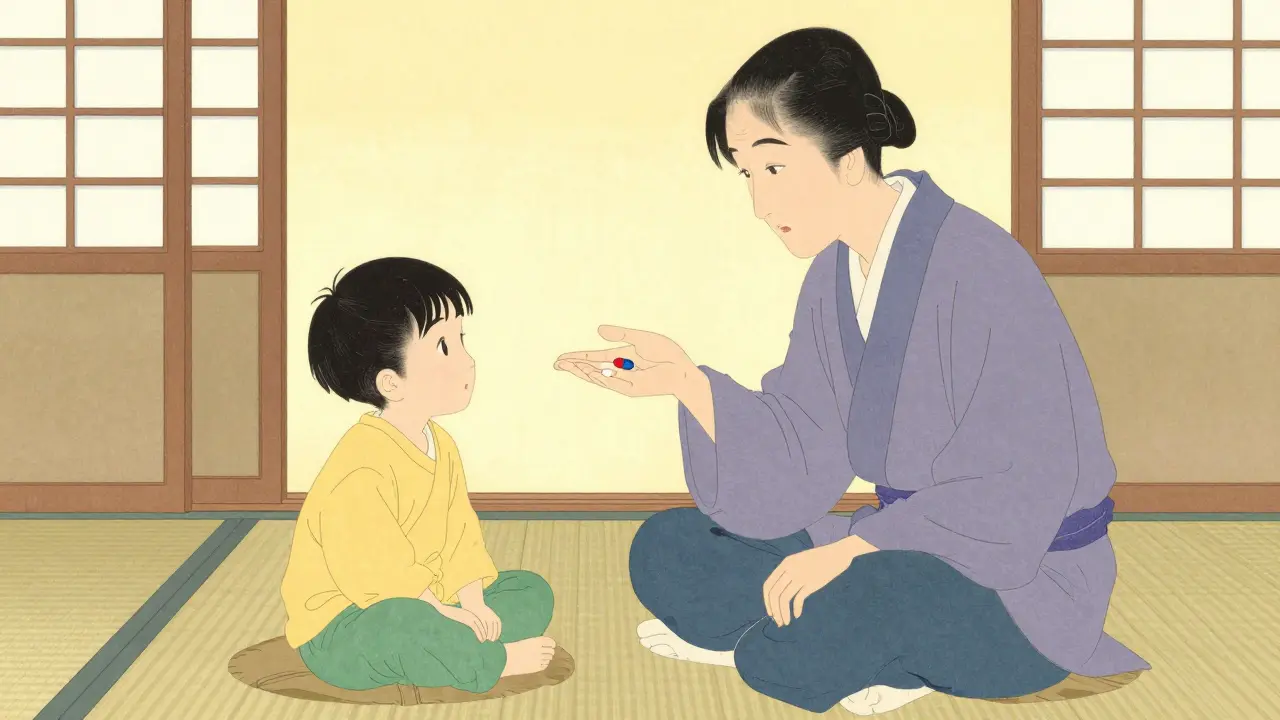
Talking About Generic Drugs and Brand Names
One of the most confusing moments for a child is when their medication changes color or shape. This usually happens when a pharmacy switches from a brand-name drug to a generic version. If a child is used to a "pink strawberry pill" and suddenly gets a "white round one," they might think they have the wrong medicine, which can lead to anxiety or, worse, them refusing to take it. When explaining this to children, keep it simple. Explain that a Generic Drug is like a store-brand version of a favorite cereal. It has the same active ingredients-the part that actually makes them feel better-but it might have a different name or look different because the company that makes it is different. Using a "twin" analogy often works well: they are like twins who look different on the outside but are the same person on the inside. This prevents the child from feeling scared and helps them trust the medication process.Age-Appropriate Safety Milestones
You can't teach a first-grader the same way you teach a high schooler. The approach needs to evolve as the child's brain develops. In the early years, the focus is on basic boundaries; in the teen years, it shifts toward critical thinking and social resistance.- Early Elementary (K-2): Focus on the "Ask First" rule. Use activities like the Medication Safety Patrol to teach that only adults should handle medicine. The goal here is to prevent accidental ingestion by treating all medicines as "off-limits" without supervision.
- Upper Elementary (3-5): This is the time to introduce the concept of "medicine science." Children can start learning why some medicines are prescription and others are over-the-counter. They can begin to understand that taking too much of a "safe" medicine, like cough syrup, can actually be dangerous.
- Middle School (6-8): Transition toward peer pressure and the science of addiction. This is where role-playing becomes vital. Instead of just saying "don't do it," kids need to practice *how* to say no in a way that feels natural to them.
- High School (9-12): Focus on honest, evidence-based risks. Teenagers have a high "nonsense detector," so avoid scare tactics. Discussing the real-world risks of things like fentanyl or the normalization of cannabis provides them with a factual basis for making their own choices.
| Approach | Methodology | Impact on Children | Knowledge Retention |
|---|---|---|---|
| Interactive/Skill-Based | Role-playing, activities, discussions | Empowers child with refusal skills | High (25-35% increase) |
| Fear-Based/Scare Tactics | Shocking images, extreme warnings | Can increase curiosity/cynicism | Low (May increase risk) |
| Passive/Lecture-Based | Reading pamphlets, listening to talks | Low engagement, quickly forgotten | Moderate to Low |
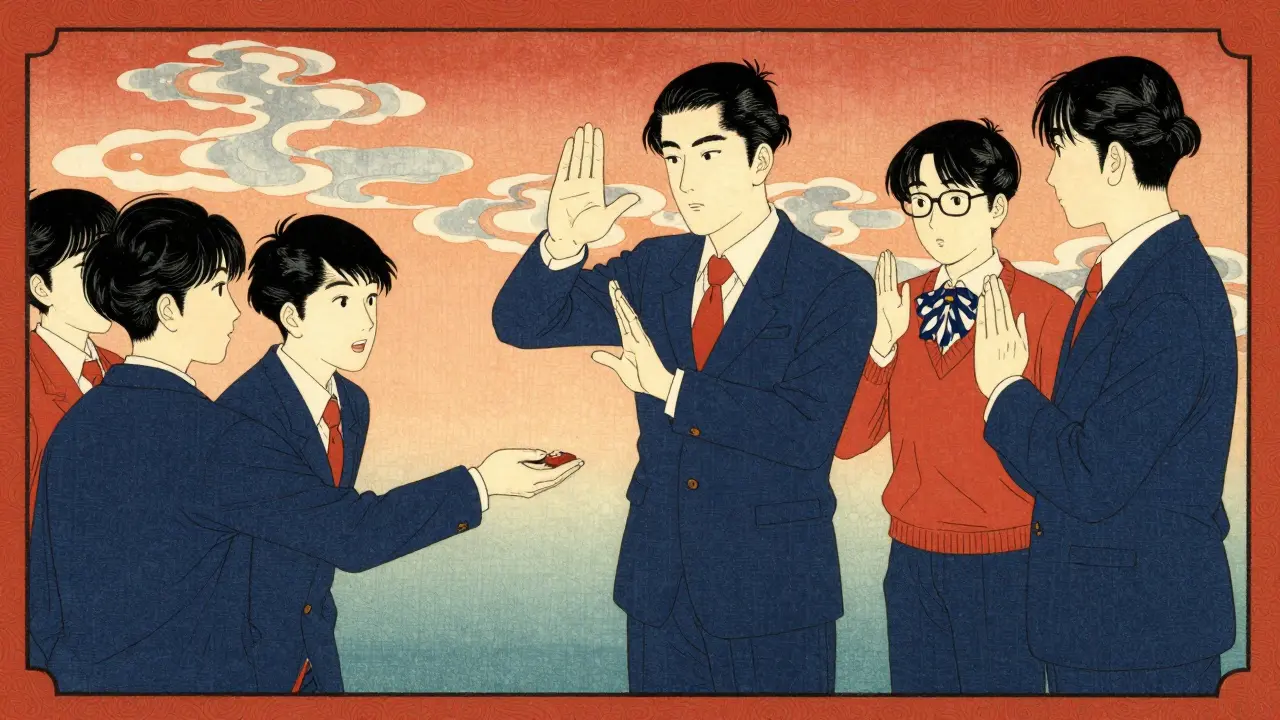
The Danger of Scare Tactics
For years, programs like DARE relied heavily on the idea that one single mistake would ruin a child's life. However, research has shown that this often backfires. When we exaggerate risks, children stop trusting the adults providing the information. If a teen finds out that a "deadly" drug is actually common in their neighborhood and hasn't killed everyone they know, they might dismiss all future health warnings as lies. Instead, the most effective programs-such as those developed by the National Institute on Drug Abuse (NIDA)-focus on the statistical reality. Telling teens that "many people your age don't use drugs" is actually more effective than saying "everyone is doing it" or "it's a monster that will eat you." When kids realize that the majority of their peers are making healthy choices, they are more likely to follow suit to fit in with the "healthy" norm.Practical Refusal Skills for Teens
Knowing that drugs are bad isn't enough. A 15-year-old knows that opioids are dangerous, but that knowledge disappears the moment they are at a party and feel the need to be liked. This is where "refusal skills" come in. Refusal skills are a set of social tools that allow a teen to decline a substance without feeling socially isolated. Some effective techniques include:- The "Out" Excuse: Having a pre-planned reason to leave or say no, such as "My parents are picking me up in ten minutes" or "I have a big game tomorrow and can't mess up my head."
- The Pivot: Acknowledging the offer but immediately suggesting something else. "No thanks, but I'm starving-do you guys have any pizza?"
- The Direct Approach: A simple, confident "No, I'm not into that," delivered without hesitation.

The Role of Family and Digital Literacy
Education doesn't end when the school bell rings. In 2026, a huge part of pediatric drug education happens on a screen. Social media platforms are flooded with "challenges" or influencers who make medication misuse look like a trend. This is why Digital Literacy is now a core part of drug safety. Parents and educators should help children analyze what they see online. Ask them: "Why is this person promoting this?" or "Do you think they're showing the whole truth?" By teaching kids to be skeptical of social media drug promotion, we reduce their susceptibility to online peer pressure by nearly 30%. Furthermore, family involvement is a huge predictor of success. When parents have open, non-judgmental conversations about medication and substance use, children are far less likely to experiment in secret. The goal is to be the first person the child goes to when they have a question, rather than a search engine or a friend who might have the wrong answer.How do I explain a generic drug to a 6-year-old?
Use a simple analogy. Tell them that the medicine is like a favorite snack. A brand-name drug is like a name-brand cookie, and a generic drug is like the store-brand version. They look and taste a little different, but they both give you the same energy and help your body feel better in the same way.
At what age should I start talking to my kids about substance abuse?
Start early with basic safety. For toddlers and preschoolers, focus on "medicine is not candy." By elementary school, you can introduce the concept of "prescription vs. over-the-counter." By middle school, shift the conversation toward the risks of misuse and how to handle peer pressure.
What is the most effective way to teach a teenager to say no?
Interactive role-playing is the gold standard. Instead of lecturing them, create realistic scenarios and let them practice different refusal techniques. This builds confidence and gives them a "script" to follow when they are actually in a high-pressure social situation.
Are generic drugs actually as safe as brand-name drugs for children?
Yes. Generic medications must have the same active ingredients, strength, and dosage as the brand-name version. They are regulated to ensure they provide the same clinical benefit and safety profile, though they may use different inactive ingredients (like dyes or fillers) which can change the color or shape.
Why are scare tactics considered ineffective in pediatric education?
Fear-based approaches often create a gap between the "scary story" and the child's reality. If the threats seem unrealistic, children may stop trusting the adults providing the information and may even become more curious about the substance to see if it's actually as bad as described.
8 Comments
The whole bit about role-playing for teens is spot on. Giving them a script actually works because it takes the panic out of the moment.
Wait a minute! You're telling me to trust these 'generic' twins? Absolute madness! Who knows what's actually inside those white pills? The big pharma companies are just playing games with our kids' health to save a few pennies while they laugh all the way to the bank! Open your eyes people, the colors change for a reason, probably to hide the chemicals they're testing on us!
One finds the analogy of the 'store-brand cereal' to be dreadfully pedestrian, yet predictably effective for the masses. While the author attempts to democratize safety, they fail to acknowledge the nuanced ontological difference between a branded experience and a generic utility. It is a simplistic approach to a complex psychological phenomenon, though I suppose the average parent prefers brevity over intellectual rigor.
Safety... is a fragile thing... isn't it? The way we shield our children... while simultaneously preparing them for a world that is inherently dangerous... it's a paradox!
Man, the section on digital literacy is just huge. It's wild how a 15-second clip can override years of parenting. We really need to be in their digital space without being overbearing, just guiding them through the noise.
I've always wondered if there's a specific age where the 'fear' approach actually starts to flip and become curiosity. This post makes a lot of sense regarding the NIDA findings. It's interesting that normalization of health is more powerful than a warning.
honestly this is just basic stuff any parent should already know lol like why is this even a guide... just talk to your kids its not that deep
The provided guidelines regarding the age-appropriate milestones are most helpful and detailed. I appreciate the emphasis on respectful communication within the family unit to ensure the safety of the children.