Cutaneous Larva Migrans – What You Need to Know
When dealing with Cutaneous Larva Migrans, a skin condition caused by hookworm larvae that burrow just under the surface, creating winding, itchy tracks. Also known as creeping eruption, it often appears after beach trips in warm, sandy areas. This condition is a type of parasitic skin disease, so the rash isn’t just irritation—it’s a living parasite moving under your skin. Most people notice a raised, reddish line that twists like a tiny river, and the spot itches intensely, especially at night. The larvae can travel a few millimeters to a few centimeters each day, leaving a visible trail that tells the story of where they’ve been. Because the parasite never reaches deeper tissues, the infection stays on the surface, but the itch can be miserable and may lead to scratching, secondary infection, or scarring if ignored.
How It Happens, How to Treat It, and How to Prevent It
The underlying hookworm infection, most often from Ancylostoma braziliense is picked up when contaminated sand or soil contacts bare skin. Beaches, parks, and tropical resorts with poor sanitation are common hotspots. Once the larvae penetrate the skin, they can’t get past the outer layer, so they wander just below it, causing the characteristic serpiginous rash. Diagnosis usually relies on recognizing that winding, itchy track, and a doctor may confirm it by looking at the pattern and asking about recent travel.
Effective treatment requires an antiparasitic drug. Ivermectin, an oral medication that kills the larvae is the first‑line choice for most patients because it works quickly and has few side effects. When ivermectin isn’t available, albendazole, another oral antiparasitic can be used, often for a slightly longer course. Both drugs stop the larvae from moving, letting the skin heal within a week or two. Alongside medication, keeping the area clean, applying soothing lotions, and avoiding scratching help prevent secondary infection.
Travel to tropical beaches increases the risk of hookworm infection, so prevention is key. Simple steps like wearing shoes or water shoes, sitting on a towel instead of directly on sand, and showering after exposure dramatically cut the odds. If you’re planning a vacation to a region where cutaneous larva migrans is common, talk to a travel clinic about possible prophylactic measures and keep a small first‑aid kit with an antihistamine for itch relief.
Below you’ll find a curated set of articles that dig deeper into related topics—drug comparisons, alternative treatments, and practical health tips—so you can stay informed and act confidently whether you’re dealing with a rash, choosing a medication, or planning your next trip.
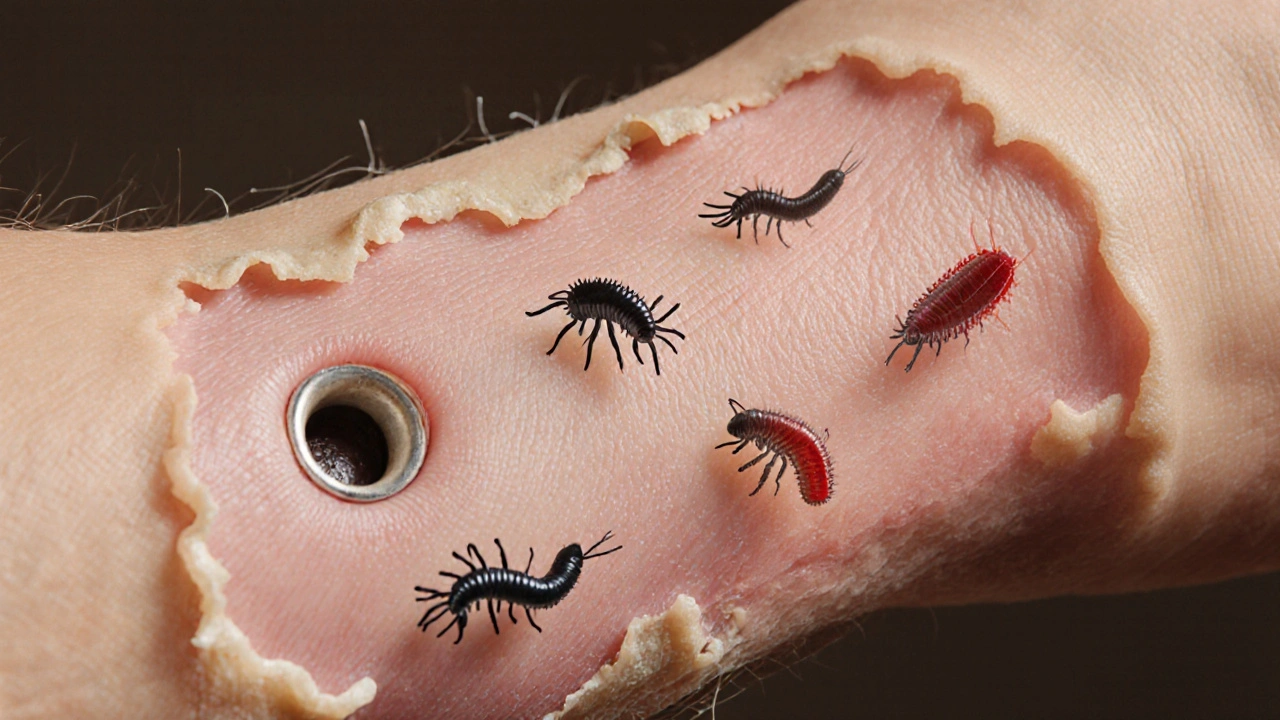
A clear guide to the life cycles of skin parasites, symptoms, prevention tips, and treatment options for common infestations.