Botfly Infection: What It Is and Why It Matters
When dealing with botfly infection, you’re facing a skin problem caused by the larvae of certain flies that embed themselves under the skin. In medical terms, botfly infection is a cutaneous parasitic infestation caused by the larval stage of botflies, often leading to painful, swollen nodules. Also known as cutaneous myiasis, it can affect both humans and animals. This condition encompasses myiasis, a broader term for any infestation by fly larvae, and it specifically involves parasite larvae the immature form of botflies that feed on host tissue, creating a tunnel under the skin. Understanding these relationships helps you see why early detection and proper care are crucial.
How Botfly Infection Develops and What to Look For
Botfly infection requires a vector—usually a mosquito or horsefly—to carry the eggs to the skin surface. Once the eggs hatch, the larvae burrow in, forming a small, raised bump that may ooze fluid or a tiny opening for breathing. This cutaneous infestation appears as a painful, enlarging nodule with a central punctum, often mistaken for a cyst or abscess. The itching and throbbing are common clues, and the presence of movement under the skin can be felt if you gently press the area. Diagnosis influences treatment choices; a clinician may use imaging or simply examine the lesion to confirm the larvae’s presence. The condition is more frequent in warm, humid regions where botflies thrive, but travelers can bring it home from outdoor activities like hiking or camping.
Effective treatment requires proper wound care and removal of the larvae. Methods include suffocating the worm with petroleum jelly, occlusive tape, or a small piece of gauze, forcing it to emerge for easy extraction. Some practitioners prefer a minor surgical incision to pull the larva out, followed by antiseptic cleaning to prevent secondary infection. After removal, applying a topical antibiotic and keeping the site covered aids healing. Preventive steps—such as wearing insect repellent, covering exposed skin, and inspecting any bite marks—reduce the risk of new botfly infections. Below, you’ll find detailed articles covering everything from symptom recognition to step‑by‑step removal techniques, so you can act quickly and safely.
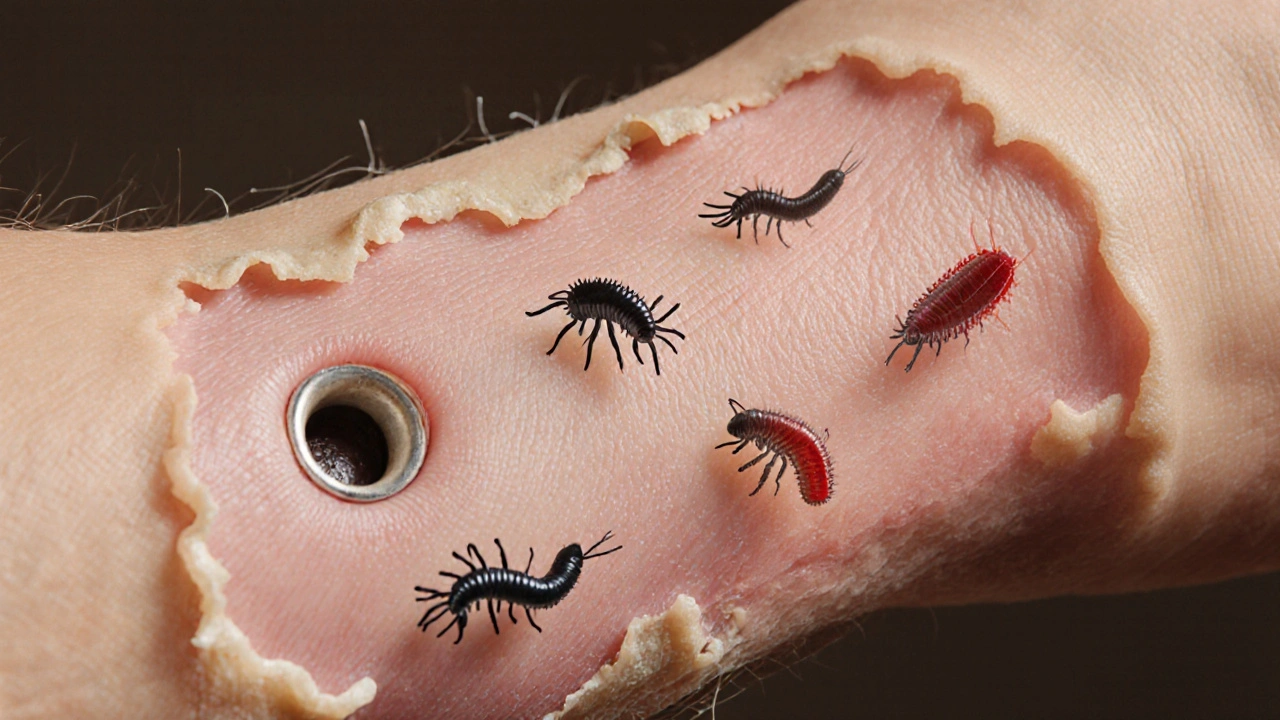
A clear guide to the life cycles of skin parasites, symptoms, prevention tips, and treatment options for common infestations.