
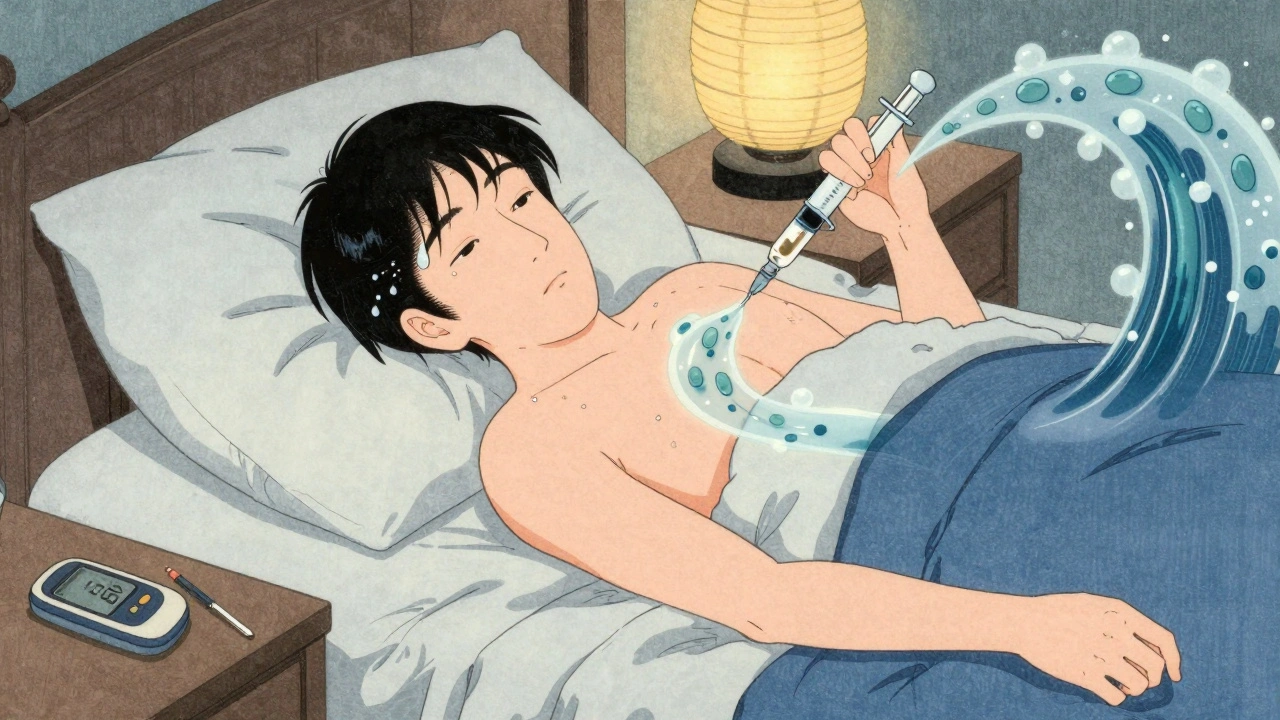
When you’re sick, your body isn’t just fighting a cold or the flu-it’s fighting a battle that can send your blood sugar into dangerous territory. For people with diabetes, especially Type 1, getting sick isn’t just about resting and sipping tea. It’s about knowing when to adjust insulin, how much fluid to drink, and when ketones become a red flag. Many end up in the hospital not because their illness got worse, but because they didn’t know how to manage their diabetes while sick. The rules aren’t complicated, but they’re easy to ignore when you feel awful. This is what you need to do-step by step, no guesswork.
Never Stop Taking Insulin, Even If You Can’t Eat
This is the most critical rule: insulin does not take a day off when you’re sick. Your body still needs it, even if you’re not eating. When you’re ill, your liver releases extra glucose and stress hormones like cortisol and adrenaline make your body resistant to insulin. That means your blood sugar can spike-even if you’re not eating anything. Skipping insulin, even for one dose, can lead to diabetic ketoacidosis (DKA), a life-threatening condition that sends about 27% of diabetes-related hospitalizations in the U.S. each year.For Type 1 diabetes, you must keep your long-acting insulin (like Lantus, Levemir, or Basaglar) at your usual dose. Some people think, “I didn’t eat, so I don’t need insulin.” That’s wrong. Your body is still producing glucose. For those using insulin pumps, you may need to increase your basal rate by 20% for 12 hours if ketones are moderate or large. For those on multiple daily injections, keep your basal insulin and use correction doses as needed. Type 2 diabetes patients on insulin should also keep their insulin going. Those on oral meds only might not need insulin right away-but if blood sugar stays above 240 mg/dL for more than a day, talk to your doctor. Never assume you can skip insulin because you’re not hungry.
Check Your Blood Sugar Every 2 to 4 Hours
When you’re healthy, checking your blood sugar twice a day might be enough. When you’re sick, you need to check more often. Children should check every 2 to 3 hours. Adults should check every 3 to 4 hours. Don’t wait until you feel worse. High blood sugar builds slowly. By the time you’re dizzy or nauseous, it might already be too late.Use these thresholds as your guide:
- Below 100 mg/dL: You’re at risk for low blood sugar. Take 15 grams of fast-acting carbs.
- 100-180 mg/dL: Your sugar is in a safe zone. Keep monitoring and stay hydrated.
- Above 180 mg/dL: You need to act. Drink fluids, check ketones, and consider a correction dose.
- Above 240 mg/dL: Check ketones immediately. This is your warning sign.
If your blood sugar stays above 240 mg/dL for two checks in a row, don’t wait. Start ketone testing right away. Use a blood ketone meter if you have one. Urine strips are outdated and unreliable-they can show negative even when ketones are dangerously high. Blood ketones above 1.0 mmol/L mean you need to increase insulin. Above 1.5 mmol/L? You’re in danger zone. Call your doctor or go to urgent care.
Hydration Isn’t Optional-It’s Your Lifeline
When your blood sugar is high, your body tries to flush out the extra glucose through urine. That means you lose water fast. Dehydration makes everything worse: it raises your blood sugar even higher, makes ketones build up faster, and can lead to kidney stress or shock.Drink fluids constantly. Adults: aim for 6 to 8 ounces every hour. Children: drink an amount equal to their age in ounces per hour (a 10-year-old drinks 10 ounces every hour). But here’s the catch-not all fluids are equal. What you drink depends on your blood sugar level.
- If your blood sugar is below 100 mg/dL: drink fluids with sugar. Regular soda, juice, or sports drinks. Avoid diet versions.
- If your blood sugar is between 100-180 mg/dL: alternate between sugar-free drinks and drinks with 15 grams of carbs. Try half water, half Gatorade. Or sip 4 oz of water, then 4 oz of juice.
- If your blood sugar is above 180 mg/dL: stick to sugar-free fluids. Water, unsweetened tea, or sugar-free electrolyte drinks like Pedialyte.
Why does this matter? If you drink sugar-free fluids when your sugar is low, you risk crashing. If you drink juice when your sugar is high, you make it worse. It’s not just about drinking-it’s about drinking the right thing at the right time. Keep a measuring cup nearby. Guessing leads to mistakes.
Ketone Checks: What They Mean and When to Panic
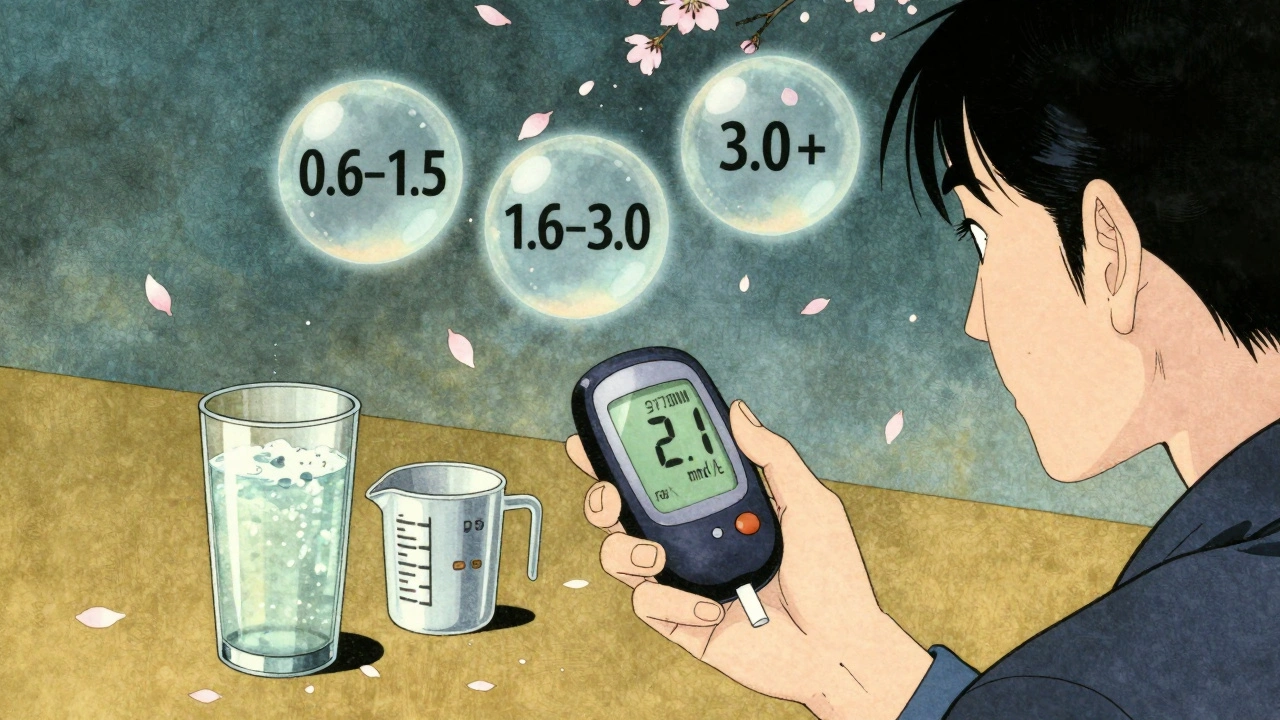
Ketones are your body’s backup fuel. When there’s not enough insulin, your body burns fat instead of glucose. That’s normal in fasting-but when you’re sick and insulin is low, it becomes dangerous. Too many ketones = diabetic ketoacidosis (DKA).Test for ketones whenever your blood sugar is above 240 mg/dL. Use a blood ketone meter if you have one. Urine strips are slower and less accurate-they can miss early warning signs. Blood ketone levels:
- 0.6-1.5 mmol/L: Moderate ketones. Increase insulin and drink fluids. Recheck in 2 hours.
- 1.6-3.0 mmol/L: High ketones. Call your doctor. You may need an adjustment in insulin or fluids.
- Above 3.0 mmol/L: Emergency level. Go to the ER. Do not wait.
Don’t rely on how you feel. You can feel fine with ketones at 2.5 mmol/L. Or you can feel terrible with ketones at 0.8 mmol/L. The number tells the truth. Keep ketone strips in your sick-day kit. They expire after 6 months once opened. Check the date. An expired strip can give you a false negative-and that’s how people end up in the hospital.
Type 1 vs. Type 2: Different Rules, Same Goal
Type 1 and Type 2 diabetes handle illness differently. Type 1 patients always need insulin and always need to check ketones. Type 2 patients on insulin should follow similar rules. But if you’re on metformin or other oral meds only, you don’t need ketone checks unless your blood sugar is above 240 mg/dL for more than a day.Here’s the key difference: Type 2 patients can sometimes manage illness without insulin-but only if their blood sugar stays under control. If it climbs past 300 mg/dL for more than 24 hours, you may need temporary insulin. Don’t wait. Call your doctor. Many Type 2 patients think, “I don’t need insulin,” and end up in DKA because they ignored the warning signs.
Also, watch your medications. Over-the-counter cold remedies often contain sugar or alcohol. A single teaspoon of cough syrup can add 10 grams of sugar. Read labels. Choose sugar-free versions. If you’re unsure, ask your pharmacist.
What to Pack in Your Sick-Day Kit
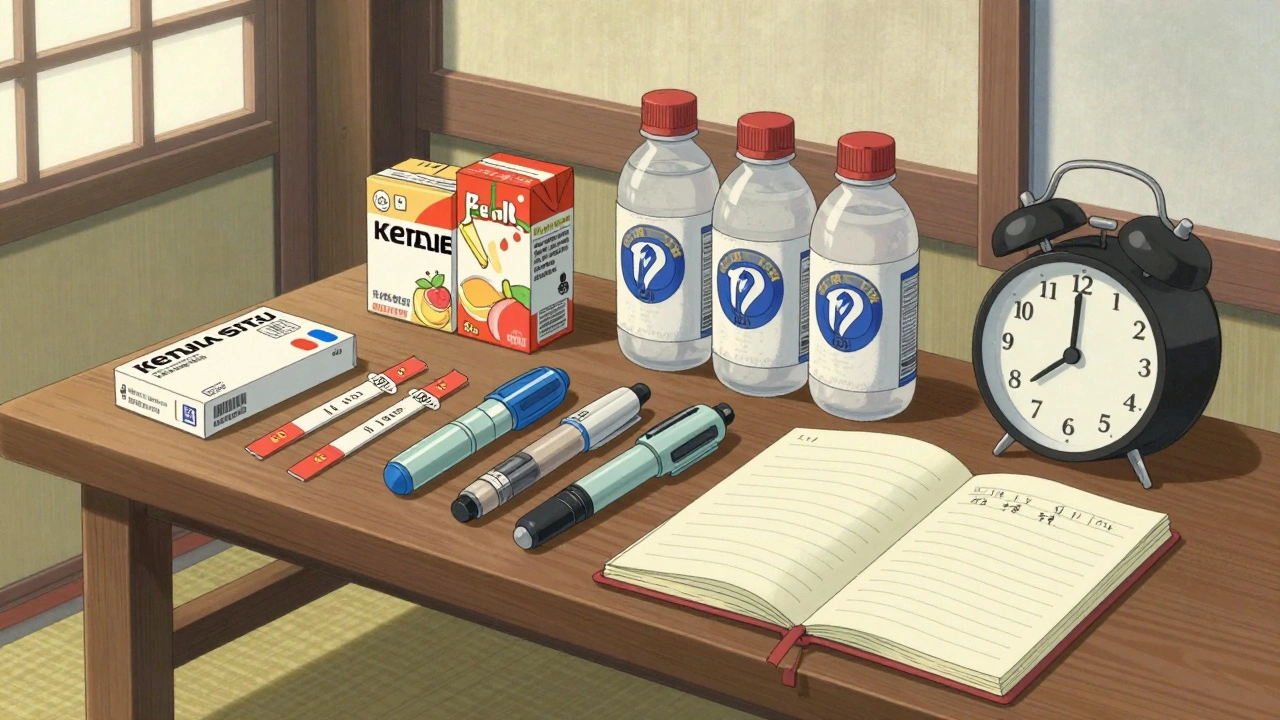
Don’t wait until you’re sick to prepare. Build a sick-day kit now. Keep it in your medicine cabinet or fridge. Include:- Unexpired blood ketone strips (check expiration dates every 3 months)
- Glucose tablets or juice boxes (for low blood sugar)
- Sugar-free electrolyte drinks (like Pedialyte or Nuun)
- Regular soda or juice (for low blood sugar)
- A 7-day supply of insulin and other diabetes meds
- An 8-ounce measuring cup (for accurate fluid intake)
- Your doctor’s phone number and emergency contact
- A notebook to write down blood sugar, ketone, and fluid intake
Test your kit every 3 months. Replace expired strips. Check insulin expiration dates. If you use a pump, make sure you have extra infusion sets and batteries.
When to Call for Help
You don’t have to tough this out alone. Call your doctor or go to urgent care if:- Your blood sugar stays above 240 mg/dL for more than 6 hours
- Your ketones are above 1.5 mmol/L
- You’ve been vomiting for more than 2 hours and can’t keep fluids down
- You’re confused, breathing fast, or smell fruity (signs of DKA)
- You’ve lost more than 5 pounds in a few days
These aren’t “maybe” signs. They’re emergencies. One man in Nottingham shared on a diabetes forum: “I thought vomiting meant I should skip insulin. I ended up in the ER with ketones at 8.2 mmol/L. I was lucky I didn’t lose consciousness.” Don’t be that person. Call early.
What No One Tells You
Most sick-day guides focus on numbers. But the real challenge is sticking to the plan when you’re too tired to care. You’re nauseous. Your head hurts. You just want to sleep. That’s when people skip checks. That’s when ketones rise unnoticed.Set alarms. Every 3 hours. For blood sugar. For fluids. For ketones. Use your phone. Even if you feel fine, check. Write it down. If you can’t, ask someone to help. Parents of kids with diabetes: your job isn’t just to give insulin. It’s to be the reminder, the enforcer, the calm voice when your child is too sick to listen.
And if you use a closed-loop system? The rules are still the same. These systems don’t automatically adjust for illness. They may even shut off insulin if your sugar drops too low-which is dangerous if you’re producing ketones. You still need to override and manually increase basal rates. Talk to your diabetes team about your pump’s settings for illness. Don’t assume it knows what to do.
Can I skip my insulin if I’m not eating because I’m sick?
No. Even if you’re not eating, your body still needs insulin. Illness triggers stress hormones that raise blood sugar. Skipping insulin, even for one dose, can lead to diabetic ketoacidosis (DKA), a life-threatening condition. Always keep your long-acting insulin on schedule. Adjust correction doses based on blood sugar, but never stop basal insulin.
How often should I check ketones when I’m sick?
Check ketones whenever your blood sugar is above 240 mg/dL. If it stays high for more than two checks, test every 2 to 4 hours. Use a blood ketone meter, not urine strips-they’re slower and less accurate. Blood ketones above 1.5 mmol/L mean you need to act immediately. Contact your doctor or go to urgent care.
What fluids should I drink when my blood sugar is high?
If your blood sugar is above 180 mg/dL, drink sugar-free fluids like water, unsweetened tea, or sugar-free electrolyte drinks. If your sugar is between 100-180 mg/dL, alternate between sugar-free fluids and drinks with 15 grams of carbs-like half water and half regular soda or juice. Avoid sugary drinks when your sugar is high, and avoid sugar-free drinks when your sugar is low.
Do I need to check ketones if I have Type 2 diabetes?
Yes-if you take insulin, you must check ketones when your blood sugar is above 240 mg/dL. If you’re on oral medications only, you don’t need to check unless your blood sugar stays above 240 mg/dL for more than a day. Even then, if you feel unwell, dizzy, or nauseous, test for ketones. DKA can happen in Type 2 diabetes too, especially during severe illness.
What should I do if I can’t keep fluids down?
If you’ve been vomiting for more than 4 hours and can’t keep any fluids down, call your doctor or go to the emergency room. Dehydration and high ketones can spiral quickly. You may need IV fluids and insulin in a hospital setting. Don’t wait to see if you’ll “get better on your own.” This is a medical emergency.
Can over-the-counter cold medicine affect my blood sugar?
Yes. Many cold and flu medicines contain sugar, alcohol, or decongestants that raise blood sugar. Always check the label. Choose sugar-free versions when possible. If you’re unsure, ask your pharmacist. A single teaspoon of sugary cough syrup can add 10 grams of carbs. That’s enough to spike your blood sugar if you’re already struggling to control it.
How do I know if I’m losing too much weight when sick?
Losing more than 5 pounds in a few days during illness is a red flag. It means your body is breaking down fat and muscle because it’s not getting enough insulin. This is a sign of severe high blood sugar and possible DKA. Weigh yourself daily during illness. If you lose 5 pounds or more, contact your healthcare provider immediately.
If you’re managing diabetes during illness, you’re not alone. Thousands do this every day. But it takes preparation, discipline, and knowing when to ask for help. Build your kit. Know your numbers. Stick to the rules-even when you feel too sick to care. Your body is fighting two battles at once. You can’t win one by losing the other.
13 Comments
Just wanted to say this guide is life-saving-seriously, I wish I’d had this when I was hospitalized last year. I thought skipping insulin meant ‘resting my pancreas’… turns out, my pancreas was already done for. I was just killing myself with ignorance. Now I keep ketone strips next to my coffee maker. Always.
People still don’t get it. You don’t need a whole damn essay to know: if you’re sick and diabetic, you don’t get to be lazy. Stop making excuses. This isn’t a suggestion-it’s survival. And if you’re too tired to check your sugar, you’re not sick-you’re irresponsible.
interesting how the body turns on itself when ill… like it’s a betrayal from within. insulin is not a drug, it’s a covenant with biology. and yet we treat it like a suggestion. we forget we are not separate from our chemistry. we are it. and when we ignore it… well. we pay the price. in ketones. in hospital bills. in lost time.
While I appreciate the effort, I must point out that the terminology here lacks precision. ‘Sugar-free’ is a marketing term, not a medical one. Many electrolyte drinks contain maltodextrin or dextrose, which are still carbohydrates. And ‘fluid intake’ should be quantified in milliliters, not ounces, for clinical accuracy. Also, why is Pedialyte listed as ‘sugar-free’? It contains 25g of glucose per liter. This guide needs peer review.
Thank you for this. I’ve been using this as a checklist since my kid got sick last winter. 🙏 I set alarms every 3 hours-blood sugar, fluids, ketones. I even have a little notebook by the bed. I’m not a nurse, but I’m learning. And I’m alive because of this. 💪
My doctor told me to skip insulin if I wasn’t eating. I did. I woke up in the ER. Don’t listen to your doctor if they don’t get diabetes. This post saved my life.
There’s a quiet, brutal truth here that nobody talks about: managing diabetes during illness isn’t about willpower-it’s about systems. The body doesn’t care how motivated you are. It responds to insulin, hydration, and glucose. So if you’re relying on memory or feelings, you’re already losing. That’s why the sick-day kit matters. It’s not about being prepared-it’s about removing choice. You don’t have to decide what to drink when you’re nauseous. You just reach for the right bottle. You don’t have to remember the ketone thresholds. You’ve got them written down. You’ve built a cage for chaos. And that’s not weakness. That’s wisdom.
OMG YES. I just got over the flu and I almost skipped my basal because I didn’t eat. But I remembered this post and checked my sugar-310. Ketones at 1.8. I called my endo and she told me to double my correction. I did. I’m okay. Thank you for writing this. I printed it and taped it to my fridge. 🤍
Let’s be real-this whole ‘sick day’ thing is just Big Pharma’s way of keeping you dependent. They want you to buy ketone strips, insulin, and Pedialyte forever. What if your body just needs rest? What if insulin isn’t the answer? I’ve been off meds for 6 months. My sugar’s fine. You’re being manipulated. Trust your body, not the guidelines.
As a diabetes educator in Mumbai, I see this daily. Families think ‘no food = no insulin’-they don’t understand stress hormones. I teach them: insulin is not for food. Insulin is for survival. We make laminated cards with ketone ranges. We use WhatsApp to send reminders. We don’t wait for emergencies. Prevention is our mantra. This guide? It’s perfect. Share it. Save lives.
i had no idea ketones could be so sneaky. i felt fine but my sugar was 320 and ketones were 2.1. i called my doc and they said go to er. i did. they gave me iv fluids and adjusted my insulin. i’m alive because i listened. i didn’t know what ketones were 6 months ago. now i check them like i check my phone. lol.
Thank you for this comprehensive guide. In India, many patients do not have access to blood ketone meters. Urine strips are often the only option. While less accurate, they are better than nothing. We encourage patients to test at least twice daily during illness, and to seek care if vomiting persists beyond 12 hours. Hydration remains the most critical factor. This document should be translated into regional languages.
The most profound insight here isn’t about insulin or ketones-it’s about the quiet dignity of routine. When you’re too sick to care, the only thing keeping you alive is the discipline you built before you got sick. The alarms. The notebook. The kit. The person who reminded you. This isn’t medicine. It’s love made visible. The body doesn’t need heroics. It needs consistency. Even when you’re broken, show up. Even when you’re tired, check. Even when you’re afraid, act. That’s not compliance. That’s courage.