

After having a baby, many women feel exhausted, overwhelmed, or emotionally drained. It’s normal. But what if your fatigue doesn’t go away? What if you’re losing weight but feel cold all the time? Or gaining weight despite eating less? These aren’t just signs of being a new mom-they could be symptoms of postpartum thyroiditis, a hidden thyroid problem that affects 5 to 10% of women after childbirth.
What Exactly Is Postpartum Thyroiditis?
Postpartum thyroiditis is an autoimmune condition where the body’s immune system attacks the thyroid gland after pregnancy. It’s not caused by infection or poor diet. It’s not even something you did wrong. It’s a natural but unpredictable shift in immune function that happens when the body tries to reset after pregnancy. During pregnancy, your immune system is naturally suppressed to protect the baby. After birth, it rebounds-and sometimes, it mistakenly targets your thyroid.
This attack causes inflammation, which leads to two phases: first, too much thyroid hormone leaks into the bloodstream (hyperthyroidism), then, the gland runs out of stored hormone and becomes underactive (hypothyroidism). Most women go through both phases, but some only experience one. The whole cycle usually lasts 12 to 18 months, and in 70 to 80% of cases, the thyroid returns to normal on its own.
The Two Phases: Hyperthyroidism Then Hypothyroidism
The first phase, hyperthyroidism, typically shows up between 1 and 4 months after delivery. You might notice:
- Heart racing or palpitations (over 100 beats per minute)
- Feeling unusually hot, even in cool rooms
- Unintentional weight loss of 4 to 7 pounds
- Tremors in your hands
- Difficulty sleeping
But here’s the catch: many women don’t even notice these symptoms. They’re blamed on lack of sleep, stress, or being “just tired from being a new mom.” In fact, up to half of women with this phase have no obvious signs at all.
Then, around 4 to 8 months postpartum, the second phase kicks in: hypothyroidism. This is when the thyroid is damaged and can’t make enough hormone. Symptoms are more obvious and often mistaken for postpartum depression:
- Overwhelming fatigue-worse than any sleep deprivation
- Feeling cold when others are comfortable
- Constipation and bloating
- Dry skin and hair loss
- Weight gain of 5 to 10 pounds without changes in diet
- Brain fog: trouble focusing, remembering names, or following conversations
One study found 72% of women in this phase had measurable declines in executive function. That’s not just being tired. That’s your brain struggling to work normally.
How Is It Different From Postpartum Depression?
Doctors often mistake postpartum thyroiditis for depression. And it’s easy to see why. Both cause fatigue, mood swings, trouble sleeping, and feelings of sadness. But there are key differences.
Postpartum depression is mostly emotional: guilt, detachment from the baby, loss of interest in things you used to enjoy. Postpartum thyroiditis brings physical symptoms too-heart palpitations, heat or cold intolerance, hair falling out, changes in bowel habits. If you’re having both mood changes and these physical signs, thyroid testing is non-negotiable.
According to Cleveland Clinic data, 30% of women with postpartum thyroiditis are initially misdiagnosed with depression. And 40% of those women are prescribed antidepressants-medications that won’t fix a thyroid problem. That’s why getting a simple blood test matters.
How Do You Know For Sure?
The only way to confirm postpartum thyroiditis is through blood tests. You need three key markers:
- TSH (Thyroid Stimulating Hormone): Low in the hyperthyroid phase, high in the hypothyroid phase.
- Free T4: High during hyperthyroidism, low during hypothyroidism.
- TPO antibodies: Present in 80 to 90% of cases. This confirms it’s autoimmune.
Testing should happen between 6 and 12 weeks after delivery if you’re experiencing symptoms. But even if you feel fine, if you have a history of type 1 diabetes, Hashimoto’s, or previous postpartum thyroiditis, you should get tested. Women with type 1 diabetes have a 25 to 30% risk of developing this condition.
And here’s something important: you don’t need to wait until you’re miserable to get tested. If you had high TPO antibodies during pregnancy, your risk jumps to 70%. Early detection can prevent severe symptoms.

Who’s at Risk?
Not every woman gets postpartum thyroiditis. But certain factors make it much more likely:
- History of autoimmune disease (like type 1 diabetes, rheumatoid arthritis, or lupus)
- Previous episode of postpartum thyroiditis (40% chance of recurrence)
- High levels of TPO antibodies before or during pregnancy
- Family history of thyroid disease
- Having a baby after age 30
If you fall into any of these categories, talk to your doctor about testing at your 6-week postpartum checkup. Don’t wait for symptoms to get worse.
What’s the Treatment?
There’s no cure, but there is management-and it’s often simple.
During the hyperthyroid phase: Most women don’t need medication. The phase is usually mild and short-lived. If your heart is racing badly or you’re having tremors, your doctor might prescribe a beta-blocker like propranolol for a few weeks to calm your heart rate. No antithyroid drugs (like methimazole) are used-this isn’t Graves’ disease.
During the hypothyroid phase: If symptoms are mild, your doctor might just monitor you. But if you’re struggling with fatigue, brain fog, or weight gain, levothyroxine (a synthetic thyroid hormone) is prescribed. Most women take it for 6 to 12 months. Then, the medication is slowly stopped to see if the thyroid recovers.
And here’s the good news: 70 to 80% of women stop medication and return to normal thyroid function. But 20 to 30% develop permanent hypothyroidism and will need lifelong treatment.
What About Breastfeeding?
Yes, you can safely breastfeed while being treated. Levothyroxine passes into breast milk in tiny amounts-far below what a baby would normally produce on its own. Beta-blockers like propranolol are also considered safe in low doses. In fact, untreated hypothyroidism is riskier for breastfeeding than the medication. Low thyroid levels can reduce milk supply, and studies show 38% of women report decreased production during the hypothyroid phase.
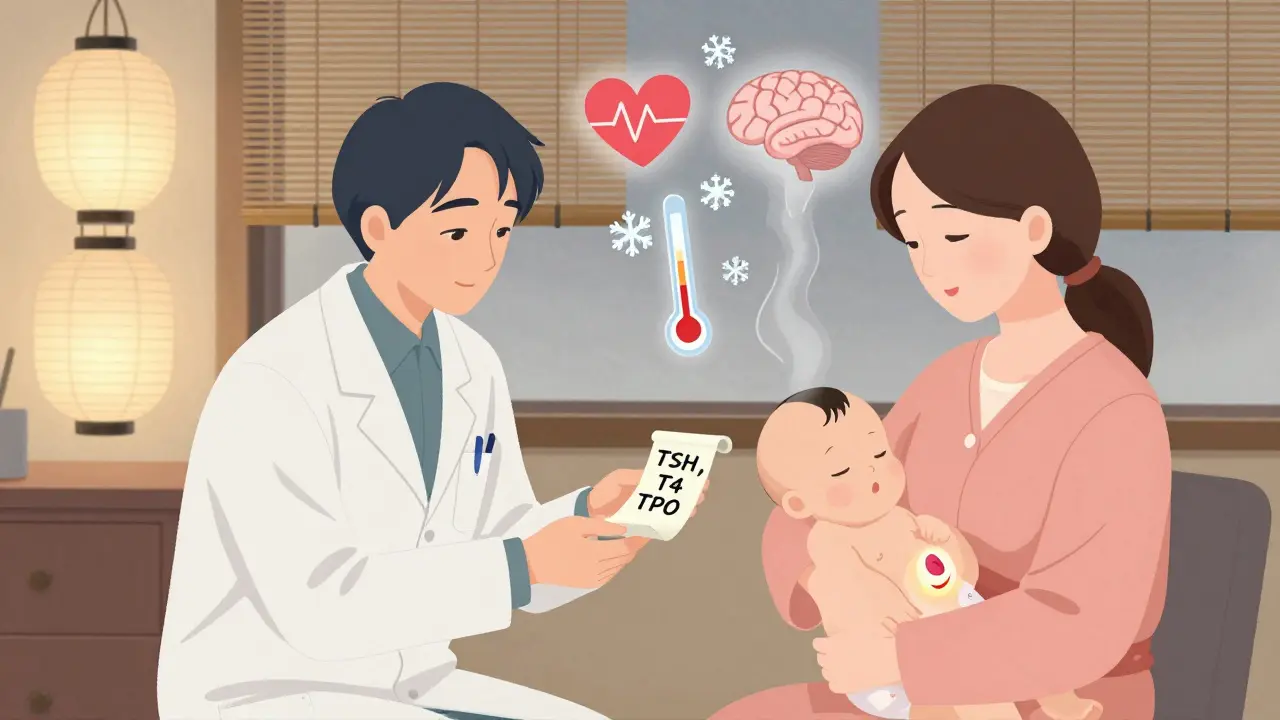
Why This Matters Beyond Your Own Health
Postpartum thyroiditis isn’t just about you. It’s about your ability to care for your baby. If you’re exhausted, foggy, and emotionally drained because of a hormone imbalance, you’re not “just tired.” You’re sick. And treating it isn’t selfish-it’s necessary.
Delayed diagnosis leads to longer recovery, more stress, and sometimes unnecessary psychiatric treatment. One woman on Reddit shared: “I went to three doctors before someone finally tested my thyroid. I thought I was failing as a mom. Turns out, I just needed a pill.”
Healthcare providers are getting better at recognizing this condition. Academic hospitals now have dedicated postpartum thyroid clinics that cut diagnosis time from over 5 months to under 2. But in many places, awareness is still low. Only 42% of obstetricians routinely check thyroid function in women with persistent symptoms beyond 12 weeks.
What’s Next for This Condition?
Research is moving fast. Scientists are now looking at biomarkers like interleukin-10 to predict who will develop postpartum thyroiditis before symptoms start. The Cleveland Clinic launched a digital symptom tracker in early 2024 that flags potential thyroid issues based on daily input-reducing diagnostic delays by 40% in early trials.
Experts predict that within five years, universal TSH screening at 6 and 12 weeks postpartum will become standard in the U.S. Why? Because it saves money. One study found every correctly diagnosed case saves $2,300 by avoiding misdiagnosis, unnecessary medications, and prolonged disability.
But right now, the biggest barrier isn’t science-it’s awareness. If you’ve had a baby in the last year and feel off, don’t wait. Ask for a TSH and TPO antibody test. It takes five minutes. It could change everything.
When to See a Doctor
Don’t wait for symptoms to get worse. See your doctor if you have any of these after giving birth:
- Extreme fatigue that doesn’t improve with rest
- Unexplained weight loss or gain
- Heart palpitations or rapid heartbeat
- Feeling unusually hot or cold
- Significant hair loss or dry skin
- Brain fog that affects daily tasks
- Symptoms that started between 1 and 8 months postpartum
Bring a list of your symptoms and when they started. Mention if you have a history of autoimmune disease. Ask specifically for TSH, free T4, and TPO antibody tests. If your doctor says “it’s just stress,” ask for a second opinion.
Is postpartum thyroiditis the same as Hashimoto’s?
No, but they’re closely related. Postpartum thyroiditis is a temporary autoimmune attack on the thyroid that happens after pregnancy. Hashimoto’s is a lifelong condition. The same antibodies and tissue damage are involved-so if you have postpartum thyroiditis, you’re at higher risk of developing Hashimoto’s later. About 20-30% of women with postpartum thyroiditis end up with permanent hypothyroidism, which is essentially Hashimoto’s.
Can postpartum thyroiditis affect my baby?
Not directly. The condition doesn’t pass to your baby through breast milk or pregnancy. But if your thyroid levels are very low and untreated, it can impact your energy, mood, and ability to care for your child. That’s why treating it matters-not just for your health, but for your family’s well-being.
Will I get this again with my next baby?
Yes, if you had it once, you have a 40% chance of getting it again after another pregnancy. That’s why it’s critical to get tested early in your next pregnancy-ideally at your first OB visit. Your doctor can monitor your thyroid and start treatment before symptoms begin.
Do I need to avoid iodine or goitrogenic foods?
No. Unlike some thyroid conditions, postpartum thyroiditis isn’t triggered by diet. You don’t need to avoid soy, cruciferous vegetables, or iodine. In fact, most women get enough iodine from prenatal vitamins and dairy. Focus on balanced nutrition, not restriction.
How long does it take to feel better after starting treatment?
If you’re on levothyroxine for the hypothyroid phase, most women start feeling better within 2 to 4 weeks. Fatigue improves first, then brain fog, then weight and skin changes. But it can take up to 6 weeks for your body to fully adjust to the dose. Don’t rush to change your medication-work with your doctor to find the right level.
Final Thoughts
Postpartum thyroiditis is not rare. It’s not your fault. And it’s not just “baby blues.” It’s a real, measurable, treatable medical condition that affects thousands of women every year. If you’re struggling after childbirth and no one seems to take it seriously, trust your body. Ask for the right tests. Push for answers. Your recovery isn’t just about hormones-it’s about reclaiming your health so you can be the mom you want to be.
13 Comments
Wow, this is so important. I had no idea thyroid issues could mimic postpartum depression so perfectly. I thought I was just failing as a mom-turns out I needed a blood test, not a therapist. Thank you for writing this.
Also, please tell your OB to test TPO antibodies. Don’t wait. Seriously.
🙏
How is it that we live in a society where a woman’s exhaustion is pathologized as ‘baby blues’ while a measurable autoimmune dysfunction-confirmed by lab values-is dismissed as ‘stress’? This isn’t just medical negligence; it’s patriarchal gaslighting dressed in white coats.
Levothyroxine isn’t a ‘pill for the weak.’ It’s a restoration of biological autonomy. And yet, women are still told to ‘sleep more’ while their TSH climbs like a stock chart in a bear market.
Someone needs to sue the entire OB-GYN industry for this.
Wait so TPO antibodies = autoimmune? duh. why is this even news? also, 70% recover? that’s not ‘good news’ that’s baseline. and why are they testing TSH at 6 wks? should’ve been done at 2 wks. lazy med.
also, beta blockers? why not just drink matcha? jk. but seriously, why not naturopaths first? 🤷♀️
The assertion that postpartum thyroiditis is ‘not your fault’ is both scientifically accurate and socially necessary. However, the conflation of temporary autoimmune flares with chronic Hashimoto’s-without sufficient caveats regarding antibody titers and longitudinal follow-up-is clinically imprecise.
Furthermore, the suggestion that universal screening is cost-effective lacks robust health economic modeling. A 2023 JAMA study found marginal ROI in low-risk populations. This piece, while well-intentioned, risks promoting overdiagnosis.
And for the record: ‘push for answers’ is not a medical protocol. It’s a slogan.
This isn’t just about thyroid function-it’s about how society views women’s bodies after childbirth. We’re expected to bounce back like nothing happened, while our biology is screaming in autoimmune chaos.
When a woman’s fatigue is dismissed as ‘just tired,’ it’s not ignorance-it’s erasure. And when doctors reach for antidepressants before thyroid panels, it’s not a mistake-it’s a pattern.
We’ve been conditioned to believe that motherhood means silent suffering. This condition? It’s the body saying: ‘I am not your sacrifice.’
Test. Treat. Believe. Repeat.
As someone from India, I’ve seen this happen to multiple friends-no one talks about it. In our culture, postpartum fatigue is ‘normal.’ Even doctors say, ‘You’re a mother now, this is part of the package.’
But when my friend lost 12 pounds in 3 weeks and couldn’t lift her baby, we pushed for tests. TPO antibodies were sky-high. She was on levothyroxine in 10 days.
Education needs to start in prenatal classes. Not after the breakdown.
Great breakdown. One thing I’d add: if you’re breastfeeding and feel like you’re running on fumes, don’t assume it’s ‘just sleep deprivation.’
I had a patient who thought she was failing at mom life-turns out her TSH was 18. She started levothyroxine, and within 3 weeks, she was playing with her baby again-not just staring at the ceiling.
It’s not weakness. It’s physiology. And it’s fixable.
Okay but why is no one talking about the fact that Big Pharma is fine with women being misdiagnosed? Antidepressants = recurring revenue. Thyroid tests = one-time cost.
And don’t even get me started on how insurance won’t cover TPO panels unless you’re ‘symptomatic enough’-which means you have to be a sobbing mess before they’ll test you.
Also, why do we even need to ‘ask’ for this? Shouldn’t it be standard? 🤔
The real question isn’t whether postpartum thyroiditis is real-it’s why we’ve normalized the collapse of women’s health after birth. We don’t treat the body like a system; we treat it like a machine that should reboot on command.
But biology doesn’t care about your Instagram aesthetic or your ‘momfluencer’ routine.
The immune system doesn’t reset-it recalibrates, often catastrophically. And we’re still acting like this is a ‘mom thing’ instead of a systemic failure of postpartum care.
What if we treated postpartum recovery like we treat post-surgery recovery? With monitoring. With support. With science?
Just saying.
Oh so now it’s ‘not your fault’? Funny how the same people who told you to ‘just rest’ and ‘eat more greens’ are now acting like they didn’t gaslight you for 6 months.
Also, congrats on the 70% recovery rate-because the other 30%? They’re the ones still on levothyroxine while their doctors tell them they’re ‘just depressed.’
Don’t be grateful for basic care. Demand it.
I cried reading this. Not because I’m emotional-but because I finally understood why I couldn’t hold my baby without shaking. Why my hair was falling out in clumps. Why I forgot my own phone number.
It wasn’t me failing. It was my thyroid.
Thank you for naming it. Now I’m telling every new mom I know: get tested. Even if you feel ‘fine.’
This is powerful. In Nigeria, we don’t have access to thyroid testing for most women. Many suffer silently. I hope this reaches more doctors.
Maybe we need community health workers to carry simple TSH kits to rural clinics.
Not everyone can go to Cleveland Clinic.
But everyone deserves to know why they’re tired.
So let me get this straight… the government doesn’t test your thyroid after birth because they want you to stay on antidepressants? And Big Pharma owns the AMA? And the CDC is in on it? 😳
Also, I saw a video on TikTok that said iodine causes thyroiditis-so should I stop eating seaweed? Or is that a deep state trick? 🤔💊