

Living with Post-Traumatic Stress Disorder (PTSD) feels like your nervous system is stuck in overdrive. You might be haunted by flashbacks, avoiding places that trigger memories, or feeling constantly on edge. It’s not just "being stressed." It’s a biological and psychological response to trauma that changes how your brain processes safety and danger. The good news? You don’t have to live with it forever. Effective treatments exist, but they fall into two main camps: trauma-focused psychotherapy that helps you process the memory and medication that manages the chemical symptoms.
Many people ask which path is better. The short answer is that guidelines from organizations like the National Institute for Health and Care Excellence (NICE) and the American Psychological Association (APA) prioritize therapy first. However, medication plays a crucial role, especially when symptoms are so severe that therapy feels impossible. Understanding how these two approaches work-and how they can work together-is key to finding relief.
How Trauma Processing Therapy Works
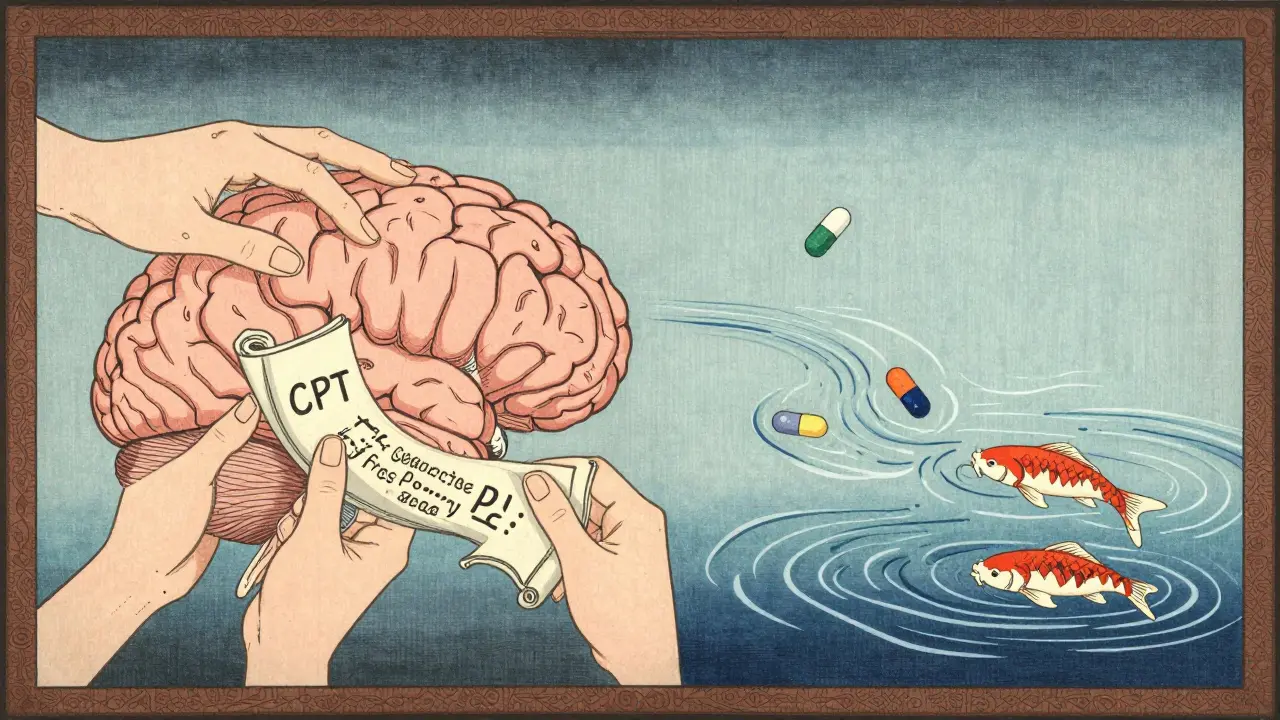
Medication can lower the volume of your anxiety, but it doesn’t erase the traumatic memory. That’s where trauma processing comes in. This type of therapy isn’t about talking endlessly about what happened; it’s about changing how your brain stores and reacts to that memory. Two gold-standard therapies dominate this space: Cognitive Processing Therapy (CPT) and Prolonged Exposure (PE).
Cognitive Processing Therapy (CPT) focuses on the thoughts and beliefs that developed after the trauma. Often, survivors blame themselves or believe the world is entirely unsafe. CPT helps you challenge these "stuck points." For example, if you think, "It was my fault because I didn’t fight back," CPT provides tools to examine the evidence for and against that thought, helping you build a more balanced perspective. Studies show CPT leads to remission rates of 60-70%, significantly higher than medication alone.
Prolonged Exposure (PE), on the other hand, tackles avoidance. Avoidance keeps PTSD alive because it prevents your brain from learning that the memory itself isn’t dangerous. In PE, you gradually face safe situations you’ve been avoiding and repeatedly recount the traumatic memory in a controlled setting. This process, called habituation, teaches your nervous system that the memory won’t hurt you anymore. While this sounds daunting, research from the VA/DoD Clinical Practice Guidelines confirms that PE is one of the most effective interventions available.
The timeline matters here. Psychotherapy typically takes 8-12 weeks to show full effects. It requires active participation and emotional energy. But the benefit is lasting: once you finish therapy, the skills remain with you. You aren’t dependent on a pill to feel calm.
Understanding PTSD Medications
If therapy feels out of reach right now, or if your symptoms are too intense to engage in counseling, medication can provide a bridge. As of 2023, the U.S. Food and Drug Administration (FDA) has approved only two medications specifically for PTSD: Sertraline (Zoloft) and Paroxetine (Paxil). Both are Selective Serotonin Reuptake Inhibitors (SSRIs).
| Medication | Type | FDA Approved for PTSD? | Typical Dose Range | Key Benefit |
|---|---|---|---|---|
| Sertraline (Zoloft) | SSRI | Yes | 50-200 mg daily | High efficacy, widely studied |
| Paroxetine (Paxil) | SSRI | Yes | 20-50 mg daily | Effective for hyperarousal |
| Venlafaxine (Effexor XR) | SNRI | No (Off-label) | 75-300 mg daily | Comparable to SSRIs, helps with mood |
| Prazosin | Alpha-1 Blocker | No (Off-label) | 1-15 mg nightly | Specifically targets nightmares |
SSRIs like Sertraline work by increasing serotonin levels in the brain, which helps regulate mood, sleep, and anxiety. A 2022 Cochrane review found that SSRIs improve symptoms in about two-thirds of patients compared to placebo. Sertraline, in particular, shows a 53% response rate in reducing core PTSD symptoms. Doctors usually start with a low dose (25-50 mg) and increase it weekly to minimize side effects like nausea or jitteriness.
Venlafaxine (Effexor XR) is an SNRI (Serotonin-Norepinephrine Reuptake Inhibitor). Although it lacks FDA approval for PTSD, many psychiatrists prescribe it off-label because it works similarly to SSRIs but also affects norepinephrine, which can help with energy and focus. Response rates hover around 50-60%.
For those suffering from severe trauma-related nightmares, Prazosin is often the go-to choice. It’s an alpha-1 blocker originally designed for blood pressure, but it blocks adrenaline surges during sleep. Veterans Affairs studies show it can reduce nightmare frequency by 50% in combat veterans. It’s not a cure for PTSD, but it can restore sleep, which is essential for healing.
Side Effects and Real-World Experiences
Medication isn’t a magic bullet, and it comes with trade-offs. According to user surveys from communities like Reddit’s r/ptsd, while 68% of users report moderate improvement with SSRIs, nearly half discontinue use due to side effects. Sexual dysfunction is the most common complaint, affecting libido and ability to climax in over 30% of users. Other initial side effects include nausea, insomnia, and emotional blunting-a feeling of being "numb" rather than sad or anxious.
Emotional blunting is a critical point. Some experts, like Dr. Jonathan Shay, argue that if medication makes you feel too numb, it might interfere with the emotional processing required in therapy. If you’re taking meds solely to cope without doing the therapeutic work, you might find yourself stuck long-term. Conversely, if your anxiety is so high you can’t sit still in a therapist’s office, medication can be the necessary tool to make therapy possible.
Another concern is relapse. The National Institute of Mental Health (NIMH) reports that 55% of people experience symptom return within 12 months of stopping medication. This suggests that for many, medication needs to be continued for at least a year after symptoms improve, or indefinitely if symptoms return upon cessation.
Combining Therapy and Medication
Does combining both approaches work better? The data is mixed but promising. A 2021 study in JAMA Psychiatry found that patients receiving both Sertraline and Prolonged Exposure had a 72% response rate, compared to 58% for either treatment alone. This suggests that for complex cases, a dual approach can cover more bases: medication stabilizes the biology, while therapy rewires the psychology.
However, cost and access are real barriers. Generic SSRIs cost $4-$10 monthly in the U.S., whereas psychotherapy sessions can range from $100-$200. Insurance coverage varies wildly. In the UK, NICE guidelines restrict medication to cases where therapy is declined or ineffective, pushing patients toward free NHS therapy services first. In the U.S., private practices often initiate medication faster due to shorter wait times for therapists.
Here is a practical decision tree:
- Start with Therapy if: You can tolerate discussing the trauma, you want long-term skills, and you prefer to avoid medication side effects.
- Start with Medication if: Your anxiety is debilitating, you cannot sleep, you have no access to trauma-trained therapists, or you refuse therapy.
- Combine Both if: Single treatments fail, you have severe comorbid depression, or your symptoms fluctuate wildly.

Future Directions and New Hope
The landscape of PTSD treatment is evolving. Researchers are moving toward precision medicine, using genetic testing to predict who will respond to SSRIs. The Psychiatric Genomics Consortium has identified dozens of genetic variants linked to SSRI response, which could soon help doctors prescribe the right drug faster.
Perhaps the most exciting development is MDMA-assisted psychotherapy. After receiving FDA Breakthrough Therapy designation, phase III trials showed 67% remission rates at 18-week follow-up. MDMA allows patients to process traumatic memories with reduced fear and increased empathy, potentially accelerating the work done in traditional therapy. While not yet widely available, its inclusion in updated VA/DoD guidelines signals a shift toward more potent, integrated treatments.
Digital therapeutics are also rising. Apps like PTSD Coach, backed by VA studies, show that combining digital tools with traditional care increases engagement by 27%. These aren’t replacements for human connection, but they offer support between sessions.
Next Steps for Recovery
If you’re struggling with PTSD, take these steps today:
- Consult a Professional: See a psychiatrist or primary care doctor to discuss your symptoms. Be honest about suicidal thoughts or self-harm urges.
- Ask About Therapy First: Request a referral for CPT or PE. Ask if the therapist is trained in trauma-focused modalities.
- Discuss Medication Options: If therapy isn’t an immediate option, ask about Sertraline or Venlafaxine. Discuss potential side effects openly.
- Track Your Symptoms: Use a journal or app to monitor sleep, anxiety levels, and triggers. This data helps your provider adjust treatment.
- Be Patient: Healing isn’t linear. It may take 8-12 weeks to see significant changes. Don’t give up if the first treatment doesn’t work perfectly.
Recovery is possible. Whether through the deep work of trauma processing, the stabilization of medication, or a combination of both, you can reclaim your life from the grip of PTSD.
What is the best medication for PTSD?
The FDA-approved first-line medications for PTSD are Sertraline (Zoloft) and Paroxetine (Paxil), both SSRIs. They are considered the best starting points due to extensive clinical trial data showing efficacy in reducing core symptoms like intrusion and hyperarousal. Venlafaxine (Effexor XR) is also commonly prescribed off-label with similar effectiveness.
Can therapy cure PTSD completely?
While "cure" is a strong word, trauma-focused therapies like Cognitive Processing Therapy (CPT) and Prolonged Exposure (PE) lead to remission in 60-70% of patients. Remission means symptoms no longer meet the diagnostic criteria for PTSD and do not significantly impair daily life. Many people achieve lasting recovery without needing ongoing medication.
How long does it take for PTSD medication to work?
Most SSRIs and SNRIs take 4-6 weeks to show noticeable symptom reduction. However, doctors often start with a low dose and titrate up over several weeks to minimize side effects. Full therapeutic benefit may take 8-12 weeks. It is important to stick with the medication during this initial period unless side effects are severe.
Is Prazosin effective for PTSD nightmares?
Yes, Prazosin is highly effective for trauma-related nightmares, particularly in military veterans. It is an alpha-1 blocker that reduces adrenaline surges during sleep. Studies show it can decrease nightmare frequency by 50% or more within four weeks of treatment, improving overall sleep quality.
Should I take medication before starting therapy?
Guidelines generally recommend starting with trauma-focused therapy. However, if your anxiety, panic, or insomnia is so severe that you cannot engage in therapy, medication can be used as a bridge to stabilize symptoms. Many clinicians prefer a combined approach for severe cases to maximize response rates.