
Athlete Medication Impact Checker
Enter a medication name or condition to discover its potential impact on your athletic performance, including side effects, risk levels, and anti-doping status.
💡 Safety Tips for Athletes
- Always consult a sports medicine specialist before starting new medications
- Check the Global DRO database for WADA compliance if you compete
- Test new medications during training, not competition day
- Keep detailed records of prescriptions and dosages
- Apply for TUEs well in advance if required
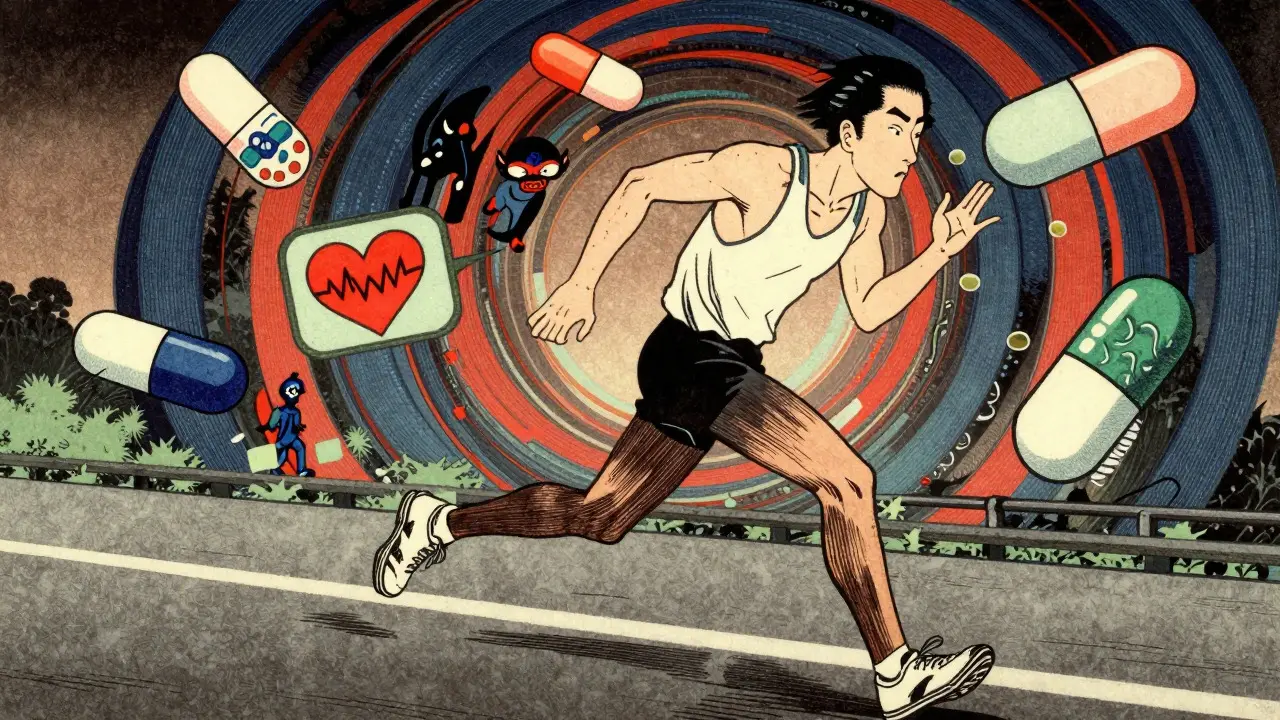
Picture this: You are mid-marathon. Your legs feel heavy, your lungs burn, but you push through because you know you have the strength to finish strong. Now imagine that same moment, but your heart is beating out of rhythm, or your vision blurs slightly due to a blood pressure medication you took for a routine headache earlier that week. For athletes, the line between necessary medical treatment and performance-altering side effects is thinner than most people realize.
We often think about drugs in sports as illegal performance-enhancing substances like steroids. But what about the prescriptions sitting on your bathroom counter? Common medications for allergies, asthma, depression, and pain can significantly impact how your body performs under stress. Some boost energy unexpectedly; others drain it completely. Understanding these interactions isn't just about avoiding a doping violation-it's about protecting your health and optimizing your results safely.
The Hidden Impact of Common Medications
Most athletes take at least one medication regularly. Whether it’s an antihistamine for hay fever or an antidepressant for anxiety, these drugs interact with your physiology in ways that directly affect athletic output. The problem? Many side effects mimic natural fatigue or poor training adaptation, leading athletes to misdiagnose their own bodies.
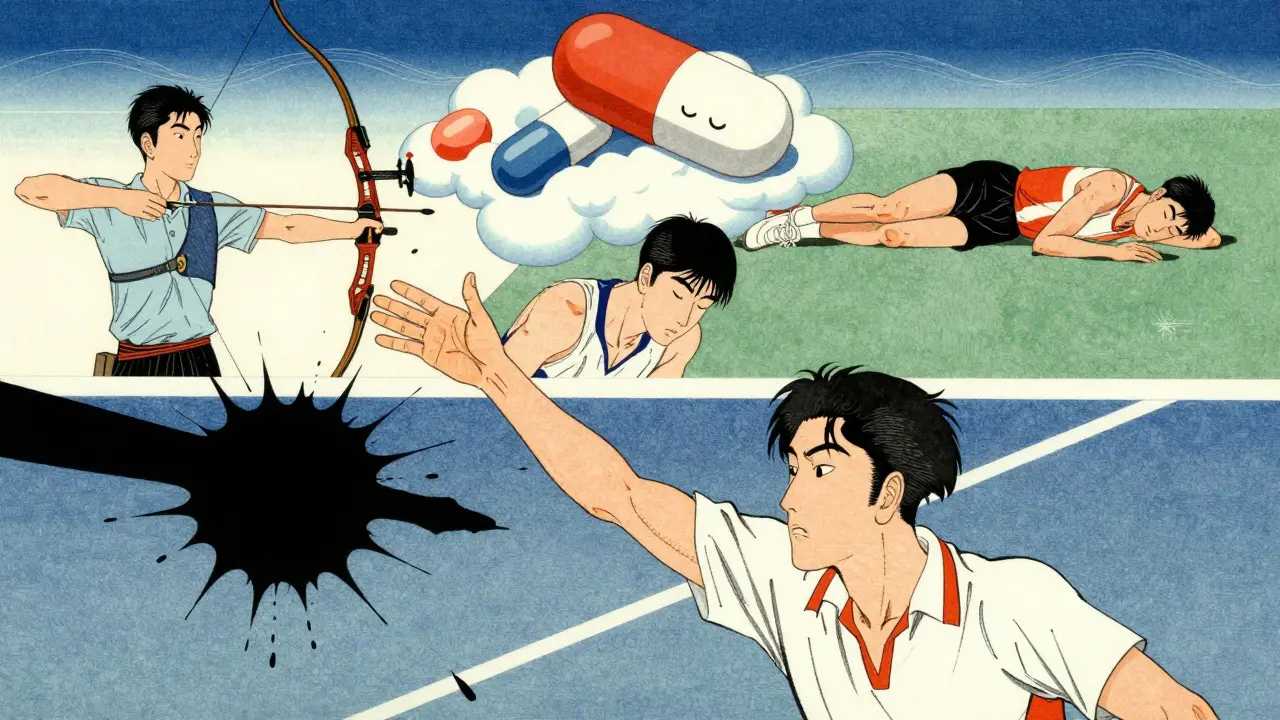
Take Antihistamines, commonly used for allergies. First-generation types like diphenhydramine cause significant drowsiness and slow reaction times. For a sprinter or a tennis player relying on split-second reflexes, this is catastrophic. Even second-generation options, while less sedating, can still reduce alertness in sensitive individuals. Then there are Beta-blockers. While banned in precision sports like archery and shooting because they steady the hand and lower heart rate, they are prescribed to millions for high blood pressure. An athlete taking them for a legitimate cardiac condition might find their endurance plummeting because their heart cannot ramp up its rate during intense exertion.
Psychiatric medications present another complex layer. SSRIs (selective serotonin reuptake inhibitors) are standard treatments for depression and anxiety. However, they can lead to emotional blunting, reduced motivation, and sometimes weight gain. For an athlete whose mental drive is tied to physical achievement, this loss of "edge" can feel like a total performance collapse. Conversely, stimulants used for ADHD, such as methylphenidate, are strictly regulated by the World Anti-Doping Agency (WADA) because they increase focus and energy levels beyond normal limits.
Cardiovascular Risks and Heart Health
Your heart is the engine of your athletic performance. Medications that affect cardiovascular function do so in profound ways. According to data from the Mayo Clinic and NHS studies, even short-term use of certain substances can alter cardiac mass and efficiency.
Consider non-steroidal anti-inflammatory drugs (NSAIDs) like ibuprofen or naproxen. Athletes love them for post-workout soreness. But frequent use can raise blood pressure and strain the kidneys, which regulate fluid balance and electrolytes-critical factors for preventing cramps and maintaining stamina. Long-term reliance on NSAIDs has been linked to a 15-25% reduction in renal function in some case studies, which indirectly impacts endurance capacity by reducing oxygen delivery to muscles.
More severe risks come from unmonitored hormone therapies. While we often associate testosterone suppression with illicit steroid use, legitimate hormone replacement therapy (HRT) requires careful monitoring. If an athlete takes exogenous testosterone without proper oversight, they risk suppressing their natural production. This leads to testicular shrinkage and low sperm counts, as documented in NHS clinical reports. More immediately relevant to performance, hormonal imbalances can cause fluid retention, altering body weight and agility in weight-class sports or distance running.
| Medication Class | Primary Use | Performance Side Effect | Risk Level |
|---|---|---|---|
| First-Gen Antihistamines | Allergies | Sedation, slowed reaction time | High |
| Beta-Blockers | Hypertension, Anxiety | Reduced max heart rate, lower endurance | High (Precision Sports) |
| NSAIDs | Pain/Inflammation | Kidney strain, increased BP | Moderate |
| SSRIs | Depression/Anxiety | Emotional blunting, weight changes | Moderate |
| Decongestants | Congestion | Increased heart rate, jitteriness | Low-Moderate |
Navigating the WADA Prohibited List
If you compete at a sanctioned level, ignorance of the rules is no defense. The WADA Prohibited List is updated annually, usually effective January 1st. It categorizes over 250 substances across five major classes. Crucially, it doesn't just ban "drugs"; it bans specific molecules and mechanisms of action.
Many over-the-counter cold medicines contain pseudoephedrine, a stimulant that is permitted below a certain urinary concentration but prohibited above it. Similarly, corticosteroids are allowed when taken orally or via injection only if approved via a Therapeutic Use Exemption (TUE). Without a TUE, using a common asthma inhaler containing salbutamol could result in a positive test if dosage limits are exceeded.
The concept of Therapeutic Use Exemptions (TUEs) is vital. A TUE allows an athlete to use a prohibited substance if they have a genuine medical need. To get one, you typically need:
- Evidence that the substance is treating a diagnosed medical condition.
- Proof that the therapeutic effect is not significant enough to enhance performance beyond baseline health.
- Documentation showing no reasonable alternative exists.
For example, an athlete with asthma must prove their lung function is impaired without the inhaler. The process involves extensive documentation, including endocrine function testing or pulmonary function tests. Failing to secure a TUE before competition is the most common reason for inadvertent doping violations.
The Rise of Recreational PED Use and Misinformation
A dramatic shift has occurred in recent years. Historically, elite athletes were the primary users of performance-enhancing drugs (PEDs). Today, estimates suggest that 60-80% of anabolic steroid misuse cases involve recreational gym-goers, not competitive athletes. This trend is driven by social media fitness culture and the desire for rapid aesthetic changes.
The danger here is twofold. First, recreational users often lack medical supervision. They engage in "stacking" multiple compounds without understanding drug interactions. Second, the market is flooded with unreliable products. The FDA found that 89% of SARMs (Selective Androgen Receptor Modulators) products tested contained undeclared ingredients. These "research chemicals" are marketed as safer alternatives to steroids but carry unknown long-term risks.
Dr. Laura Barnes from the University of Colorado warns that PEDs create a false sense of security. Users push harder during the active phase, increasing injury risk by 40-60%. When they stop, muscle loss is rapid, and mood crashes are severe. Studies show 67% of recreational users experience clinically significant depression during off-cycles. This psychological toll is rarely discussed in gym forums but is well-documented in medical literature.

Practical Steps for Safe Medication Management
How do you protect yourself? Start with transparency. Only 12% of recreational athletes discuss PED or prescription use with their physicians, according to AAFP reports. This gap is dangerous. Your doctor needs to know your training load to prescribe appropriately. For instance, if you are doing high-intensity interval training, a beta-blocker might require dose adjustment to prevent excessive fatigue.
Use verified resources. The Global DRO (Drug Reference Online) database is a free tool provided by WADA where you can check any medication against the current prohibited list. Always read labels carefully. Herbal supplements are particularly risky because they are not strictly regulated. Contamination with banned substances is common.
If you require ongoing medication, establish a relationship with a sports medicine specialist. They can help navigate TUE applications and monitor for side effects like liver enzyme elevation or lipid profile changes. Regular blood work-including LH/FSH levels and complete metabolic panels-is essential for anyone on long-term hormone therapies or high-dose NSAIDs.
Long-Term Health vs. Short-Term Gains
The ultimate question for any athlete is whether the trade-off is worth it. Medical consensus emphasizes that short-term performance gains often come with unacceptable long-term health risks. Cardiovascular aging equivalent to 10-15 additional years has been observed in chronic anabolic steroid users. Irreversible tissue elasticity loss and fibrosis can occur even after stopping use.
For those dealing with legitimate medical conditions, the goal is management, not enhancement. Work with your healthcare provider to find the lowest effective dose. Monitor your body’s response. If a medication makes you feel sluggish or anxious, speak up. There are almost always alternatives. Your health is the foundation of your athletic career; don’t let a pill undermine it.
Can I take allergy medication before a race?
Yes, but choose carefully. Avoid first-generation antihistamines like diphenhydramine, which cause drowsiness. Opt for non-sedating options like loratadine or cetirizine, and test them in training first to ensure they don't affect your hydration or focus. Check the WADA list if you are a registered competitor.
What is a Therapeutic Use Exemption (TUE)?
A TUE is permission granted by anti-doping authorities allowing an athlete to use a prohibited medication for a genuine medical condition. You must provide medical evidence that the drug is necessary, has no significant performance-enhancing effect beyond restoring health, and has no acceptable alternative.
Do NSAIDs like Ibuprofen hurt performance?
Occasional use is generally safe, but chronic use can impair muscle recovery by blunting inflammation signals needed for growth. It also increases blood pressure and strains the kidneys, which can reduce endurance and increase dehydration risk during intense exercise.
Are herbal supplements safe for athletes?
Not necessarily. Supplements are less regulated than pharmaceuticals. Studies show many contain undeclared banned substances like stimulants or steroids. Always look for third-party certification seals (like Informed Sport or NSF Certified for Sport) to minimize contamination risks.
How do antidepressants affect athletic performance?
SSRIs can cause side effects like emotional blunting, weight gain, and sleep disturbances, which may impact motivation and energy levels. However, untreated depression often harms performance more than the medication. Work with your doctor to find a dosage that balances mental health and physical capability.