

Snoring isn't just a nuisance; it's often a sign that your airway is struggling to stay open while you sleep. If you or your partner are tired of the noise, you might have heard about Mandibular Advancement Devices, which are custom-fitted dental appliances designed to reposition the lower jaw forward to keep the airway open during sleep. Unlike bulky machines with tubes and masks, these small plastic devices fit right in your mouth. But do they actually work? And are they worth the cost?
This guide breaks down how Oral Appliance Therapy (OAT) works, who should consider it, and what you can realistically expect. We’ll look at the difference between cheap over-the-counter options and prescription-grade devices, explore the side effects, and help you decide if this is the right path for better sleep.
How Mandibular Advancement Devices Work
The science behind these devices is straightforward but effective. When you sleep, the muscles in your throat relax. For many people, this relaxation causes the tongue and soft tissues to collapse backward, narrowing the airway. This restriction creates turbulence-the sound we know as snoring-and in severe cases, stops breathing entirely, known as obstructive sleep apnea (OSA).
A mandibular advancement device (MAD) physically holds your lower jaw slightly forward. Think of it like pulling a drawer out just an inch. By moving the jaw forward, you also pull the tongue and attached throat tissues forward with it. This widens the space in the back of your throat, allowing air to flow freely without creating noise or obstruction.
Research supports this mechanism. A landmark study by Dr. Nobuyoshi Kato showed that even small advancements of 2mm to 6mm significantly reduced breathing pauses. Most modern devices allow for adjustments between 3mm and 12mm. The goal isn’t to move your jaw as far forward as possible, but to find the "sweet spot" where your airway stays open with minimal discomfort.
Custom Prescription vs. Over-the-Counter Options
You can buy boil-and-bite mouth guards online for around $99, or visit a dental sleep specialist for a custom device costing between $1,800 and $2,500. The price difference reflects a huge gap in effectiveness and safety.
| Feature | Custom Prescription MAD | Over-the-Counter (Boil-and-Bite) |
|---|---|---|
| Cost | $1,800 - $2,500 | $50 - $150 |
| Fit | Precision-molded from digital scans or impressions | Generic shape, molded by user |
| Adjustability | Titratable (adjustable in 0.5mm increments) | Fixed position or limited adjustment |
| Efficacy | 72%+ reduction in snoring | ~48% reduction in snoring |
| Dental Safety | Monitored by a dentist/specialist | No professional oversight |
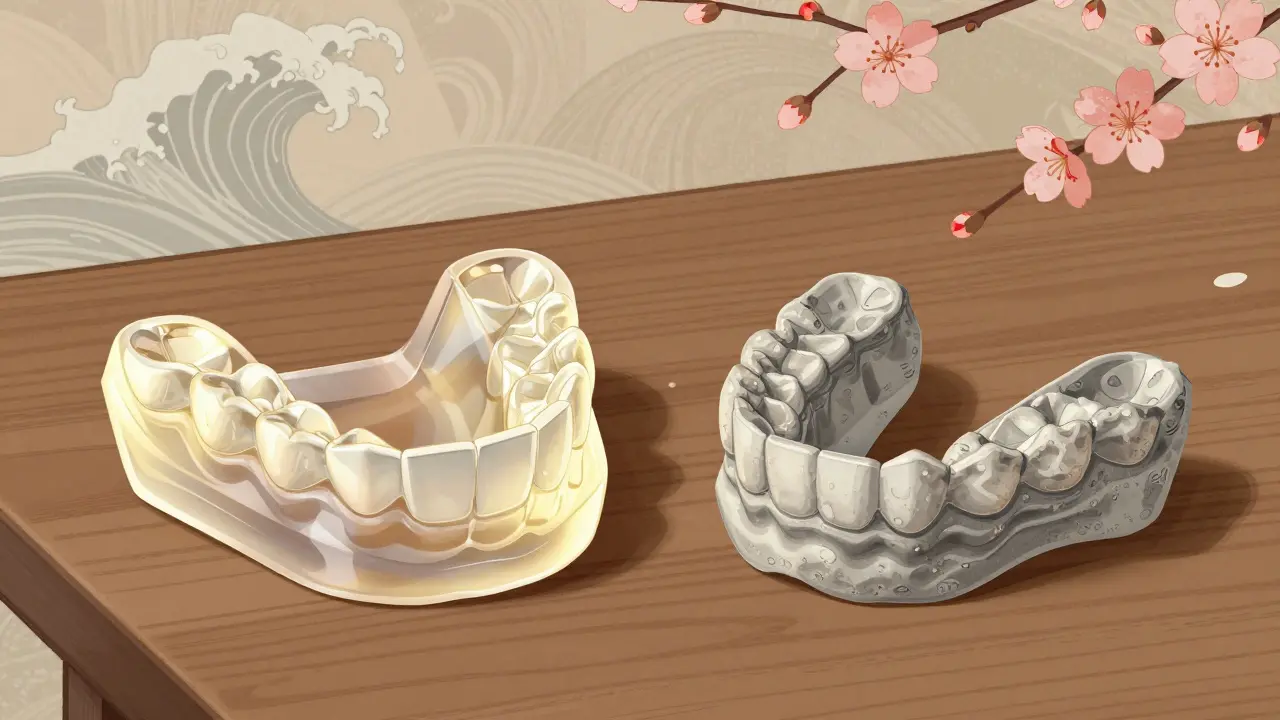
Custom devices, such as the SomnoDent MAS or TAP 3, use semi-rigid acrylic materials that are durable and precise. They allow for titration-meaning your dentist can gradually increase the jaw advancement over weeks to find the optimal setting. Over-the-counter devices often force a fixed advancement that may be too aggressive (causing pain) or too weak (doing nothing). A 2015 meta-analysis found that custom devices were significantly more effective at reducing snoring than generic alternatives.
Who Is a Good Candidate for OAT?
Not everyone who snores needs a mandibular advancement device. In fact, some people shouldn't wear them at all. Before investing in OAT, you need to understand your specific sleep profile.
OAT is considered a first-line treatment for:
- Primary Snorers: People who snore loudly but don't have sleep apnea.
- Mild to Moderate OSA Patients: Those who struggle with CPAP machines due to claustrophobia, noise, or skin irritation.
- Travelers: Individuals who need a portable solution for occasional sleep disruptions.
However, there are important contraindications. You likely aren't a good candidate if you have:
- Severe Obstructive Sleep Apnea: While MADs help, they may not fully stop breathing events in severe cases. CPAP remains the gold standard here.
- Temporomandibular Joint (TMJ) Disorders: If you already suffer from jaw pain, clicking, or arthritis, forcing your jaw forward could worsen the condition.
- Insufficient Teeth: You generally need at least 6 to 8 natural teeth per arch to anchor the device properly. Extensive bridges or missing teeth complicate fitting.
- Severe Periodontal Disease: Gum health must be stable before starting therapy.
A proper evaluation usually involves a sleep study (polysomnography) to rule out severe apnea and a dental exam to check your jaw health.
The Adjustment Period: What to Expect
If you’ve never worn a dental appliance, the first few weeks can be challenging. Don’t let early discomfort scare you off-most users adjust successfully.
During the initial 10 to 14 days, you might experience:
- Excessive Salivation: Your mouth treats the device as a foreign object. This usually subsides within a week.
- Jaw Soreness: Muscles not used to holding a new position will ache. Start by wearing the device for short periods during the day to acclimatize.
- Tooth Discomfort: Pressure on teeth is normal initially but should not cause sharp pain.
The titration process is key. Your dentist won’t set the device to maximum advancement immediately. Instead, they’ll start with a mild protrusion (e.g., 25% of your maximum capacity) and increase it by 1mm every 3 to 5 days. This gradual approach minimizes side effects and ensures you reach the most effective setting without hurting your jaw.
By the 30-day mark, studies show that over 75% of users achieve consistent nightly compliance. The device becomes part of your routine, much like brushing your teeth.
Long-Term Side Effects and Dental Health
One of the biggest concerns with long-term MAD use is dental changes. Because the device constantly holds your jaw in a forward position, your bite may shift over time.
According to data from dental sleep specialists, approximately 25% of long-term users develop irreversible occlusal changes. This means your upper and lower teeth might not line up perfectly when you take the device out. In some cases, this leads to temporary jaw pain or requires orthodontic correction after years of use.
To mitigate these risks:
- Schedule Regular Check-ups: Visit your dentist every 6 months to monitor bite alignment and gum health.
- Follow Cleaning Protocols: Clean the device daily with a soft brush and non-abrasive cleaner to prevent bacterial buildup.
- Listen to Your Body: If you experience persistent jaw pain or tooth sensitivity, contact your provider immediately. They may need to reduce the advancement level.
While these risks exist, the benefit-risk profile remains favorable for most patients. The improvement in sleep quality and the reduction in snoring often outweigh the potential for minor dental adjustments.

Effectiveness: MADs vs. Other Treatments
How do mandibular advancement devices stack up against other snoring remedies?
Compared to nasal dilators or positional therapy (sleeping on your side), MADs are significantly more effective. Nasal strips might reduce snoring by 20-30%, while MADs can cut intensity by 50-75%. However, they are generally less effective than CPAP machines, which can eliminate snoring in 85-95% of cases.
Where MADs shine is in patient adherence. Many people abandon CPAP because it’s loud, bulky, and uncomfortable. MADs are silent, portable, and weigh only 25-40 grams. Studies show that MAD users are nearly twice as likely to stick with their treatment long-term compared to CPAP users. For those who simply cannot tolerate a mask, MADs offer the best balance of efficacy and comfort.
Cost and Insurance Coverage
The upfront cost is the biggest barrier. Custom MADs range from $1,800 to $2,500. As of 2023, only about 38% of U.S. commercial insurance plans cover these devices, often requiring proof of medical necessity (like a sleep apnea diagnosis). If you’re a primary snorer without apnea, coverage is less likely.
However, consider the long-term value. A CPAP machine costs $500-$1,000 plus ongoing supplies (masks, filters, tubing) that add up to hundreds of dollars yearly. MADs have no recurring supply costs. With proper care, a custom device can last 5 to 7 years.
If cost is a concern, ask your dentist about financing options. Some practices offer payment plans, making the monthly cost comparable to gym membership fees-a small price for peaceful nights.
Do mandibular advancement devices cure snoring permanently?
No, they manage snoring rather than cure it. The device works by mechanically keeping your airway open while you wear it. If you stop using the device, your snoring will typically return within 48 hours. It is a nightly treatment, similar to wearing glasses for vision correction.
Can I get a mandibular advancement device without seeing a doctor?
You can buy over-the-counter versions online, but experts strongly advise against this for long-term use. Without a professional evaluation, you risk worsening TMJ issues or failing to address underlying sleep apnea. A custom device from a dental sleep specialist ensures proper fit and safe advancement levels.
You can buy over-the-counter versions online, but experts strongly advise against this for long-term use. Without a professional evaluation, you risk worsening TMJ issues or failing to address underlying sleep apnea. A custom device from a dental sleep specialist ensures proper fit and safe advancement levels.
Will the device change my face shape?
Temporary changes in muscle tone may occur while wearing the device, but permanent facial structure changes are rare. Some users report slight tightening of the jawline due to muscle engagement, but this is reversible upon discontinuation. Significant skeletal changes are not expected in adults.
How long does it take to see results?
Many users notice a reduction in snoring volume within the first few nights. However, finding the optimal advancement level takes 4 to 6 weeks of titration. During this period, your dentist will make small adjustments to maximize effectiveness while minimizing discomfort.
Are there any new technologies in MADs?
Yes, recent models like the SomnoDent EVO 3 include integrated sensors that track snoring events and send data to a smartphone app. This allows dentists to verify usage and adjust settings remotely, improving treatment accuracy and accountability.