

Imagine walking through a wooded trail on a warm summer day. You’re enjoying the fresh air, but hidden in the grass is a tiny creature no bigger than a poppy seed. If that creature bites you and stays attached for more than 24 hours, you might be at risk for Lyme disease, a bacterial infection transmitted by blacklegged ticks that can affect multiple body systems if untreated. It sounds scary, but here’s the good news: when caught early, it’s highly treatable with antibiotics. The problem? It’s often missed or misdiagnosed because the symptoms can look like the flu or other common ailments.
In this guide, we’ll break down exactly how Lyme disease works, what to look for, and how long treatment takes. Whether you live in a high-risk area or just want to be prepared for your next outdoor adventure, knowing the timeline is your best defense.
What Is Lyme Disease and How Do You Get It?
Lyme borreliosis, commonly known as Lyme disease, is caused by the bacterium Borrelia burgdorferi. You don’t catch it from another person; it comes exclusively from the bite of an infected tick. Specifically, you’re looking at two main species of blacklegged ticks: the Ixodes scapularis (blacklegged tick) found in the eastern and central U.S., and the Ixodes pacificus (Western blacklegged tick) found along the West Coast.
Not every tick bite leads to infection. The tick needs to be attached and feeding for a specific amount of time for the bacteria to move from its gut into your bloodstream. Research indicates that transmission typically requires the tick to be attached for at least 24 to 36 hours. This is why checking yourself promptly after being outdoors is so critical. Nymphs, which are immature ticks, are the most dangerous transmitters because they are so small-about the size of a pinhead-that you might not even notice them until they’ve been feeding for days.
The Three Stages of Infection and Their Timelines
Lyme disease doesn’t stay static. If left untreated, it progresses through three distinct stages. Understanding these timelines helps you recognize when to seek help.
Stage 1: Early Localized (Days to Weeks)
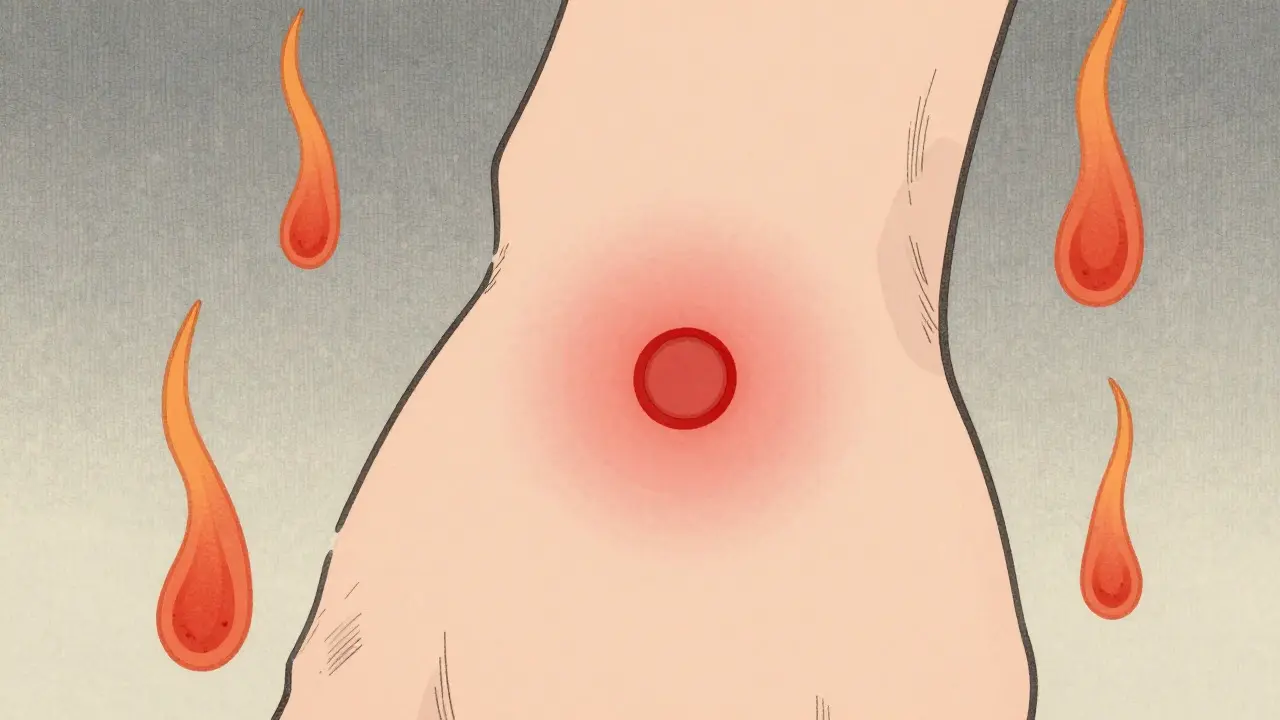
This is the window where you have the best chance for a quick recovery. Symptoms usually appear 3 to 30 days after the bite. The hallmark sign is erythema migrans (EM), often described as a “bull’s-eye” rash. It starts as a red spot at the bite site and expands over days. About 70-80% of people with Lyme disease develop this rash. Other symptoms include fever, chills, headache, fatigue, and muscle or joint aches. If you see this expanding red ring, don’t wait for a test-see a doctor immediately.
Stage 2: Early Disseminated (Weeks to Months)
If Stage 1 goes untreated, the bacteria spread throughout your body via the bloodstream. You might develop multiple EM rashes on different parts of your body. This stage can also bring neurological issues, such as facial palsy (Bell’s palsy), where one side of your face droops. Some patients experience heart palpitations or irregular heartbeat, known as Lyme carditis. Joint pain may start to feel more widespread during this phase.
Stage 3: Late Disseminated (Months to Years)
This is the most severe stage, occurring months or even years after the initial infection. The most common symptom is arthritis, particularly in large joints like the knees. The swelling can be painful and intermittent. Neurological problems can persist, including numbness, tingling, or memory difficulties. Reaching this stage means the infection has had time to cause significant damage, making treatment longer and more complex.
Diagnosis: Why It Can Be Tricky
Diagnosing Lyme disease isn’t always straightforward. For the classic bull’s-eye rash, doctors can often diagnose it clinically without lab tests. However, if symptoms are vague, blood tests are used. The standard method is a two-tiered serological test: first an ELISA, followed by a Western blot if the first is positive.
Here’s the catch: these blood tests look for antibodies, not the bacteria itself. Your body takes time to produce antibodies. In the very early stages, sensitivity is low (around 30-40%), meaning you could have Lyme disease but test negative. As the disease progresses, accuracy improves significantly. This is why clinical history and physical exams are just as important as lab results.
Treatment Protocols: Antibiotics and Duration
The good news is that Lyme disease is curable with antibiotics. The type and duration depend on the stage of infection.
- Early Localized Disease: Typically treated with oral antibiotics for 10 to 21 days. Common prescriptions include doxycycline (for adults), amoxicillin (for children and pregnant women), or cefuroxime axetil.
- Neurological or Cardiac Involvement: If the infection affects the nervous system or heart, intravenous (IV) antibiotics like ceftriaxone may be required for 14 to 28 days.
- Late Stage Arthritis: Often starts with oral antibiotics again. If joints remain swollen after 2-3 weeks, IV antibiotics might be considered.
Most patients recover fully within weeks of starting treatment. However, about 10-20% of people may experience lingering symptoms like fatigue or joint pain for months after finishing antibiotics. This condition is called Post-Treatment Lyme Disease Syndrome (PTLDS). It’s not necessarily a sign of ongoing infection, but rather a residual effect of the immune response.

Prevention: Your Best Line of Defense
Since there is no widely available vaccine yet, prevention is key. Here are practical steps to reduce your risk:
- Use Repellent: Apply permethrin to clothing and use DEET-based repellent on skin.
- Stay on Trails: Ticks prefer tall grass and leaf litter. Walking on cleared paths reduces exposure.
- Check Yourself: Perform full-body tick checks within 2 hours of coming indoors. Don’t forget behind ears, under arms, and in hair.
- Shower Promptly: Showering within 2 hours of potential exposure can wash off unattached ticks.
- Remove Ticks Quickly: If you find a tick, remove it with fine-tipped tweezers as soon as possible. Removing it within 24 hours drastically lowers the risk of infection.
| Stage | Timeline After Bite | Key Symptoms | Typical Treatment |
|---|---|---|---|
| Early Localized | 3-30 days | Erythema migrans rash, fever, fatigue | Oral antibiotics (10-21 days) |
| Early Disseminated | Weeks-Months | Multiple rashes, facial palsy, heart issues | Oral or IV antibiotics (14-28 days) |
| Late Disseminated | Months-Years | Arthritis, neurological problems | Oral/IV antibiotics (Longer courses) |
Frequently Asked Questions
How fast does Lyme disease show up?
Symptoms typically appear between 3 and 30 days after a tick bite. The earliest sign is often the erythema migrans rash, which can appear as soon as 3 days post-bite but usually shows up around 7 to 14 days later.
Can you get Lyme disease from a dog tick?
Yes, but only if the tick is a blacklegged tick (Ixodes species) carrying the Borrelia bacteria. Not all ticks carry Lyme disease. Deer ticks, which are a type of blacklegged tick, are the primary carriers in many regions. Regular dog ticks (Dermacentor variabilis) generally do not transmit Lyme disease to humans.
Is Lyme disease contagious between humans?
No. You cannot catch Lyme disease from another person, a pet, or a household member. It is strictly a vector-borne illness, meaning it must be transmitted through the bite of an infected tick.
What happens if I don't treat Lyme disease?
Untreated Lyme disease can progress to late-stage complications, including chronic arthritis, nerve damage, and heart rhythm abnormalities. While rare, it can lead to serious long-term health issues. Early treatment prevents these complications in the vast majority of cases.
How long do I need to take antibiotics for Lyme disease?
For early localized disease, the standard course is 10 to 21 days of oral antibiotics. If neurological or cardiac involvement is present, the course may extend to 14 to 28 days of IV antibiotics. Always follow your doctor’s specific prescription.