
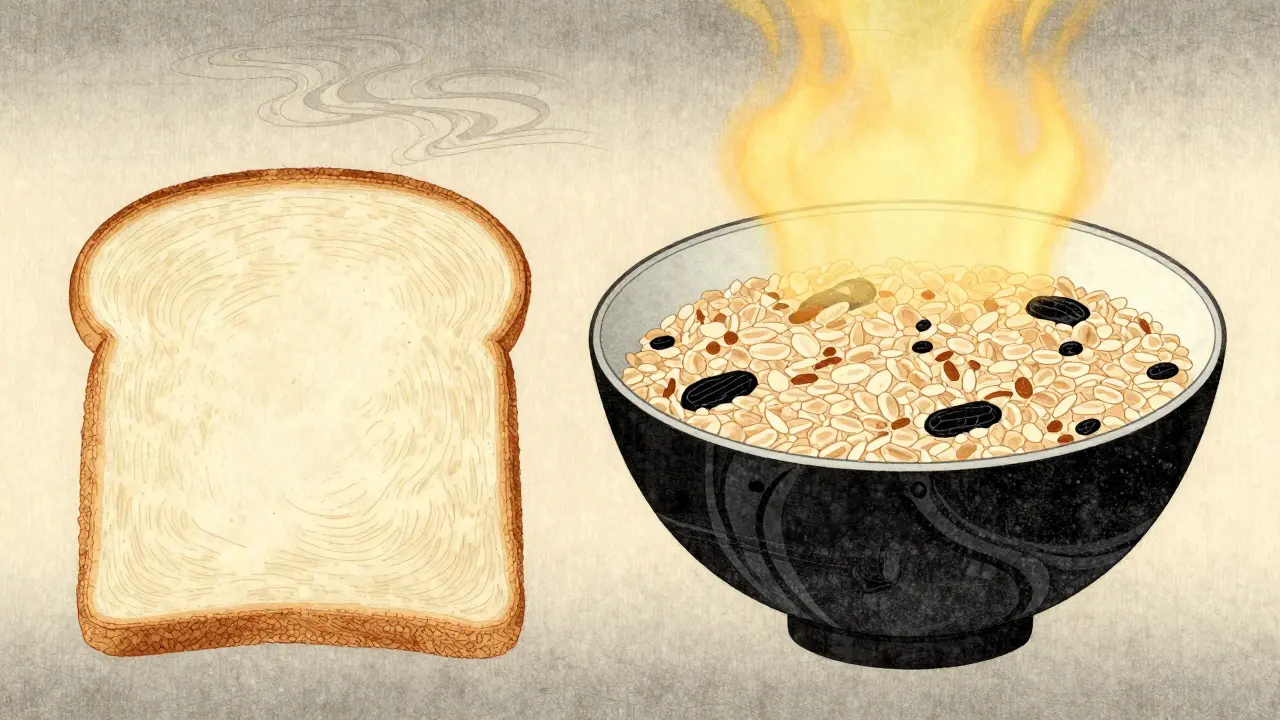
Imagine eating a slice of white toast and feeling hungry again an hour later, despite the calories. Now imagine eating a bowl of steel-cut oats and feeling full until lunch. The difference isn't just about calories; it's about how your body reacts to the carbohydrates in those foods. This is the core of the Low-GI Diet is a nutritional approach that focuses on eating carbohydrates that are digested slowly, causing a gradual rise in blood glucose levels rather than a sharp spike. While many people turn to this method for weight loss, the real magic lies in how it stabilizes your energy and manages your insulin.
What exactly is the Glycemic Index?
The Glycemic Index (GI) is a ranking system developed by Dr. David Jenkins and his team at the University of Toronto back in 1981. It measures how quickly a carbohydrate-containing food raises your blood glucose levels compared to a reference food-usually pure glucose or white bread. Think of it as a speed limit for sugar entering your bloodstream.
Foods are generally split into three categories: low, medium, and high. Low-GI foods (55 or less) are the stars of this diet because they take longer to break down. Medium-GI foods (56-69) are acceptable in moderation, while high-GI foods (70 or higher) hit your system fast, leading to the "sugar crash" that often triggers cravings and overeating.
| Food Category | Example Food | GI Value | GI Classification |
|---|---|---|---|
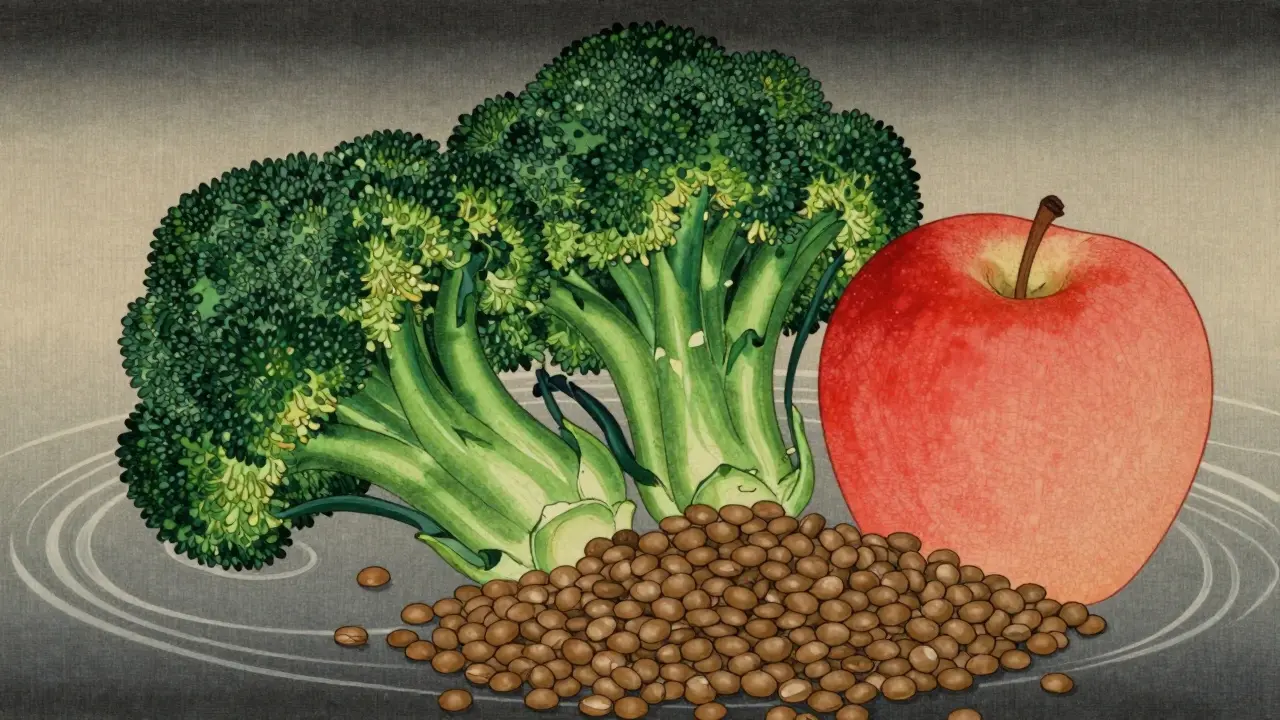
| Vegetables | Spinach / Broccoli | 15 | Low |
| Legumes | Chickpeas / Lentils | 28-32 | Low |
| Grains | Barley | 25 | Low |
| Fruit | Apple | 36 | Low |
| Grains | White Rice | 73 | High |
| Vegetables | Potato | 85 | High |
| Cereal | Corn Flakes | 81 | High |
Does a Low-GI Diet actually help with weight control?
This is where things get interesting-and a bit controversial. If you look at how these foods work, it makes sense that they'd help with weight control. Because low-GI foods are rich in fiber and complex structures, they slow down digestion. This keeps you feeling full longer (satiety) and prevents the massive insulin spikes that tell your body to store fat.
However, the science is nuanced. Some experts, like Dr. David Ludwig from Harvard, suggest that reducing insulin secretion improves metabolic efficiency, potentially burning an extra 50-100 calories a day. On the flip side, the American Institute for Cancer Research (AICR) has pointed out that in clinical trials where calories were kept exactly the same, low-GI diets didn't necessarily lead to more weight loss than high-GI diets. In other words, you still need a calorie deficit to lose weight, but the low-GI approach makes it much easier to stick to that deficit because you aren't fighting constant hunger.
Managing blood sugar and metabolic health
While the weight loss debate continues, the benefits for blood sugar are crystal clear. For anyone dealing with Type 2 Diabetes or prediabetes, this diet is a game-changer. A 2019 review of 54 studies showed that low-GI diets significantly reduced hemoglobin A1c levels-a key marker of long-term blood sugar control-by 0.5%, compared to just 0.2% for those on high-GI diets.
By smoothing out the glucose peaks, you reduce the strain on your pancreas and lower your risk of cardiovascular issues. The Academy of Nutrition and Dietetics has noted that this approach can lower LDL cholesterol by about 4.7 mg/dL on average. It's not just about the scale; it's about how your internal organs are functioning.
The pitfalls: Not everything "Low-GI" is healthy
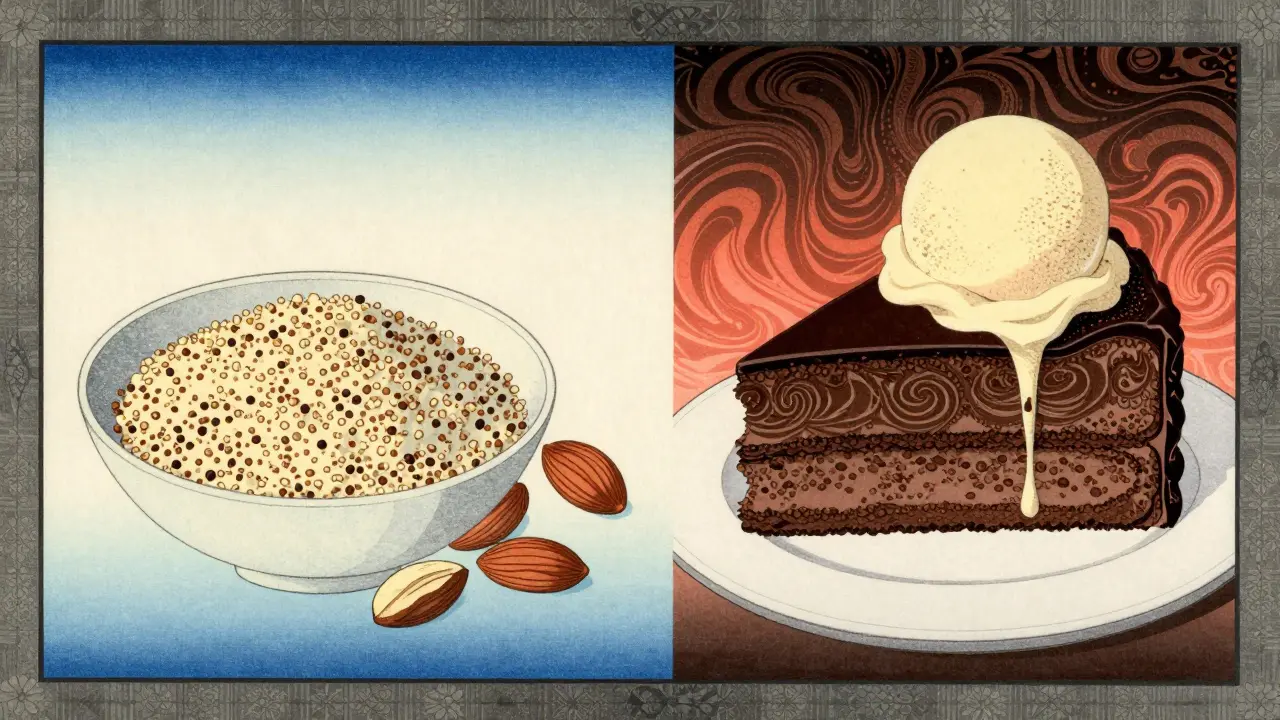
Here is the biggest trap people fall into: assuming that a low GI number equals a "healthy" food. This is a dangerous mistake. For example, ice cream has a GI of around 37 and chocolate cake is around 38. Both are technically "low-GI" because the high fat content slows down the absorption of sugar. But obviously, eating ice cream for breakfast isn't going to help your health.
You have to balance the GI value with nutrient density. A bowl of lentils (GI 32) provides protein, fiber, and iron, while a piece of cake (GI 38) provides mostly saturated fat and processed sugar. The goal is to find foods that are both low-GI and nutrient-dense, like non-starchy vegetables, nuts, and whole grains.
Practical tips for switching your diet
You don't need to carry a GI chart in your pocket to make this work. A few simple swaps can shift your entire metabolic response. Most people find it takes about two to four weeks to get the hang of these choices.
- Swap your grains: Trade white rice for barley or quinoa, and white bread for sprouted grain or sourdough.
- Watch your prep: How you cook food changes its GI. Al dente pasta has a lower GI (around 45) than overcooked, mushy pasta (which can hit 65).
- Mind the ripeness: An unripe banana has a GI of about 30, but as it ripens and the starch turns to sugar, the GI climbs to 51.
- Pair your carbs: If you must eat a high-GI food, pair it with a protein or a healthy fat (like avocado or olive oil). This slows down the overall digestion process and lowers the total glycemic load of the meal.
Personalized nutrition and the future
One thing the old-school GI charts don't tell you is that everyone's body is different. A study from the Weizmann Institute found that two people can eat the exact same piece of bread and have completely different blood sugar responses-sometimes a difference of 20 points. This is why some people swear by a certain food while others find it spikes their sugar.
We are moving toward "personalized nutrition." New research using machine learning is now being used to predict how an individual will respond to specific foods, which has shown to improve dietary outcomes by 25% over general recommendations. Until you have a wearable glucose monitor, the best bet is to focus on whole, unprocessed foods and observe how you feel after eating them.
Can I lose weight on a low-GI diet without counting calories?
While low-GI foods help you feel full longer, which naturally leads to eating fewer calories, weight loss still depends on your overall energy balance. However, most people find it much easier to maintain a calorie deficit without strict counting because the stabilized blood sugar reduces the intense hunger and cravings associated with high-GI crashes.
Are all fruits low-GI?
No, but many are. Apples and pears are great low-GI choices. However, some fruits, like very ripe bananas or watermelon, have a higher GI. The best way to enjoy fruit is to eat it whole rather than juiced, as the fiber in the whole fruit slows down the sugar absorption.
Is the low-GI diet better than a low-carb diet?
It depends on your goals. For pure weight loss, some studies show similar results between the two. However, the low-GI approach often provides better lipid profiles, with more significant reductions in LDL (bad) cholesterol compared to strict low-carb diets. It is also generally easier to sustain long-term because it doesn't eliminate entire food groups.
Do I need to track the GI of every single ingredient in a meal?
Not necessarily. The American Diabetes Association suggests focusing on whole food sources and balanced meals (around 45-60g of carbs per meal) rather than meticulous tracking. Think in terms of "glycemic load," which considers both the GI and the amount of the food you're actually eating.
Why is ice cream considered low-GI if it's unhealthy?
The Glycemic Index only measures how fast glucose rises. Because ice cream has a high fat content, the fat slows down the digestion of the sugar, resulting in a slower rise in blood glucose. This proves that GI is a tool for blood sugar management, not a comprehensive measure of how "healthy" or "nutrient-dense" a food is.
Next Steps for Your Journey
If you're just starting, don't overhaul your entire pantry overnight. Start by replacing one high-GI item per meal. Switch your morning cereal for oats or your white rice for quinoa. Pay attention to your energy levels two hours after eating; if you feel a slump, that's a sign your meal was too high-GI. Over time, these small adjustments build a metabolic foundation that supports both your weight goals and your long-term health.
11 Comments
Lmaooo look at this absolute joke of a guide acting like GI is some magic bullet when everyone knows it's basically obsolete now compared to load and glycemic response variability. The math here is just basic and honestly a bit insultng to anyone who actually reads real research papers instead of blog posts
It is truly wonderful to see such an inclusive approach to health management!!! I believe that focusing on these small, sustainable changes can empower individuals from all walks of life to reclaim their vitality!!!
the ice cream part is obvious 🙄 basically just saying fat slows sugar absorption which is basic bio 💅
one must ponder if the very notion of indexing food is not merely a human attempt to quantify the chaos of biological existence which is fundamentally unpredictable and thus any chart is just a security blanket for the masses who fear the raw unpredictability of their own metabolizm and the systemic failure of modern nutriton science to grasp the transcendental nature of hunger
barely a guide’s just a list of swaps lol
I love how this encourages us to listen to our own bodies rather than just following a rigid set of rules. It's so important to remember that we are all different and what works for one person might not work for another!
I absolutely concur with the emphasis on blood sugar stability, and I must insist that anyone ignoring the impact of insulin on fat storage is simply disregarding the most fundamental pillar of metabolic health which is why we must all commit to these dietary adjustments with the utmost rigor and discipline regardless of the perceived difficulty of the transition!
Exactly. Swapping white rice for quinoa is a no-brainer for anyone actually serious about their health.
Typical fake science probably pushed by foreign interests to make us eat weird grains when real american food is just fine if you have the guts to eat it
Funny how they mention machine learning and wearable monitors... just another way for them to track our every move and manipulate our biology through 'personalized' data while the real agenda is hidden in plain sight
It is truly heartening to see the discussion move toward personalized nutrition. While it can be overwhelming to navigate all the conflicting data, focusing on whole foods is a reliable starting point for everyone. :)
I believe that by supporting each other in these small transitions, we can all achieve a better quality of life. It is simply about balance and patience. I've found that adding a bit of olive oil to a meal really does make a difference in how I feel afterward. This approach allows for flexibility without sacrificing health goals, which is essential for long-term success. Many of us struggle with the 'all or nothing' mindset, but this guide suggests a middle ground. It is wonderful that the science is evolving to recognize our individual differences. I encourage everyone to keep experimenting and seeing what works best for their unique body. Small wins lead to big changes over time. Let's keep the conversation positive and supportive as we all learn together. Proper nutrition is a journey, not a destination. I'm glad we have these resources to help us make informed choices. It's all about the long game and staying consistent. Cheers to everyone trying to improve their health!