
Ever opened a medication box and felt overwhelmed by the tiny print in the fold-out leaflet? You aren't alone. Many of us skim those pages or ignore them entirely, but those leaflets contain a critical map of how your medicine plays with other substances. According to the Institute of Medicine, medication errors cause about 7,000 deaths every year in the U.S. alone. A huge part of that risk comes from drug interactions-when two or more substances react in a way that makes a drug less effective or, worse, dangerous. Knowing how to spot these red flags can literally save your life.
Where to Find the Warnings
Depending on whether you bought your medicine at a pharmacy counter or off a supermarket shelf, the warnings are in different places. If you have a prescription drug, look for the Prescribing Information the official professional labeling provided by the manufacturer. Specifically, head to Section 7, which is titled "Drug Interactions." This is where the heavy lifting is done, detailing every clinically significant reaction the manufacturer has documented.
For over-the-counter (OTC) meds, it's simpler. Look for the "Drug Facts" label on the back of the box. The interaction info is tucked into the "Warnings" section. While these are shorter, they still carry the same weight. A common mistake people make is ignoring these OTC warnings because they assume "natural" or "non-prescription" means safe. In reality, a huge 37% of significant interactions involve OTC meds or supplements, according to FDA reporting data.
Decoding the Severity Levels
Not every warning is a "stop everything" emergency. Most guides use a tiered system to tell you how worried you should be. While terminology varies slightly between brands, they generally follow these four levels:
| Level | What it Means | Action Needed |
|---|---|---|
| Contraindicated | Absolute risk of severe harm. | Do NOT take together. |
| Major | Serious side effects are likely. | Avoid unless a doctor manages it. |
| Moderate | May cause an adverse reaction. | Monitor closely; may need dose change. |
| Minor | Low risk of a mild effect. | Generally safe; just be aware. |
Keep an eye out for a "Black Box Warning." This isn't actually a black box, but a bolded border around a section of text. It's the most serious warning the FDA the U.S. Food and Drug Administration, responsible for protecting public health by ensuring the safety and efficacy of medicines can issue. For example, if you see a black box warning on a blood thinner like warfarin mentioning NSAIDs (like ibuprofen), take it seriously-clinical studies show this combo can increase bleeding risk by up to 100%.
Spotting the "Hidden" Interactions
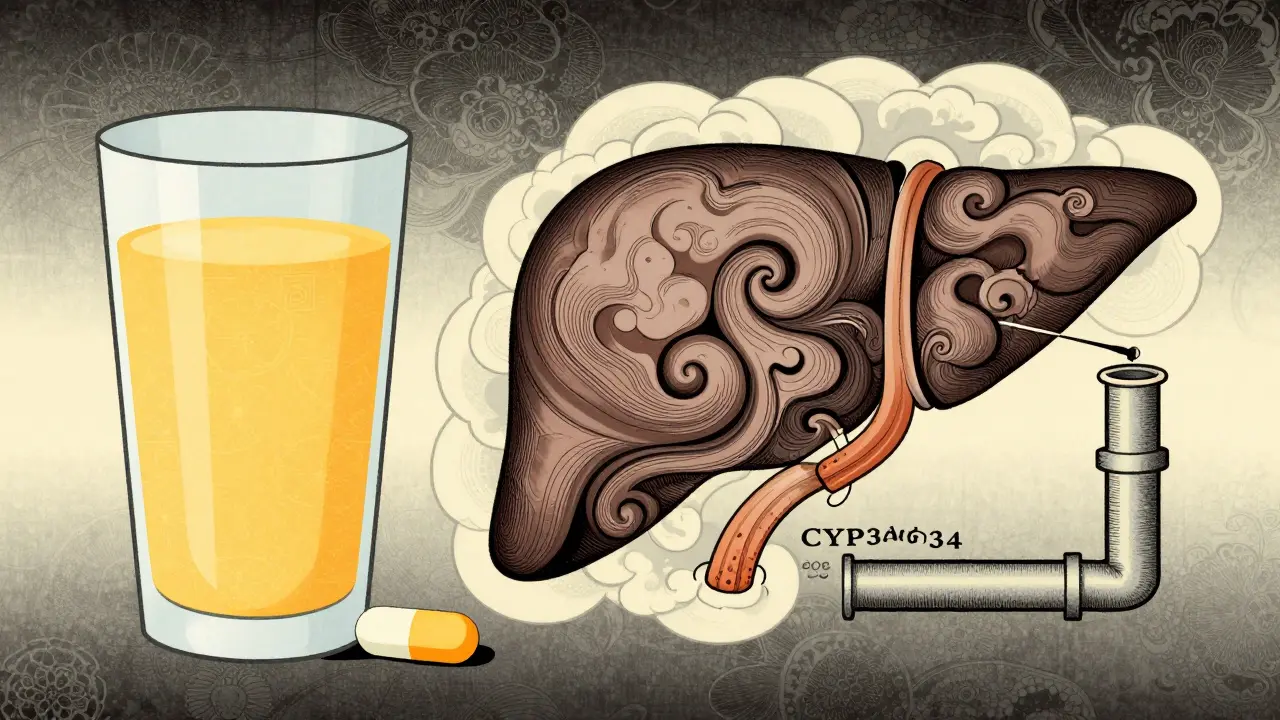
It's not just about pill-to-pill reactions. Your body processes drugs using specific proteins called enzymes. The most famous one is CYP3A4 a critical enzyme in the liver that metabolizes about 50% of all prescription drugs. If a guide mentions a "CYP3A4 inhibitor," it means another substance is blocking this enzyme, causing the drug to build up in your system like a clogged pipe.
This is why you'll see warnings about food. Grapefruit juice, for instance, is a known inhibitor. For some people taking warfarin, just one glass of grapefruit juice can spike their INR (a measure of how fast blood clots) by 1.5 to 2.0 within a single day. If your guide says "avoid grapefruit," it's not a suggestion-it's a chemical warning.
A Practical Step-by-Step Verification Process
Don't just read the guide and hope for the best. Use a system to make sure you're covered. Experts at the Cleveland Clinic suggest a four-step check:
- List Everything: Write down every prescription, vitamin, herbal tea, and OTC painkiller you take. The average patient takes nearly five different medications; it's easy to forget one.
- Hunt the Sections: Open the guide for each med and go straight to the "Drug Interactions" or "Warnings" section.
- Cross-Reference: Use a digital tool like the FDA's Drug Interaction Checker to see if any of your listed items clash.
- Talk to Your Pharmacist: This is the most important step. A pharmacist can often fix a "moderate" interaction simply by changing the timing. Separating doses by 2 to 4 hours can mitigate up to 60% of moderate interactions.
Modernizing Your Approach
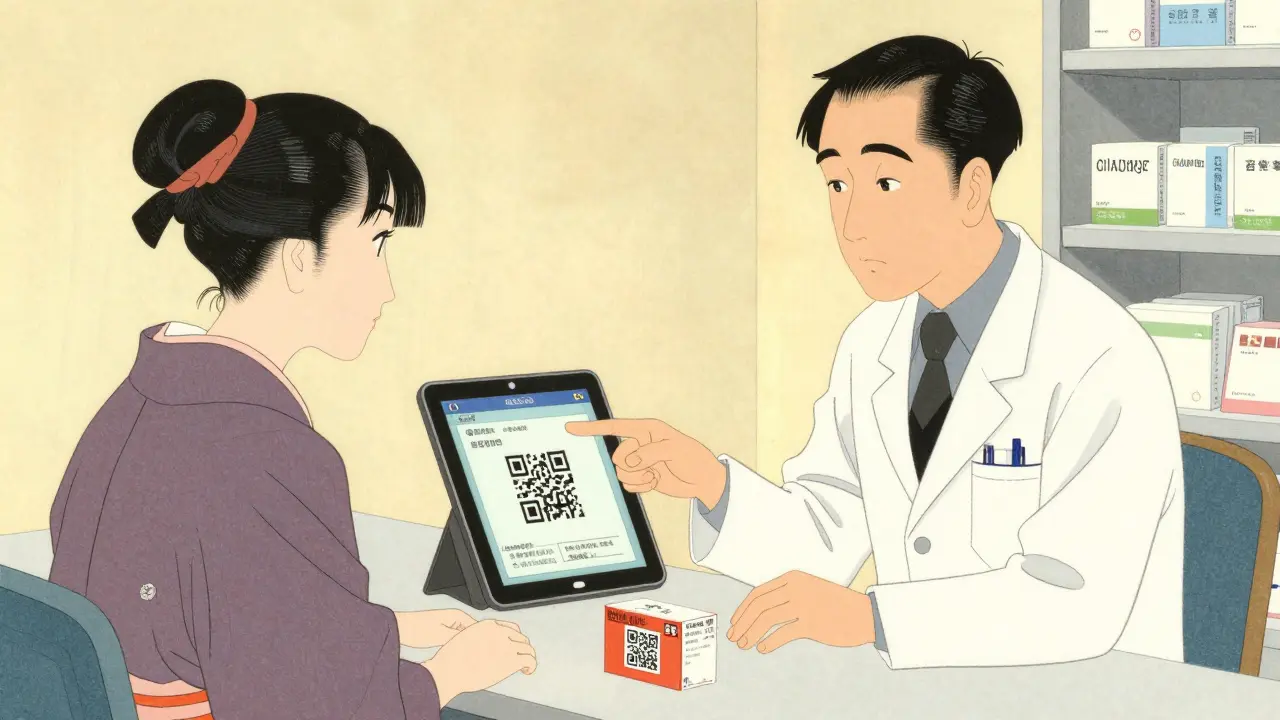
Reading these guides is getting easier. If you see a QR code on your medication packaging, scan it. The Digital Medication Guide Initiative an FDA effort to replace paper inserts with interactive, accessible digital guides is rolling out, providing voice navigation and easier-to-read formats. If you're managing multiple chronic conditions, taking a photo of the interaction section of your guide is a great way to keep that info handy for your next doctor's visit.
What is the difference between a pharmacokinetic and pharmacodynamic interaction?
A pharmacokinetic interaction happens when one drug affects how the body absorbs, distributes, or excretes another drug (like the CYP3A4 enzyme example). A pharmacodynamic interaction happens when two drugs have additive or opposing effects on the body, such as two different medications both lowering your blood pressure, which could cause it to drop to dangerous levels.
Are herbal supplements included in these warnings?
Not always. While some guides mention common supplements like St. John's Wort, many don't list every possible herbal interaction. This is why you must tell your pharmacist about every supplement you take, as they can significantly alter how prescription drugs work.
What should I do if I find a 'Major' interaction in my guide?
Do not stop taking your prescribed medication abruptly, as this can be dangerous. Instead, call your doctor or pharmacist immediately. They can determine if the benefit outweighs the risk or if they need to switch you to a different medication.
Why are some warnings written in bold or italics?
FDA templates use specific formatting to highlight urgency. Bold text is typically reserved for contraindications ("Do not take if..."), while italics are often used for precautionary statements ("Ask a doctor before use if...").
How often are these medication guides updated?
Guides are updated whenever new clinical data emerges or the FDA mandates a safety change. Always check the "Revised" date at the bottom of the guide to ensure you have the most current information.
11 Comments
The point about pharmacists changing timing to mitigate moderate interactions is the most practical part of this. Many people don't realize that a simple two-hour window can prevent a drug from binding to a receptor or interfering with absorption, effectively neutralizing the interaction without needing to change the medication itself.
I never knew about the CYP3A4 enzyme thing!!! It's actually wild how one fruit can mess with your meds like that!!!
It is truly a reflection of our fragmented society that we must rely on these cryptic, tiny leaflets to survive, yet most people just blindly trust the system without questioning the existential weight of a chemical interaction. We live in an era where we outsource our biological consciousness to a pharmaceutical industry that profits from the very complexity it creates, and yet we act surprised when a 'minor' warning turns into a life-altering event because we lacked the intellectual curiosity to decode the jargon. The real tragedy isn't the interaction itself, but the cognitive dissonance we experience when we realize that our health is essentially a series of checkboxes in a corporate manual, proving that true wellness requires an awakening from the slumber of ignorance that the average consumer embraces. If you aren't analyzing the pharmacodynamics of your daily routine, you're basically just a passenger in your own body, drifting toward a cliff while reading a simplified brochure that tells you it's a sunny day.
most people are too stupd to read the labels anyway. just a matter of time before they mess up and blame the doctor lol.
The FDA's Digital Medication Guide Initiative sounds like a perfect pipeline for real-time bio-surveillance. Once they move all the safety data to QR codes and digital portals, it's just a matter of time before they integrate a tracking API to monitor our compliance via the cloud. The CYP3A4 inhibitor stuff is real, but the push for 'interactive' guides is just a way to map our physiological responses through metadata harvesting under the guise of public health.
Oh wow... a guide on how to read!!! Truly groundbreaking stuff... my life is basically complete now that I know how to look at a piece of paper!!!!
It's a great idea to take a photo of the interaction section for your doctor. It helps keep everyone on the same page and ensures nothing is missed during those quick appointments.
The FDA is the only reason we have standrds in this country, unlike the failured systems of foreign nations!! We must uphold American medical supremacy through strict adherence to these guide lines!!
Imagine thinking a PDF is helpful in 2024 🤡 this is so basic 📉
The distinction between pharmacokinetic and pharmacodynamic interactions is paramount. One pertains to the systemic movement of the substance, while the other concerns the biochemical effect on the target receptor; to conflate the two is to misunderstand the very foundation of pharmacology.
I once took a supplement and felt like my heart was gonna explode’ cause I didnt check the label. Total disaster!!!!