
Why Look-Alike Packaging Is a Silent Killer in Pharmacies
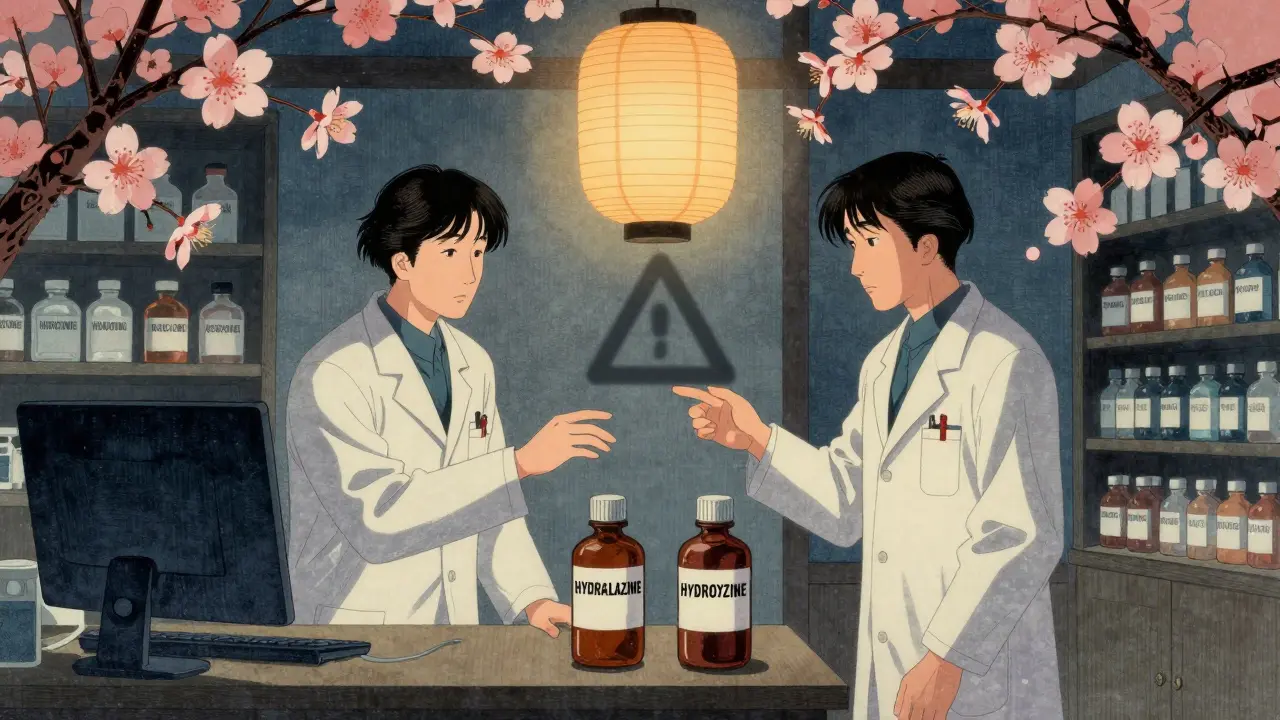
Imagine picking up a prescription for hydralazine-a blood pressure drug-and accidentally getting hydroxyzine, an antihistamine used for anxiety. Both look nearly identical in bottle shape, label color, and font size. One saves lives. The other can kill. This isn’t fiction. In UK and US pharmacies, this kind of mix-up happens more often than you think. Look-alike packaging isn’t just a minor inconvenience-it’s a leading cause of preventable deaths. According to the Institute for Safe Medication Practices (ISMP), around 18% of all medication errors reported in the U.S. come from drugs that look or sound too similar. In 2022, over 10,000 error reports were tied to this issue alone. And in hospitals, these mistakes lead to roughly 7,000 deaths every year.
The problem isn’t just names. It’s the packaging. Similar bottle shapes, identical color schemes, and confusing label layouts make it easy for even experienced pharmacists to grab the wrong thing-especially during busy shifts. In community pharmacies, where staff juggle dozens of prescriptions at once, the risk spikes. And when a patient gets the wrong drug, the consequences aren’t just clinical-they’re personal. A diabetic might get insulin instead of a thyroid med. A heart patient might get a muscle relaxant instead of their anticoagulant. These aren’t hypotheticals. They’re real cases documented in NHS incident reports and FDA databases.
Physical Separation: The Simplest Fix That Works
You don’t need fancy tech to stop a lot of these errors. Just move the drugs apart. Physical separation is the cheapest, most effective strategy most pharmacies ignore. A 2020 study from the University of Arizona found that separating look-alike medications reduced errors by 62%. That’s not a small win-it’s life-saving.
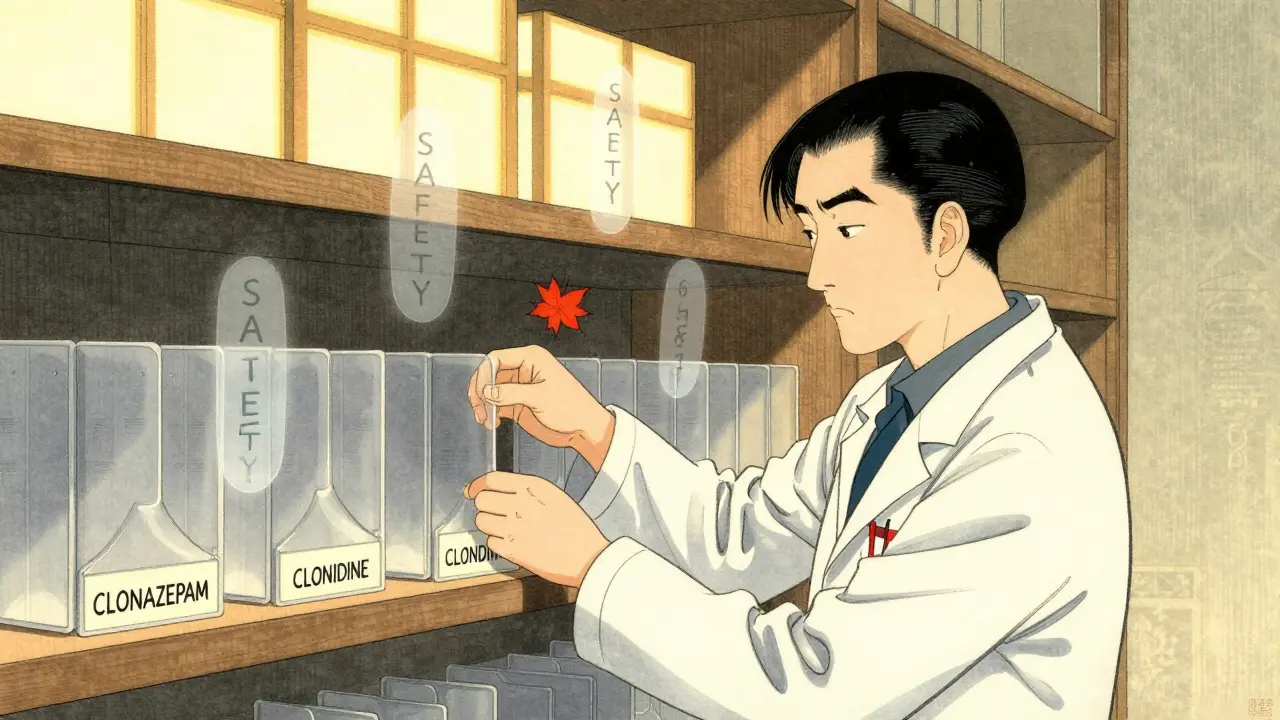
In practice, this means storing high-risk pairs in different sections of the pharmacy. Don’t put spironolactone and spiramycin next to each other. Don’t keep clonazepam and clonidine in the same drawer. Use shelf dividers, colored tape, or even just a foot of empty space between them. Many community pharmacies have tight storage, but even a small gap helps. One pharmacy in Nottingham reduced wrong-drug picks by 80% after rearranging their shelves using $300 worth of plastic dividers.
Automated dispensing cabinets (ADCs) make this even easier. If your pharmacy uses them, configure drawers so similar drugs never share the same unit. Set up alerts in your system to flag when a look-alike drug is being restocked near another. And don’t forget the back stock-errors happen there too. A pharmacist once grabbed the wrong vial of heparin because the saline vial was stored right beside it. Now, they’re kept in separate locked cabinets.
Tall Man Lettering: Making Similar Names Impossible to Miss
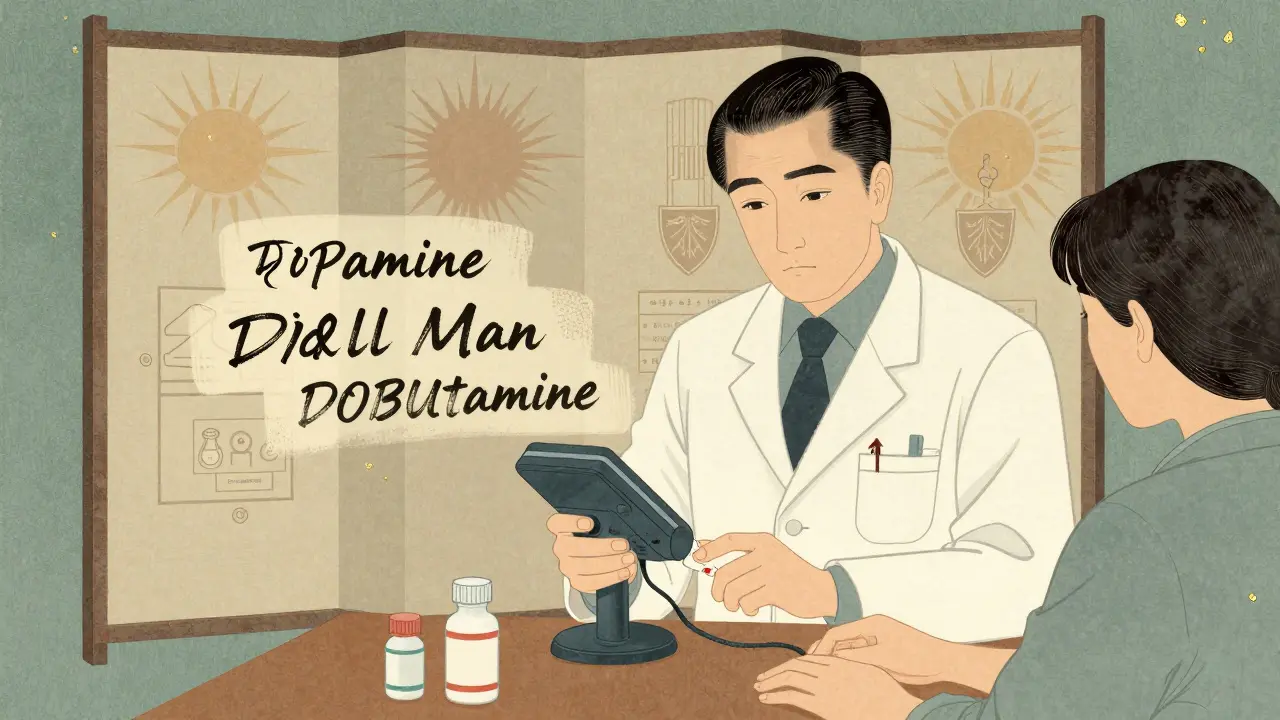
Names like DOPamine and DoBUTamine look almost the same. But when you write them with capital letters highlighting the difference-DOPamine and DOButamine-it’s harder to mix them up. That’s Tall Man Lettering (TML), and it’s been proven to cut selection errors by 47%.
The FDA and ISMP recommend TML for dozens of high-risk pairs. In the UK, NHS Digital now requires it for all electronic prescriptions. But here’s the catch: not all systems do it right. Some EHRs only capitalize the last few letters. Others don’t show it at all. If your pharmacy uses Epic, Cerner, or another system, check that TML is turned on for all LASA (look-alike/sound-alike) drugs. The ISMP updates its list of risky pairs every quarter. In January 2024, they added 17 new ones-including buprenorphine and butorphanol.
Don’t rely on software alone. Print labels with TML. Put sticky notes on physical bottles. Train staff to read names aloud before dispensing. One pharmacy in Leicester started reading out the full drug name with TML before handing it to the patient. Within six months, their dispensing errors dropped by 70%.
Barcode Scanning: The Safety Net That Actually Works
Barcode scanning isn’t just for grocery stores. In pharmacies, it’s the most powerful tool to stop errors. When a pharmacist scans a drug and the system checks it against the prescription, mismatches are flagged instantly. Studies show this reduces administration errors by 86%.
But it’s not foolproof. If staff skip the scan because they’re rushed, the system fails. In one California hospital, 12% of staff bypassed scanning during peak hours. That’s why it’s not enough to install scanners-you need culture change. Make scanning mandatory. Put reminders on workstations. Reward teams with low error rates. One community pharmacy in Nottingham tied barcode compliance to their monthly safety bonus. Within three months, scanning rates jumped from 78% to 99%.
Cost is a concern. Full barcode integration runs $15,000-$50,000. But the savings are bigger. Mayo Clinic’s program saved $287,000 a year by preventing just 12 errors. That’s a return of over 600%. Even small pharmacies can start with handheld scanners and basic software. You don’t need to overhaul everything. Just start with the top five most confusing drug pairs in your store.
Combining Strategies: Why Layering Saves Lives
Using just one method isn’t enough. Look-alike errors come from multiple angles-names, packaging, location, workload. That’s why the most effective pharmacies use all three: physical separation, Tall Man Lettering, and barcode scanning. A 2023 study in the American Journal of Health-System Pharmacy found that combining all three cut errors by 94%.
Think of it like a seatbelt, airbag, and driving course. One helps. All three make you nearly invincible. A hospital in Birmingham started with physical separation. Then added TML to their EHR. Then rolled out barcode scanners. Within a year, they went from 12 errors per month to zero. No deaths. No lawsuits. No near-misses.
Start small. Pick one high-risk pair-like metoprolol and metformin. Separate them on the shelf. Add TML to their labels. Scan them every time. Track your progress. If it works, expand. If it doesn’t, ask why. Maybe the labels aren’t clear. Maybe staff aren’t trained. Fix it. Keep going.
What You Can Do Today-No Budget Needed
You don’t need a big budget to make a difference. Here’s what you can do right now:
- Print ISMP’s current List of Confused Drug Names (updated January 2024) and hang it near the dispensing counter.
- Identify the top three most confusing pairs in your pharmacy. Move them apart-no tools needed.
- Check your EHR. Is Tall Man Lettering turned on for all high-risk drugs? If not, contact your vendor.
- Start scanning one drug per day. Build the habit.
- Ask your team: “What’s one drug you’ve almost grabbed by mistake?” Listen. Act.
These steps take less than an hour. But they can save a life.
Why This Matters More Than Ever
The pressure on pharmacies is higher than ever. Staff shortages. Rising prescription volumes. More complex medications. In 2024, the FDA issued new draft guidelines requiring standardized Tall Man Lettering for 25 high-risk drugs. The National Council for Prescription Drug Programs is rolling out a new LASA data format by late 2025. This isn’t going away. It’s becoming law.
And the cost of doing nothing? It’s measured in lives. In pain. In lost trust. In lawsuits. In burned-out staff who feel like they’re playing Russian roulette with prescriptions.
Preventing look-alike packaging errors isn’t about being perfect. It’s about being consistent. About building habits. About treating every bottle like it could be someone’s last.
One pharmacist in Nottingham told me: “I used to think I was careful. Then I almost gave a patient the wrong insulin. I haven’t skipped a scan since.”
You don’t need to be a hero. Just be careful. Every time.
What are the most common look-alike drug pairs in pharmacies?
The most frequent dangerous pairs include hydralazine/hydroxyzine, metoprolol/metformin, clonazepam/clonidine, spironolactone/spiramycin, and DOPamine/DoBUTamine. The ISMP updates its official list quarterly. In January 2024, they added buprenorphine/butorphanol and others based on new error reports. Pharmacies should review this list monthly and adjust storage and labeling accordingly.
Is Tall Man Lettering required by law in the UK?
While not yet legally mandated in the UK, Tall Man Lettering is strongly recommended by the NHS Digital and the Medicines and Healthcare products Regulatory Agency (MHRA). Many NHS trusts and large pharmacy chains use it as standard practice. Electronic prescribing systems must support it under NHS Digital’s technical specifications. Failure to use it may be considered a breach of safety standards during inspections.
Can barcode scanning eliminate all medication errors?
No. Barcode scanning reduces errors by up to 86%, but it doesn’t catch everything. Errors can still happen if the wrong barcode is scanned, if the system isn’t updated, or if staff bypass the scan. It’s a safety net, not a cure. The most effective systems combine scanning with physical separation, clear labeling, staff training, and double-checking high-risk drugs.
How often should pharmacies review their look-alike drug risks?
Pharmacies should review their LASA risks at least every three months, or whenever a new drug is added to the formulary. The ISMP releases updated lists quarterly, and new drugs often create unexpected look-alike pairs. For example, during drug shortages, generic substitutions can introduce new risks. A monthly checklist for new medications and a quarterly audit of storage layouts are best practices.
What should I do if my pharmacy’s EHR doesn’t support Tall Man Lettering?
Contact your EHR vendor and request TML support for high-risk drugs listed by ISMP. If they can’t provide it, manually add TML to printed labels and use colored stickers as visual alerts. Some pharmacies use free tools like ISMP’s LASA risk assessment tool to identify problem pairs and create custom warning labels. Don’t wait for technology-take action now with what you have.
10 Comments
I've seen this firsthand. We started separating metoprolol and metformin with just a red tape divider. Within a week, our error log dropped to zero. No fancy tech. Just common sense. Staff actually started thanking me. Who knew simple spacing could feel like a revolution?
Let me guess-next they’ll mandate pharmacists wear capes and sing the names of drugs before dispensing. 😏 Meanwhile, my pharmacy still has hydralazine and hydroxyzine in the same aisle because ‘we’ve never had a problem.’ Sure, Janice.
Tall Man Lettering saved my sister’s life. She got DOPamine instead of DoBUTamine once. We almost lost her. Now I print the ISMP list and tape it to every counter I see. #NeverAgain
This isn’t about tech. It’s about culture. You can have all the scanners and dividers in the world-but if the person behind the counter is burned out, rushed, and feels like a cog? The system fails. Fix the workload. Fix the morale. The rest follows.
The term 'look-alike packaging' is semantically imprecise. It's not the packaging that's look-alike-it's the pharmaceutical nomenclature, labeling conventions, and visual design parameters that induce perceptual confusion. The FDA's 2024 draft guidelines explicitly address 'LASA drug identification systems,' not 'packaging.' Please be more rigorous in terminology.
They don’t want you to know this, but the real reason pharmacies ignore separation is because the big pharma companies design the bottles to be identical-so you buy their version, not the generic. It’s a profit play. The ISMP? Paid off. The FDA? Captured. You think this is about safety? No. It’s about control. And the $287K Mayo saved? That’s chump change compared to what they’re making off your confusion.
I’ve been a pharmacist in Manchester for 22 years. I’ve seen it all. We started with physical separation-just moved the clonazepam to the top shelf, clonidine to the bottom. No cost. No drama. Then we added TML on every label. Staff were skeptical. Now they won’t let me take it down. It’s not a fix-it’s a habit. And habits save lives.
I scanned my own prescription once. System said 'match.' Turned out the barcode was stuck on the wrong bottle. 🤷♂️ So now I just stare at the label for 30 seconds and whisper to it. Works better than tech. 🤫💊
While I appreciate the pragmatic approach outlined herein, I must emphasize that the implementation of standardized Tall Man Lettering, as per the National Council for Prescription Drug Programs’ forthcoming LASA data format, remains a prerequisite for regulatory compliance and professional accountability in the year 2025.
I work in a small town pharmacy. We can’t afford scanners. So we started reading every drug out loud-Tall Man style-before handing it to the patient. ‘DOP-ami-ne.’ ‘DOB-u-ta-mine.’ At first, patients thought we were weird. Now they ask for it. One old man said, ‘I wish my grandson’s hospital did this.’ We’re not heroes. We’re just careful. Every. Single. Time.