

Millions of people take Ginkgo biloba every year hoping to boost memory, improve circulation, or just feel more alert. But if you're also on a blood thinner-whether it's warfarin, aspirin, clopidogrel, or a newer drug like rivaroxaban-you need to pause and think. This isn't just a theoretical concern. Real people have bled internally after mixing Ginkgo with anticoagulants. And while science hasn't given us a clear yes or no, the risk is real enough that doctors and pharmacists treat it like a red flag.
What Exactly Is Ginkgo Biloba?
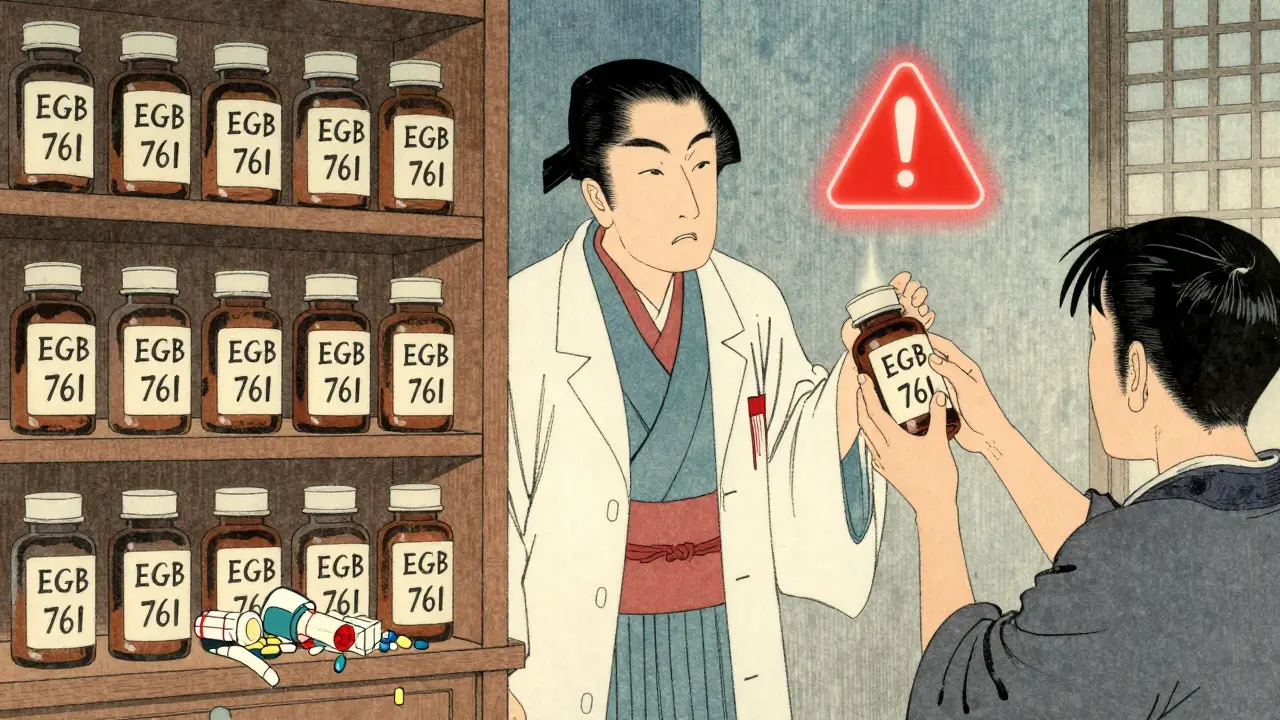
Ginkgo biloba comes from the leaves of the ginkgo tree, one of the oldest living tree species on Earth. It's been used in traditional Chinese medicine for centuries, but the version you find in bottles today is a concentrated extract-most commonly labeled as EGb 761. This standardized form contains 24% flavonol glycosides and 6% terpene lactones, which are the compounds believed to affect blood flow and brain function.
It’s not a magic pill. Studies show it might help with mild memory issues or dizziness in older adults, but the effects are subtle. What it does more clearly is interfere with platelets-the tiny cells in your blood that stick together to form clots. Ginkgo appears to reduce platelet aggregation, meaning it makes your blood less likely to clot. That sounds good if you're worried about strokes or heart attacks. But if you're already on a blood thinner, that effect can stack up.
How Blood Thinners Work
Not all blood thinners are the same. There are two main types:
- Antiplatelets like aspirin and clopidogrel (Plavix) stop platelets from clumping together.
- Anticoagulants like warfarin (Coumadin), rivaroxaban (Xarelto), and apixaban (Eliquis) slow down the chemical cascade that forms clots.
Ginkgo biloba doesn't directly affect the same pathways as warfarin, but it does interfere with platelets. That means when you take Ginkgo with aspirin or clopidogrel, you're doubling down on the same mechanism: making it harder for your blood to clot. With warfarin, the interaction is less direct-some lab studies suggest Ginkgo might affect how your liver breaks down the drug, potentially increasing its levels in your blood. But here's the catch: controlled studies don't always back this up.
The Evidence Is Mixed-But the Risk Is Real
There's a big gap between what lab studies say and what happens in real life. Some well-designed trials, like the one published in PubMed in 2008, found no significant increase in bleeding when Ginkgo was taken with aspirin or warfarin. These studies used high-quality, standardized extracts and followed patients closely.
But then there are the case reports. The FDA received 18 reports between 2008 and 2020 of bleeding events-some serious, including brain bleeds-linked to Ginkgo use. In every case, the person was also on a blood thinner. The problem? These reports don't prove Ginkgo caused the bleeding. But they also don't rule it out. And in medicine, when you see the same pattern repeated, you treat it as a warning.
What makes this even trickier is product quality. A 2020 study in PLOS ONE found that 2.6% of prescriptions for clopidogrel were taken with Ginkgo, and 18% of those taking DOACs were also using it. Many of the bad outcomes came from supplements that weren't standardized-meaning they could have too much or too little of the active compounds. The EGb 761 extract used in clinical trials is tightly controlled. Most store-bought Ginkgo isn't.
Who Says What? The Conflicting Guidelines
Here’s where it gets messy. Different authorities give different advice:
- Mayo Clinic says Ginkgo may raise your bleeding risk with aspirin, clopidogrel, or warfarin.
- GoodRx calls warfarin a "high-risk" interaction and says to avoid Ginkgo entirely.
- Cleveland Clinic lists blood thinners as a direct contraindication.
- American Society of Health-System Pharmacists calls the risk "theoretical" and says clinical studies haven't shown a significant effect.
- American College of Chest Physicians says routine discontinuation isn't needed-there's no solid evidence.
Why the contradiction? It comes down to risk tolerance. Some providers see the lack of strong evidence as a reason to not worry. Others see the case reports, the biological plausibility, and the fact that bleeding can be deadly-and they err on the side of caution.
What Should You Do?
If you're on a blood thinner and thinking about taking Ginkgo biloba, here’s what actually matters:
- Don’t start it without talking to your doctor. Even if you think it’s "just a supplement," it’s not harmless. Your doctor needs to know everything you’re taking.
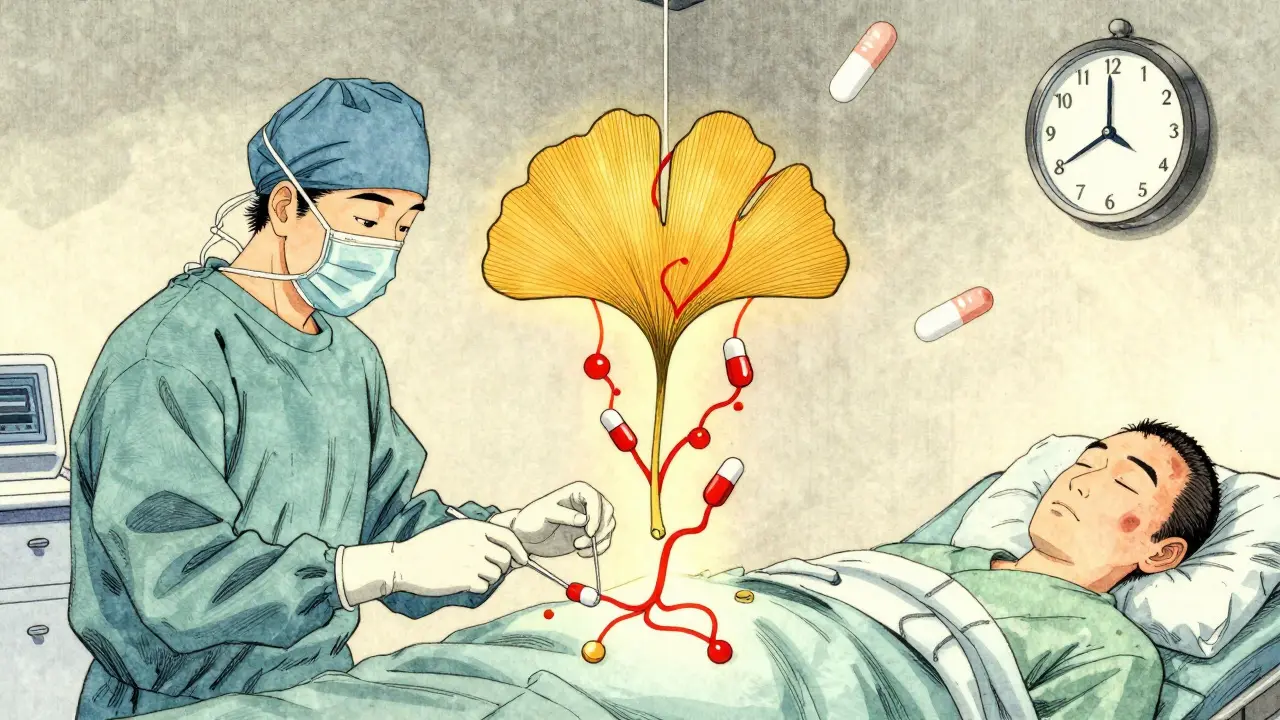
- Stop Ginkgo before surgery. The American Society of Anesthesiologists and many surgeons recommend stopping Ginkgo at least two weeks before any procedure. That includes dental work. Bleeding during or after surgery can be dangerous.
- Don’t assume "natural" means safe. Garlic, ginger, ginseng, danshen, and even high-dose vitamin E can also thin your blood. Ginkgo isn’t alone in this.
- Check your supplement label. If it doesn’t say "EGb 761" or "standardized extract," you don’t know what you’re getting. Look for third-party testing seals like USP or NSF.
- Watch for signs of bleeding. Unusual bruising, nosebleeds that won’t stop, blood in urine or stool, or headaches that feel different than usual could be warning signs.
What About the Pharmacist?
Most people don’t realize pharmacists are trained to catch these kinds of interactions. A 2022 survey found that 78% of pharmacists routinely warn patients about Ginkgo-blood thinner risks. If you pick up a prescription for warfarin or clopidogrel, ask your pharmacist: "Does this interact with any supplements I’m taking?" They’ll check your entire list-herbs, vitamins, OTC meds-and flag anything risky.
Electronic health records now often pop up alerts when a patient on a blood thinner is prescribed or refills Ginkgo. Epic’s system triggers only for warfarin. Cerner’s alerts for all anticoagulants. That means your doctor might already know you’re taking it-even if you didn’t tell them.
Bottom Line: Play It Safe
There’s no definitive proof that Ginkgo biloba causes dangerous bleeding with blood thinners. But there’s enough evidence to say: it’s not worth the risk.
You don’t need Ginkgo to protect your brain or your circulation. If you’re concerned about memory, talk to your doctor about proven strategies: exercise, sleep, managing blood pressure, and controlling cholesterol. If you’re taking a blood thinner, it’s because you have a condition that makes clots dangerous. Adding something that could make bleeding dangerous-even just a little-isn’t a trade-off worth making.
There’s no shame in skipping supplements. If your doctor says no to Ginkgo, it’s not because they don’t believe in natural remedies. It’s because they believe in keeping you safe.
Can I take Ginkgo biloba with aspirin?
It’s not recommended. Both aspirin and Ginkgo biloba reduce platelet function, which can increase your risk of bleeding. Even though some studies show no major interaction, case reports have linked the combination to nosebleeds, bruising, and even brain hemorrhages. If you’re taking aspirin daily for heart health, skip Ginkgo. Talk to your doctor before making any changes.
Is Ginkgo biloba safe with warfarin?
Most experts say no. GoodRx and the Mayo Clinic classify this as a high-risk interaction. While controlled studies haven’t consistently shown that Ginkgo raises INR levels (the measure of how thin your blood is), there are documented cases of dangerous bleeding when the two are combined. The risk is higher with non-standardized Ginkgo products. If you’re on warfarin, avoid Ginkgo unless your doctor specifically approves it-and even then, monitor your INR closely.
How long before surgery should I stop Ginkgo biloba?
Most guidelines recommend stopping Ginkgo biloba at least two weeks before any surgery, including dental procedures. Some doctors may say 36 hours is enough, but that’s not enough time for the effects to fully wear off. Bleeding during surgery can be life-threatening, and Ginkgo’s effect on platelets can linger. Don’t guess-ask your surgeon or anesthesiologist.
Are all Ginkgo supplements the same?
No. The only form studied in most clinical trials is EGb 761, a specific standardized extract. Many store-bought supplements don’t meet this standard and can vary wildly in potency. Some may have too little of the active compounds to matter. Others might have too much-or even contaminants. Look for products with USP, NSF, or ConsumerLab verification. If the label doesn’t say "standardized to 24% flavonoids and 6% terpenes," assume it’s not reliable.
What are safer alternatives to Ginkgo biloba for memory support?
There’s no supplement proven to significantly improve memory in healthy adults. But lifestyle changes can help: regular aerobic exercise, quality sleep, managing blood pressure and blood sugar, and eating a diet rich in vegetables, fish, and nuts. If you have mild cognitive concerns, talk to your doctor about checking for vitamin B12 deficiency, thyroid issues, or depression-all of which can mimic memory loss. These are proven, safe, and effective approaches-no supplements needed.
9 Comments
Ginkgo is just another herb people treat like medicine. I’ve seen guys in Delhi take it with aspirin and wonder why they’re bruising like they got in a fight. No science? Sure, but I’ve seen enough real cases to know better. Don’t be that guy who thinks ‘natural’ means ‘safe’-your liver doesn’t care about the label.
Man, this is why America’s healthcare is so broken. We let people take random herbal junk and then act shocked when they bleed out. In my country, you don’t mess with blood thinners. Period. If you’re dumb enough to take Ginkgo with warfarin, you deserve what you get. Stop treating supplements like vitamins and start treating them like drugs.
I appreciate how thorough this post is. My dad’s on Xarelto and he was thinking about Ginkgo for his memory-thankfully I caught it before he started. He’s now walking 30 minutes a day and sleeping better. No pills needed. Sometimes the simplest things work best.
Let’s cut through the noise. The fact that some studies show no interaction doesn’t mean it’s safe-it means the studies were too small, too short, or funded by supplement companies. The case reports? Those are real people who bled out in ERs. Medicine isn’t about ‘proof’-it’s about preventing harm. If you’re on a blood thinner and you’re still considering Ginkgo, you’re not being cautious-you’re being reckless.
Don’t take Ginkgo. Just don’t. Your brain will be fine without it.
This is an excellent and well-researched summary. I work in pharmacy and see this interaction all the time-patients often don’t realize that supplements are drugs too. The most common mistake? Assuming that because it’s sold in a health food store, it’s harmless. The EGb 761 standardization point is critical. Most products lack it. Also, pharmacists are your allies here-never hesitate to ask them to review your entire regimen.
As someone who grew up in Iran where herbal medicine is part of daily life, I get why people turn to Ginkgo. But I’ve also seen cousins end up in the hospital after mixing traditional remedies with Western meds. This post isn’t anti-natural-it’s pro-safety. Knowledge is power. If you’re going to mix things, at least know what’s in them and who’s warned you. Ask your pharmacist. Read the label. Don’t guess.
There’s a fascinating gap here between clinical evidence and clinical practice. The 2008 PubMed study you cited had a sample size of 200 patients over 12 months-statistically underpowered to detect rare bleeding events. Meanwhile, the FDA’s 18 case reports span 12 years and include multiple fatalities. That’s not noise-that’s signal. And the variability in supplement potency? A 2020 meta-analysis found that 41% of Ginkgo products tested contained less than 50% of the labeled active ingredients, while 12% contained unlisted contaminants like heavy metals. So you’re not just risking drug interaction-you’re risking toxicity. The fact that electronic health records now flag this interaction means the medical system is finally catching up. The real question isn’t whether Ginkgo interacts-it’s why we’re still debating it.
Of course you’re going to bleed if you mix Ginkgo with blood thinners. It’s not rocket science. People who take supplements are either naive or arrogant. And now we have doctors and pharmacists wasting time explaining this to adults who should’ve learned in high school biology. If you’re on warfarin and you think ‘natural’ means ‘no side effects,’ you’re not just ignorant-you’re dangerous. Stop being a guinea pig. Your life isn’t a Reddit experiment.