
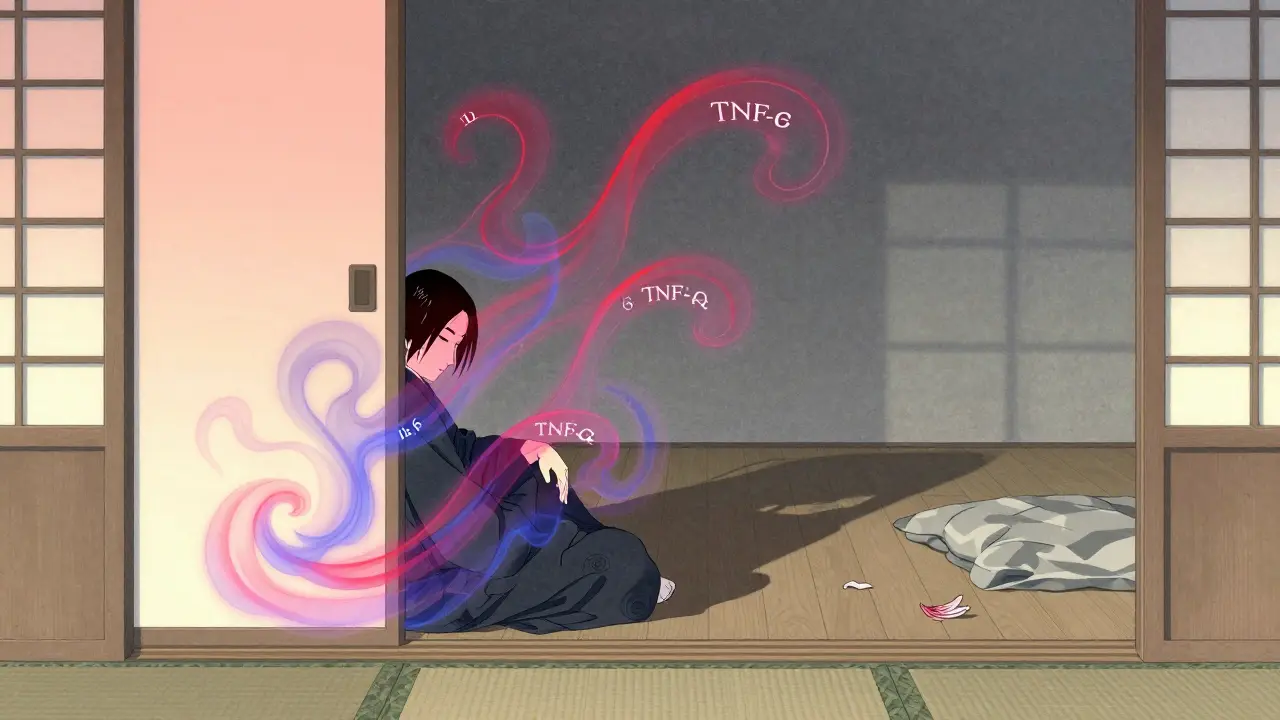
When you have an autoimmune disease, the most exhausting part isn’t always the pain, the joint swelling, or the rashes. It’s the fatigue. The kind that doesn’t go away after a full night’s sleep. The kind that makes walking to the kitchen feel like climbing a mountain. And it’s not just ‘being tired’-it’s a deep, bone-weary exhaustion that hits 98% of people with autoimmune conditions, according to research from the National Institutes of Health. This isn’t normal tiredness. This is a physiological storm inside your body, and it’s one of the most disabling symptoms you’ll face.
Why Is This Fatigue So Different?
Ordinary fatigue comes from staying up too late, working long hours, or running around with kids. It fades with rest. Autoimmune fatigue? It doesn’t care if you slept 10 hours. It doesn’t care if you took a nap. It lingers. And it gets worse after even small efforts-a concept called post-exertional malaise. You might feel fine in the morning, walk around the block, and by afternoon, you’re collapsed on the couch, mentally foggy, and physically drained for days. Studies show this fatigue scores an average of 7.2 out of 10 on severity scales, while healthy people average 2.8. That’s not just a little worse-it’s a massive gap. People with autoimmune conditions often describe it as a heavy blanket smothering their energy, making even simple tasks like showering or answering emails feel impossible. What’s happening inside your body? It’s not just your muscles tired. It’s your brain. Your immune system is stuck in overdrive, pumping out inflammatory chemicals like IL-1β, IL-6, and TNF-α-levels that can be 2.3 to 3.7 times higher than in healthy people. These cytokines don’t just attack your joints or skin. They cross into your brain, triggering neuroinflammation. Brain scans show this inflammation in 82% of patients with severe fatigue. Your brain’s energy centers are literally being flooded with signals to shut down. On top of that, your stress system-the HPA axis-gets worn out. Cortisol, your body’s natural energy booster, drops by 18-22%. Your body stops responding to stress like it should. And your mitochondria, the tiny power plants in your cells, produce 40-55% less energy. So even if your body had the will to move, your cells don’t have the fuel.Which Autoimmune Diseases Cause the Worst Fatigue?
Not all autoimmune diseases are equal when it comes to fatigue. Some hit harder than others:- Systemic lupus erythematosus (SLE): 98% of patients report severe fatigue
- Multiple sclerosis (MS): 96%
- Rheumatoid arthritis (RA): 94%
- Sjögren’s syndrome: 92%
- Celiac disease: 90%
- Type 1 diabetes: 88%
Why Do Doctors Often Miss It?
For years, fatigue was dismissed as ‘just stress’ or ‘depression.’ Even today, only 12% of rheumatologists routinely use validated tools to measure fatigue. Many patients report being told, ‘You look fine,’ or ‘Just get more sleep.’ But fatigue isn’t a sign you’re lazy. It’s a measurable biological response. The Multidimensional Fatigue Inventory (MFI-20) and the Functional Assessment of Chronic Illness Therapy-Fatigue (FACIT-F) are tools doctors should be using. A score below 34.5 on FACIT-F or above 18.7 on MFI-20 signals clinically significant fatigue. If your doctor isn’t asking about these, ask them. The disconnect isn’t just in clinics-it’s in insurance. Most plans won’t cover cognitive behavioral therapy for fatigue, specialized sleep programs, or even CoQ10 supplements, even though studies show they help. Over two-thirds of patients pay out-of-pocket for treatments that actually work.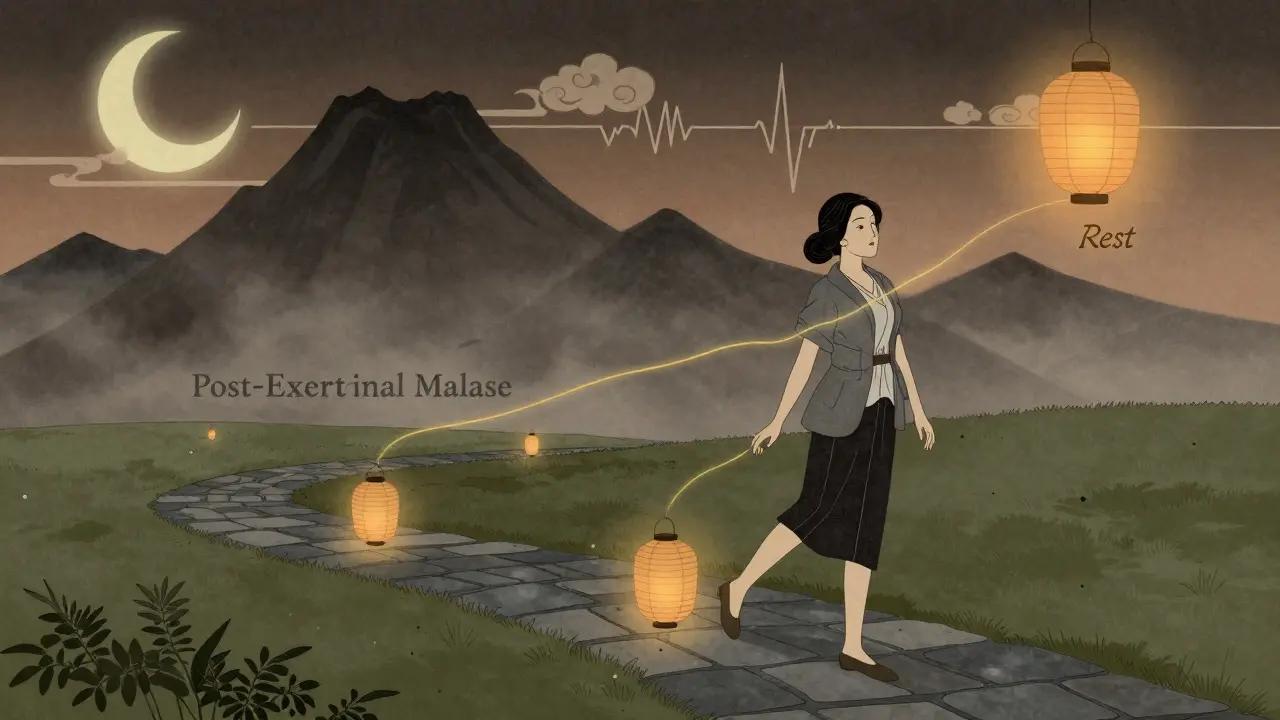
What Actually Works to Manage It?
There’s no magic pill. But there are proven strategies that, when combined, make a real difference. 1. Pacing-Not Pushing The biggest mistake people make is trying to ‘push through’ fatigue. That backfires. Pacing means breaking tasks into tiny chunks, resting before you hit your limit, and listening to your body. People who use pacing report a 78% success rate in managing fatigue. It’s not about being slow-it’s about being sustainable. 2. Sleep Optimization Sleep isn’t just about quantity-it’s about rhythm. People with autoimmune fatigue often have disrupted melatonin cycles. Their bodies don’t produce enough of the sleep hormone at night. Fixing this means:- Going to bed and waking up at the same time every day-even weekends
- Avoiding screens 90 minutes before bed
- Keeping the bedroom cool and dark
- Treating sleep apnea or restless leg syndrome if present
The Best Approach: A Combination Plan
The most successful strategy isn’t one thing-it’s all of it together. A 2021 study of over 1,200 patients found that those who got:- Medication optimization
- CBT-AF
- Personalized pacing and exercise
- Sleep support

What’s Coming Next?
Researchers are racing to find better tools. The NIH just funded $18.7 million for fatigue-specific research. New blood tests are being developed to detect fatigue biomarkers. Anti-IL-6 drugs, which target inflammation directly, are showing 38% fatigue reduction in early trials. Transcranial magnetic stimulation-a non-invasive brain treatment-is helping patients who haven’t responded to anything else. The first FDA-approved treatment specifically for autoimmune fatigue could be here by 2026. But until then, the tools we have now are powerful-if you know how to use them.What You Can Do Today
You don’t need to wait for a new drug. Start here:- Track your fatigue for one week. Note what you did, how much sleep you got, and your energy level (1-10).
- Find your personal ‘energy threshold.’ What activity makes you crash? Do less of that.
- Set one small sleep goal: go to bed 30 minutes earlier, or turn off screens an hour before bed.
- Ask your doctor: ‘Can we measure my fatigue using FACIT-F or MFI-20?’
- Try one supplement: CoQ10 200mg daily. Give it 8 weeks. See if you feel even slightly more energy.
15 Comments
This hit me right in the chest. I’ve had lupus for 12 years and no one gets how walking to the fridge can leave me sobbing on the floor. It’s not laziness. It’s my immune system throwing a rave inside my brain while my mitochondria take a nap. Thanks for putting this into words.
I started pacing last year-5 minutes of standing, then 10 minutes of sitting. It sounds tiny, but it’s the first thing that didn’t make me crash for three days. I’m not ‘getting better.’ I’m learning to not destroy myself trying to be normal.
Oh wow, another ‘autoimmune fatigue is real’ PSA. Next you’ll tell me water is wet and gravity exists. I mean, I get it, you’re tired. But do you really think the NHS or Medicare is gonna fund your CoQ10 habit because you’re ‘too exhausted’ to fold laundry? Get a job that doesn’t require moving.
Also, ‘neuroinflammation’? Sounds like a TikTok buzzword. Did you Google this or actually see a doctor who didn’t just hand you a Zoloft prescription?
Okay, I’m gonna say this with zero sarcasm (which is hard for me): this is the most accurate thing I’ve read about fatigue in 8 years. I have Sjögren’s and I swear my brain has a ‘low battery’ icon that just flashes red at 10am. And yes, I’ve cried in the shower because I couldn’t lift my arm to shampoo.
CoQ10? Took me 6 months to notice a difference, but now I can actually open a jar without needing a nap afterward. Also, sleep hygiene isn’t ‘self-help fluff’-it’s biology. Your melatonin isn’t broken, it’s just ignored. Fix the rhythm. The energy follows.
Also, ‘just sleep more’ is the worst thing anyone’s ever said to me. I’ve slept 12 hours and still felt like I was drowning in wet cement. Don’t tell me to rest. Tell me how to rest *right*.
There is no such thing as ‘autoimmune fatigue’ as a distinct clinical entity. It’s a catch-all term invented by patients who refuse to accept that chronic illness is not an excuse for inactivity. The NIH data cited is correlational, not causal. The fact that 98% of lupus patients report fatigue doesn’t mean it’s caused by autoimmunity-it means they’re depressed, sedentary, or overweight.
CoQ10? A supplement with less regulatory oversight than a YouTube influencer’s ‘detox tea.’ And pacing? That’s just glorified quitting. If your body can’t handle a full workday, perhaps you shouldn’t be working. The medical system rewards victimhood, not resilience.
YOU ARE NOT ALONE. I used to think I was broken. Then I found out my fatigue wasn’t emotional-it was mitochondrial. I started with 3 minutes of walking. Three. Minutes. And now? I hike. Not because I’m strong, but because I learned to listen. You don’t have to ‘beat’ fatigue. You just have to stop fighting it. Start small. Be kind to your body. You deserve to feel better. And yes, CoQ10 works. I swear on my last good night’s sleep.
Don’t let anyone tell you it’s ‘all in your head.’ Your head is literally being attacked by your own immune system. That’s not weakness. That’s war. And you’re still standing. That’s courage.
You’re all just making excuses. If you were really sick, you’d be in a hospital, not on Reddit typing about your ‘energy threshold.’ I’ve seen patients who have real disabilities-amputations, ventilators, paralysis. You’re not one of them. You’re just lazy and overmedicated.
And why do you think your doctor doesn’t ‘measure fatigue’? Because it’s not measurable. It’s subjective. It’s not a lab value. It’s a mood. If you want to be taken seriously, stop whining and get a job that doesn’t require you to move more than your fingers.
Okay, real talk: I thought I was the only one who collapsed after folding laundry. Turns out, my brain is just on fire. I tried CBT-AF last year. It didn’t make me ‘positive.’ It made me stop feeling guilty for napping. That’s huge.
Also, pacing isn’t ‘going slow’-it’s survival. I used to do 10 things a day and crash for 48 hours. Now I do one thing, rest, then maybe one more. I’ve got my life back-not because I’m cured, but because I stopped trying to be someone I’m not.
And CoQ10? Yeah, it’s not magic. But after 8 weeks, I could carry groceries without crying. That’s not placebo. That’s mitochondria saying ‘thank you.’
My wife has MS. She doesn’t talk about it much. But last week, she sat on the porch for an hour just watching birds. She said it was the first time in months she didn’t feel like she was drowning. I didn’t know what to say. So I didn’t say anything. Just handed her tea.
This post made me understand why. It’s not about being tired. It’s about being constantly, quietly, exhaustingly *present* in a body that won’t cooperate. Thank you for saying that out loud.
I’ve been thinking a lot about how society equates productivity with worth, and how that’s weaponized against people with invisible illnesses. I mean, if you can’t work 40 hours, clean your house, cook three meals, and still have energy to socialize-you’re failing. But what if your body’s power grid is running on 20% capacity? Do you still owe the world a perfectly curated life? I don’t think so.
And the idea that ‘just rest more’ fixes it? That’s like telling someone with a broken leg to ‘just walk more.’ You’re not broken. You’re just running on a different operating system. And honestly? Maybe we need to redesign the system instead of blaming the user.
I started tracking my energy for a week. I didn’t change anything. I just noticed. And that noticing? That was the first step toward not hating myself for existing.
Let’s talk about the cytokine cascade. IL-6 and TNF-alpha aren’t just ‘inflammatory markers’-they’re neuromodulators that directly inhibit dopaminergic pathways in the basal ganglia. That’s why motivation plummets. It’s not depression. It’s neurochemical sabotage. And the HPA axis dysregulation? Classic adrenal fatigue-though I hate that term because it’s been co-opted by wellness influencers.
But here’s the kicker: mitochondrial biogenesis is suppressed via PGC-1α downregulation. So even if you get more sleep, your cells can’t regenerate ATP efficiently. That’s why pacing + CoQ10 + circadian alignment is the trifecta. It’s not anecdotal. It’s systems biology.
Also, modafinil works because it’s a dopamine reuptake inhibitor. It doesn’t fix the root cause, but it buys you hours. And in chronic illness? Hours are currency.
My doctor told me to ‘get more sleep’ and I cried in the parking lot. Not because I’m dramatic. Because I’ve slept 11 hours. I’ve tried melatonin. I’ve tried magnesium. I’ve tried weighted blankets. I’ve tried yoga. I’ve tried fasting. I’ve tried everything. And still, I can’t lift my head off the pillow at 3pm.
And then I read this and realized-I’m not broken. My body is fighting a war I didn’t ask for. And the worst part? No one sees it. Not my boss. Not my family. Not even my therapist.
So I’m done pretending. I’m done apologizing. I’m done being ‘productive.’ I’m just gonna sit here. And if you don’t get it? That’s fine. But don’t tell me to try harder. I’ve been trying for 12 years.
Wait, so you’re saying your fatigue is ‘biological’ but your depression isn’t? That’s not how it works. You’re clearly mentally exhausted. Maybe you should see a therapist instead of buying supplements off Amazon. Also, why are you so obsessed with your energy levels? Sounds like you’re addicted to tracking your own suffering.
And ‘pacing’? That’s just a fancy word for quitting. You’re not disabled-you’re just unwilling to push through discomfort. Everyone gets tired. You’re just choosing to make it your identity.
While the pathophysiological mechanisms elucidated in this article are indeed compelling, it is imperative to acknowledge that the Western biomedical paradigm often over-medicalizes subjective experiences. The reliance on biomarkers such as IL-6 and TNF-alpha as causal agents for fatigue lacks sufficient longitudinal validation. Moreover, the promotion of CoQ10 supplementation as a therapeutic intervention is not supported by large-scale RCTs in non-MS populations.
Furthermore, the assertion that cognitive behavioral therapy for fatigue (CBT-AF) is ‘27% more effective than standard care’ is misleading, as standard care in many regions does not include any structured fatigue management protocol. This creates a false baseline for comparison.
In non-Western contexts, fatigue is often contextualized within sociocultural frameworks of duty, endurance, and spiritual resilience-concepts that are entirely absent from this discourse.
It is statistically implausible that 98% of lupus patients experience fatigue as their primary symptom. The sample sizes in such studies are often non-representative, drawn from tertiary care centers where patients are already severely affected. The general population prevalence is likely closer to 30-40%.
Additionally, the NIH funding allocation for fatigue research is disproportionate to other autoimmune manifestations. Why is there no equivalent funding for preventing organ damage in lupus nephritis? Why is fatigue prioritized over mortality?
Finally, the suggestion that patients should ‘ask their doctor’ about FACIT-F is naive. Most primary care physicians in rural America cannot access such tools. The assumption that universal access to specialized assessments is feasible reflects a profound disconnect from the realities of American healthcare infrastructure.
^This. I read your comment and I laughed because I thought you were joking. But then I realized-you’re serious. I’m not asking for a medal. I’m asking for someone to believe me when I say I can’t brush my hair. That’s not a ‘mental block.’ That’s my body saying ‘no.’
And you think I’m addicted to tracking my energy? No. I’m addicted to surviving. I don’t want to be ‘productive.’ I want to be able to hold my kid without falling asleep. That’s not weakness. That’s the bare minimum.