

Did you know that sleeping in your soft contact lenses makes you 100 times more likely to develop a severe eye infection? It sounds extreme, but the data backs it up. You might think your eyes are fine because you see clearly, yet damage can be happening beneath the surface. When that happens, you aren't just dealing with a scratch; you could be facing a corneal ulcer. This open sore on the clear front part of your eye isn't just painful; it threatens your vision permanently.
If you wear contacts, you need to understand exactly what this condition is, how it forms, and why waiting it out at home is dangerous. We're going to look at the biological mechanics of why a plastic lens turns hostile against your eye tissue, and walk through the urgent steps to take when something feels wrong.
Defining the Problem: Ulcer Versus Scratch
Many people confuse a corneal abrasion with a corneal ulcer, but the difference determines whether you visit a doctor or wait it out at home. An abrasion is like scraping the skin off your knee-it hurts, it heals quickly, and usually clears up on its own. An ulcer, however, involves actual tissue loss driven by infection.
Corneal Ulcer is an open sore on the cornea, the transparent outer layer of the eye, typically caused by an infection that has destroyed the surface tissue. Also known as Corneal Infection, it represents a serious complication often linked to improper contact lens hygiene. Without prompt treatment, these sores can scar deeply, leading to blurred vision or permanent blindness.The cornea itself acts as a protective shield and a focusing lens for your eye. It needs constant oxygen to survive. When that supply gets cut off or bacteria get trapped underneath a contact lens, the cells die and rot. That is the start of an ulcer.
The Cleveland Clinic notes that this distinction is vital. If you feel a grittiness, it might be dust. If you have a white spot on your iris area or intense pain that doesn't resolve, it is likely an ulcer. The progression from irritation to infection happens faster than most people expect, sometimes within 24 hours.
Why Contact Lenses Raise the Risk
Contact lenses are generally safe when used correctly, but they change the environment of your eye significantly. Think of your lens as a barrier. When it sits on your cornea, especially overnight, it restricts oxygen flow. This oxygen deprivation weakens the cornea's natural defense system.
| Risk Factor | Mechanism of Damage | Relative Risk Increase |
|---|---|---|
| Sleeping in Lenses | Traps bacteria under lens and cuts off oxygen | 100 times higher risk |
| Extended Wear | Lens warping and solution residue buildup | 10 times higher risk |
| Torn or Scratched Lens | Physical damage creates entry points for bacteria | Significantly elevated risk |
| Poor Hygiene | Fingers transfer bacteria directly to the eye | Depends on hand washing frequency |
Beyond oxygen issues, the physical act of handling lenses introduces germs. Your fingers are not sterile. Even if you wash them, microscopic particles of bacteria can stick to your contact lens case or the solution itself. Once the lens touches the eye, that colony grows rapidly in the warm, moist environment of the tear film.
The most common culprits behind these infections are Pseudomonas aeruginosa, a type of bacteria found widely in soil and water, and Acanthamoeba, a tiny amoeba found in tap water. Both thrive on contact lenses. While Pseudomonas causes rapid, aggressive ulcers, Acanthamoeba is notorious for being incredibly difficult to treat and causing chronic pain.
Recognizing the Symptoms Early
Catching an ulcer early saves your sight. You cannot always see the problem yourself in the mirror, but your body sends warning signals. Ignoring mild discomfort is where most people make their biggest mistake.
Watch out for these specific signs:
- Severe Redness: One bloodshot eye, particularly surrounding the iris rather than just the whites.
- Vision Changes: Blurry or hazy vision that doesn't clear up with blinking.
- Pain and Light Sensitivity: The eye feels raw, and lights seem painfully bright (photophobia).
- Discharge: Thick yellow or green mucus leaking from the eye.
- White Patch: A cloudy spot visible on the surface of the eye.
If you experience these, stop wearing your contacts immediately. Do not put them back in the next day even if it feels better. The pain might fade temporarily due to nerve damage, but the infection remains.
Diagnostic Procedures at the Clinic
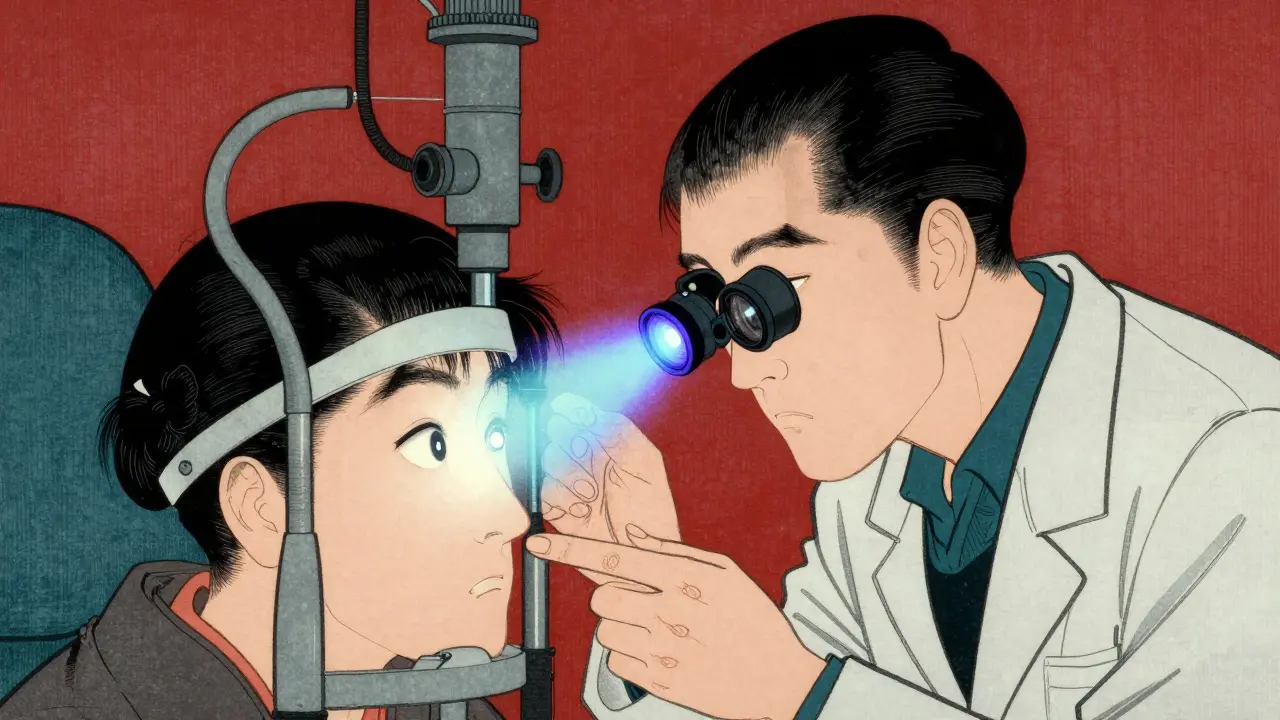
When you arrive for urgent care, an optometrist or ophthalmologist performs a specific set of tests to pinpoint the cause. They don't just look; they take samples.
A slit-lamp examination allows the doctor to magnify your eye under bright light, revealing infiltrates-spots of immune cells fighting the bacteria. They may apply a fluorescent dye called fluorescein. This stain glows under blue light, highlighting the exact shape and depth of the ulcer. Deep ulcers show up immediately as dark cracks in the glow.
In some cases, they perform a corneal scraping. Using a tiny swab, they collect material from the edge of the sore and send it to a lab. This culture identifies exactly which bacteria, fungus, or virus is attacking your eye. Knowing the enemy dictates the cure. For example, treating a fungal ulcer with antibiotics meant for bacteria won't work and wastes time.
Treatment Paths and Recovery
Once the diagnosis is made, the treatment protocol shifts based on severity. If the ulcer is small and not affecting your line of sight, doctors often start with broad-spectrum antibiotics immediately.
Fluoroquinolones are a class of powerful antibiotic eye drops commonly prescribed as the first line of defense for corneal ulcers. These medications work by stopping the growth of bacteria. Typical brands include ciprofloxacin and moxifloxacin.You might be told to drop medication every hour around the clock for several days. If the ulcer is large or threatening vision, the doctor prescribes stronger combinations or adds anti-inflammatory agents. However, steroids require caution here. While they reduce swelling, using them on certain viral or fungal infections can actually worsen the condition.
For the most severe cases involving deep scarring or a perforated cornea, a corneal transplant becomes necessary. This surgery replaces the damaged tissue with donor tissue. It is a last resort, reserved for cases where vision was lost or the eye's integrity is compromised. Fortunately, with timely intervention, most ulcers heal completely without long-term damage.
Prevention Is Your Best Medicine
Since treating a corneal ulcer is painful and risky, avoiding it entirely is the goal. This requires changing your habits regarding your lenses. The FDA explicitly warns about the hazards of non-compliance with lens safety protocols.
Here are the hard rules to follow:
- Never Sleep in Soft Lenses: Unless specifically prescribed for extended wear by a doctor, remove them before bed. The 100-fold risk increase is real.
- No Water Exposure: Never shower, swim, or splash tap water on your face while wearing contacts. Tap water contains Acanthamoeba.
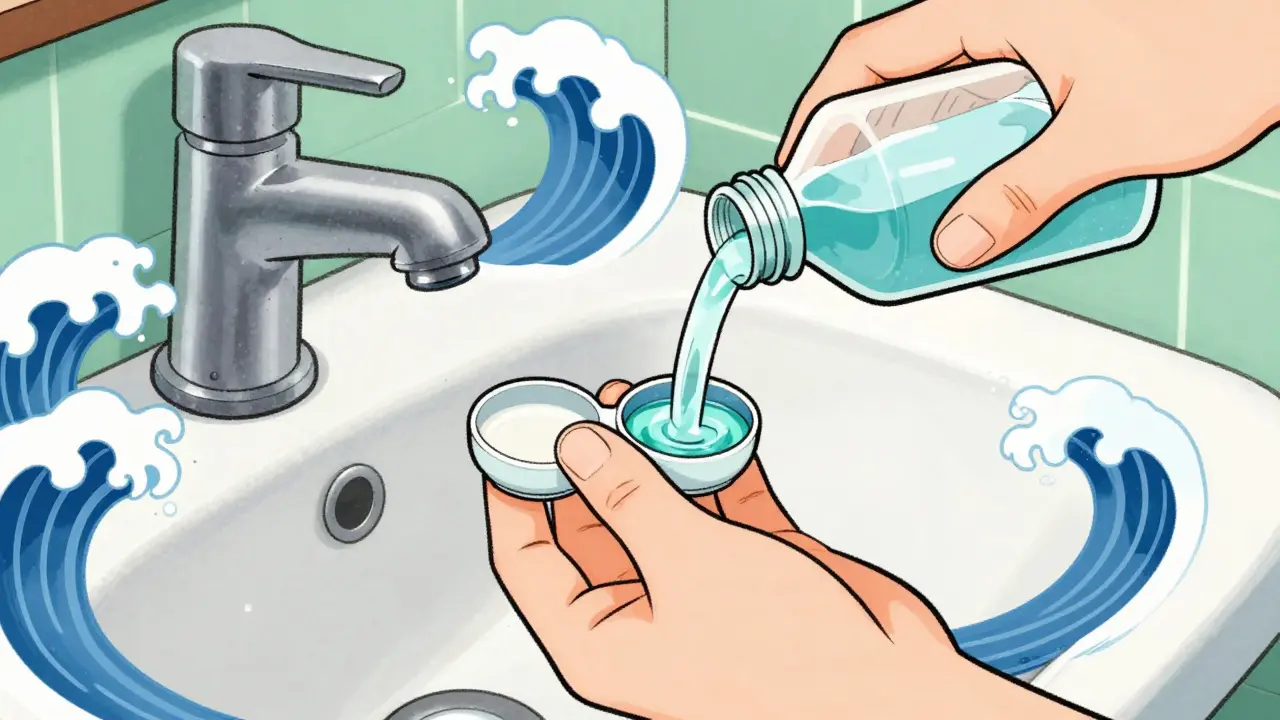
- Replace Solutions: Always pour fresh solution into your case. Do not top up old fluid.
- Inspect Your Case: Replace your contact lens storage case every three months. Old cases harbor bacteria in their scratches.
- Give Your Eyes Breaks: Switch to glasses regularly to let your corneas breathe freely.
If you find your lenses are scratched or torn, throw them away. A rough edge on a contact lens acts like a knife on your delicate cornea. Keeping a spare pair of glasses at home makes swapping easier when you sense irritation.
Urgency of Seeking Help
The window for preventing permanent damage is narrow. Delaying care allows the ulcer to eat deeper into the corneal stroma. Dr. Audrey Tai of Athena Eye Care emphasizes that using modern imaging systems can help catch these sooner, but ultimately, your judgment matters most. If you suspect an infection, go to a specialist who specializes in corneal disease.
Can a corneal ulcer heal on its own?
While minor scratches can self-heal, true corneal ulcers rarely recover without professional treatment. An ulcer involves tissue death and infection. Leaving it untreated often leads to worsening infection and permanent scarring.
How long does recovery take?
Recovery time depends on the severity. Mild ulcers treated immediately may heal in a few weeks. Deeper or complicated infections can take months of intensive medication and monitoring before the cornea fully regenerates.
Is it safe to wear contacts again after an ulcer?
Yes, many people return to wearing contacts once fully healed, provided the doctor clears you. However, you must strictly adhere to hygiene rules. Some patients are advised to switch to daily disposable lenses to reduce contamination risk.
What if the ulcer gets worse during treatment?
If the ulcer grows larger despite 48 hours of medication, your doctor may need to repeat cultures or adjust the medication. Sight-threatening ulcers require more aggressive therapy to prevent perforation.
Are there differences in risk between brand names?
All soft contact lenses carry similar risks if worn improperly. Extended-wear brands specifically warn against sleeping in them. Regardless of the brand, strict adherence to replacement schedules minimizes the danger.
15 Comments
people really need to stop sleepng in those contacts because it destroys your vison completely.
The statistics presented here are likely inflated by insurance companies pushing for unnecessary medical procedures and treatments.
Your assertion lacks empirical grounding when considering the peer-reviewed literature on corneal hypoxia. The Cleveland Clinic study cited in the text corroborates the infection rates observed in clinical settings. Medical protocols exist to prevent permanent damage that cannot be reversed by simple rest. Ignoring established biological mechanisms leads to preventable blindness in susceptible populations.
I remember my cousin who slept in her lenses every night for years without issue until she suddenly couldn't see clearly. She went to the doctor and found out it was already serious damage that needed immediate intervention. It turns out the pain wasn't there yet because the nerves had gone numb from the pressure. Waiting until something hurts often means the problem has already moved past the warning stage. We all think our bodies are tougher than they actually are in those moments of fatigue. A single night of neglect can ruin a decade of clear vision habits we built carefully. The cost of replacement glasses is nothing compared to the agony of losing sight permanently. Doctors emphasize this because they see the worst cases daily from people who ignored simple rules. Prevention is always cheaper than cure in almost every aspect of life. Cleaning cases thoroughly removes bacteria that accumulate silently during storage periods. Hygiene routines become second nature when you understand the stakes involved. Your eyes deserve better care than we often give them in a rushed morning routine. Small changes make a massive difference in long-term outcomes for everyone wearing corrective lenses. Please take the time to swap to glasses when you feel tired instead of risking your future.
Culturally, we view convenience as the highest priority often overlooking the biological maintenance our organs require for survival. In many traditional communities, vision is treated with sacred respect that modern society has unfortunately eroded significantly over time. People forget that soft plastic creates a microenvironment that does not naturally occur anywhere else on the human body surface. Oxygen deprivation happens regardless of brand quality because physics dictates gas exchange limitations through synthetic materials. Extended wear simply pushes the limits beyond what evolutionary biology intended for our ocular tissues specifically designed for open exposure. Water exposure introduces microbes that thrive in moist conditions found within contact lens reservoirs used for cleaning solutions regularly. Tapping into tap water sources brings specific organisms that standard antibiotics may not handle effectively without specialized culture testing first. We must return to older methods of handling hygiene before technology made us complacent about our bodily integrity again soon. The wisdom of removing barriers exists in ancient texts regarding sensory organ protection against environmental contaminants constantly present around us today. Switching to glasses allows the epithelial layer to regenerate fully without constant friction from foreign objects placed on sensitive skin. This recovery process is vital for maintaining clarity throughout the lifespan of an individual wearing corrective aids. Our collective behavior shifts slowly towards safety only after significant public tragedy forces regulatory changes in product labeling standards. Prioritize your health by understanding these deeper connections between material science and organic tissue vulnerability.
You must adhere strictly to the recommended removal schedule outlined by the FDA to ensure ocular integrity. Sleeping in lenses is an unacceptable risk that compromises the structural defense mechanisms of the human cornea effectively. Immediate action upon symptom onset prevents systemic infection from spreading deeper into the stromal layers of the eye. Do not ignore redness as it indicates active inflammatory responses requiring professional assessment without delay. Compliance with hygiene protocols is non-negotiable for anyone wishing to maintain functional visual capabilities indefinitely.
Surely sleeping on contact lenses is just part of the grand design for making us buy more replacement stock forever. Doctors love the revenue stream from treating preventable infections caused by basic laziness errors. It makes you wonder if the solution bottles themselves are contaminated intentionally to ensure recurring visits.
This is absolutely terrifying!!! 😱 I never realized the risk was that high!!! 🚫👓 Everyone please share this immediately!! 😰 The bacteria can be so bad 😬
Only the weak fail to manage their own hygiene standards properly and end up blinding themselves unnecessarily. Real elegance comes from discipline and not succumbing to the temptation of staying in for comfort 😒💅 Your vision is a privilege reserved for those with true self-control!
Stop ignoring the obvious signs!!! If you feel grittiness it is dangerous!!! You are ruining your own face by being lazy!!! These ulcers do not heal without expensive drugs!!! Clean your hands better!!! Don't touch your eyes!!!
The chemicals in modern solutions might actually be causing the sensitivity issues rather than just the bacteria alone. They push fluoroquinolones because natural healing is too slow for their profit margins to accept. Water filters at home aren't enough when tap infrastructure holds hidden pathogens waiting for contact. Trust your gut when the light hits your eyes wrong and remove everything immediately.
We shouldn't trust the big corporations behind lens manufacturing to disclose all side effects regarding long term use safely. Government guidelines often lag behind independent research findings regarding bacterial strain resistance in household environments. Be skeptical of official advice until you verify it yourself with independent medical sources online.
The philosophical implication of surrendering biological autonomy to synthetic devices is profound and disturbing to contemplate deeply. We trade the natural resilience of our organism for transient aesthetic enhancement without measuring the cost. True freedom lies in the capacity of the eye to function without artificial augmentation constantly intervening.
Urgent adherence to sterile techniques ensures longevity of vision which is irreplaceable once lost permanently to disease. Maintaining case hygiene prevents microbial colonization that thrives in stagnant liquid residue within storage units regularly. Early detection saves resources and prevents suffering associated with severe corneal degradation events inevitably. Commitment to protocol reflects dedication to self-preservation above temporary convenience habits developed over time.
Imagine waking up and realizing the world is blurry forever because you fell asleep with plastic in your eyes 😱 It would be a total nightmare scenario for any parent or professional trying to function normally in society today!