
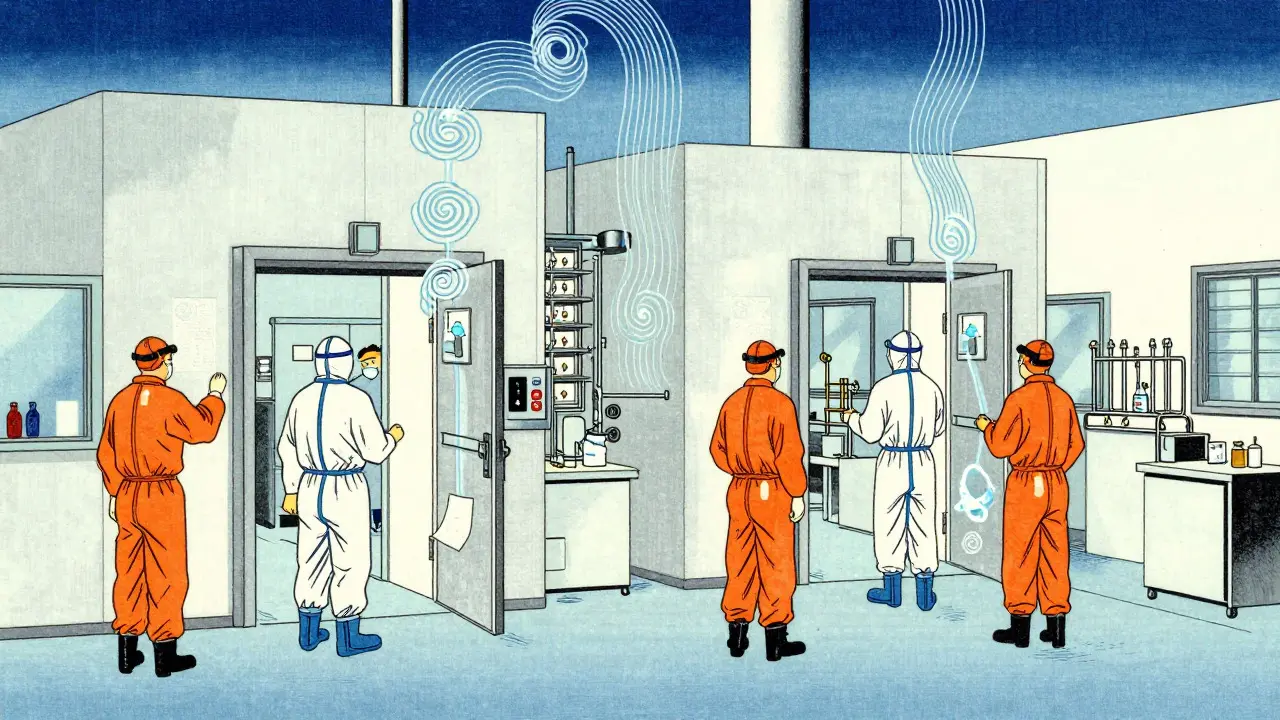
Imagine a pill that looks perfect on the outside but contains invisible nitrosamines or trace metals from the previous batch. For generic manufacturers, this isn't just a quality hiccup; it’s a regulatory nightmare and a safety risk. Contamination controls are systematic protocols designed to prevent cross-contamination, microbial intrusion, and chemical adulteration during the production of generic drugs. These measures ensure that every tablet meets strict safety standards before reaching your pharmacy shelf. The stakes are high. In fiscal year 2022, contamination-related violations accounted for 37.2% of all Warning Letters issued by the U.S. Food and Drug Administration (FDA) to pharmaceutical manufacturers. When things go wrong, the costs soar. Take the 2020 Valsartan incident, where nitrosamine contamination affected 22 generic manufacturers globally, leading to $1.2 billion in product losses. This article breaks down how generic makers prevent these disasters, the technology they use, and the human factors that often slip through the cracks.
The Regulatory Backbone: Why Adulteration Matters
To understand contamination control, you first need to grasp what regulators consider "adulterated." Under 21 CFR 210.3(b)(3), a drug is adulterated if it has been prepared, packed, or held under unsanitary conditions that may have caused it to be contaminated with filth or rendered injurious to health. This definition drives the entire framework of Current Good Manufacturing Practices (CGMP). The rules haven’t always been this strict. The foundation was laid by the 1963 U.S. Federal Food, Drug, and Cosmetic Act amendments, but significant evolution happened with the FDA's 2004 guidance and subsequent ICH Q7 guidelines. Today, the focus is on prevention rather than detection. Dr. Janet Woodcock, former FDA CDER Director, famously stated in her 2021 Senate testimony that relying solely on end-product testing for contamination control is a fundamental CGMP violation. You can't test every single pill for purity; you must build a system where contamination simply doesn't happen.
Cleanroom Standards: The Physical Barrier
Most people think of a factory as a dirty place, but generic drug manufacturing happens in some of the cleanest environments on Earth. Facilities must adhere to ISO 14644-1 cleanroom classifications. Here is how the zones break down:
- ISO Class 5 (Grade A): Used for aseptic filling. It allows a maximum of 3,520 particles ≥0.5μm per cubic meter. Think of this as the heart of the operation.
- ISO Class 7 (Grade C): Background environments where less critical steps occur.
- ISO Class 8 (Grade D): Less critical areas, such as packaging zones.
Technology vs. Human Error
You might assume that expensive machines solve everything. While technology helps, human factors remain the biggest threat. A 2023 PDA Journal article by Dr. Michael Gamlen notes that failure modes and effects analysis (FMEA) shows 83% of contamination events originate from human factors.
Consider gowning compliance. In a 2021 study at an AstraZeneca generics facility, compliance dropped by 40% after 8 hours into a 12-hour shift. Fatigue leads to mistakes, like skipping an air shower step or touching a non-sterile surface. To combat this, many facilities now use staggered shift changes to minimize personnel traffic and color-coded equipment systems, which reduce mix-ups by 65%.
On the technology side, real-time monitoring is becoming standard. Real-time particle counters like the MetOne 3400+ provide continuous monitoring. According to a 2022 ISPE benchmarking study, these systems reduce contamination incidents by 63%. In contrast, manual monitoring protocols miss 78% of transient contamination events, as found in FDA field investigations. While these units cost between $15,000 and $25,000 each, the reduction in batch failures makes them a worthwhile investment for larger players.
Cleaning Validation: Proving the Floor is Clean
It’s not enough to say you cleaned the machine; you have to prove it. Cleaning validation protocols must demonstrate specific limits:
| Method/Metric | Standard/Limit | Turnaround Time | Key Advantage |
|---|---|---|---|
| Microbial Limit (Swabbing) | ≤10 CFU per 25cm² | 5-7 days (Traditional) | Gold standard for accuracy |
| Chemical Residue | ≤10 ppm | Variable | Detects active ingredient carryover |
| ATP Bioluminescence | Quantitative data | 5 minutes | 95% correlation to culture methods |
| Rapid Microbiological Methods (RMMs) | ≤10 CFU per 25cm² | 24-48 hours | Faster than traditional culture |
Implementation Challenges and Costs
Implementing robust contamination controls is a major operational transformation. A 2022 benchmark by EY found that generic manufacturers typically require 18-24 months to fully implement EU GMP Annex 1 updates. Initial validation phases consume 35-45% of project timelines.
Costs vary significantly based on scale. According to a 2023 McKinsey analysis, innovator companies invest 2.3x more in facility design ($185 million versus $80 million for equivalent capacity). Generic manufacturers compensate through operational excellence in procedural controls. However, smaller facilities face a barrier to entry. Adoption rates show that 89% of top 50 generic manufacturers use real-time monitoring systems, compared to only 37% of small facilities, reflecting the $500,000-$2 million implementation cost barrier documented in a 2023 Deloitte analysis.
Raw material variability is another headache. Indian generic manufacturers report 22% higher raw material contamination incidents versus EU sources, according to EDQM 2022 data. This highlights that contamination control starts before the manufacturing floor, right at the supplier level.
Future Trends: AI and Sustainability
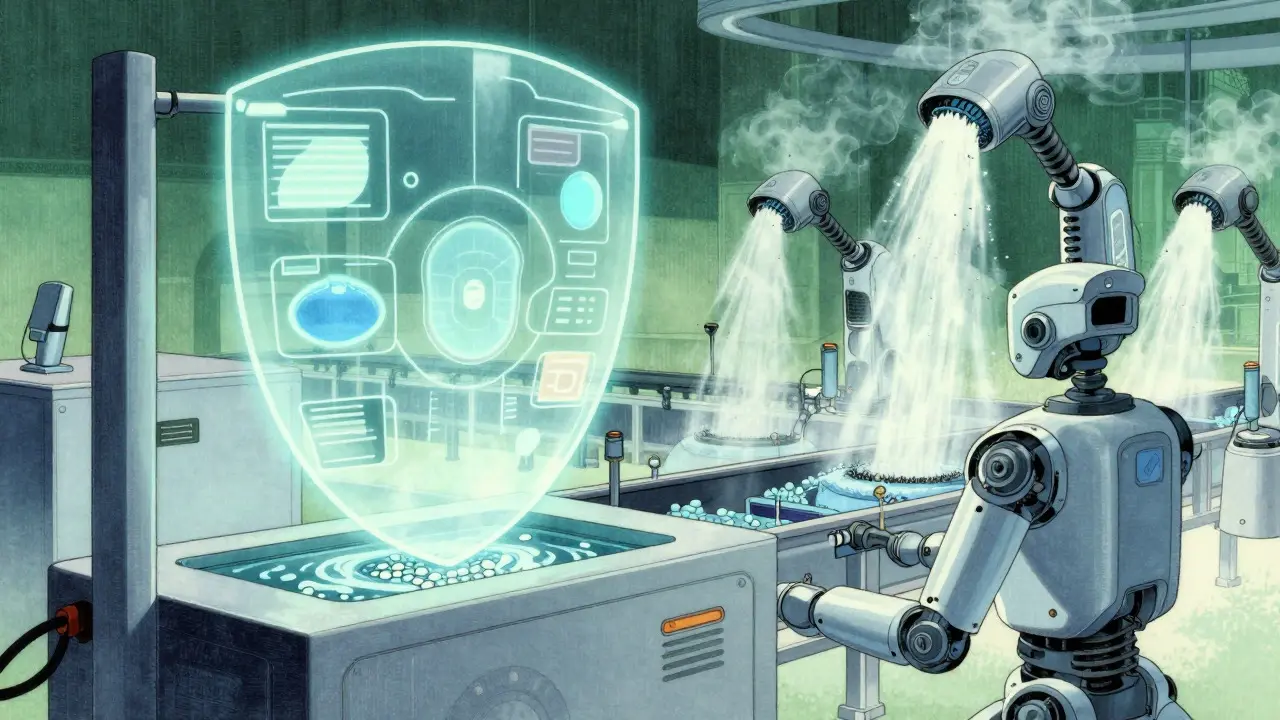
The industry is moving toward smarter, greener solutions. FDA's September 2023 draft guidance 'Cross-Contamination Controls for Solid Oral Dosage Forms' requires health-based exposure limits (HBELs) for all products by 2025. Implementation costs are estimated at $1.2 million per facility by the Generic Pharmaceutical Association. Technologically, AI-powered contamination prediction systems are entering the scene. Honeywell's Forge Pharma reduced false alarms by 68% in a 2023 Merck generics pilot. On the sustainability front, waterless cleaning technologies are gaining traction. A 2022 GlaxoSmithKline generics facility case study showed these innovations reduce utility costs by 22%. Long-term viability assessments by McKinsey indicate that facilities investing in integrated contamination management systems will achieve 3.2x ROI over 5 years through reduced batch failures.
Frequently Asked Questions
What is the most common cause of contamination in generic drug manufacturing?
Human error is the primary culprit, accounting for 47% of contamination-related batch rejections according to a 2023 PDA member survey. Equipment cleaning failures follow at 29%, while raw material contamination accounts for 18%.
How do generic manufacturers differ from innovators in contamination control?
Innovator companies typically invest significantly more in advanced facility design upfront. Generic manufacturers often rely on rigorous procedural controls and operational excellence to manage risks, compensating for lower initial capital expenditure with stricter daily protocols.
What is an HBEL and why is it important?
HBEL stands for Health-Based Exposure Limit. It is a scientific threshold that defines the maximum amount of a substance a patient can be exposed to without adverse health effects. FDA guidance requires using HBELs to set cleaning validation limits, ensuring safety is based on toxicology rather than arbitrary numbers.
Can small generic manufacturers afford real-time monitoring systems?
It is challenging due to the $500,000-$2 million implementation cost barrier. As a result, only 37% of small facilities currently use these systems, compared to 89% of top-tier manufacturers. Many smaller players still rely on periodic manual sampling despite its lower efficacy.
How long does it take to validate new contamination controls?
Full implementation of updated standards, such as EU GMP Annex 1, typically takes 18-24 months. The initial validation phase alone consumes 35-45% of the total project timeline, requiring extensive documentation and testing before the system is considered compliant.