
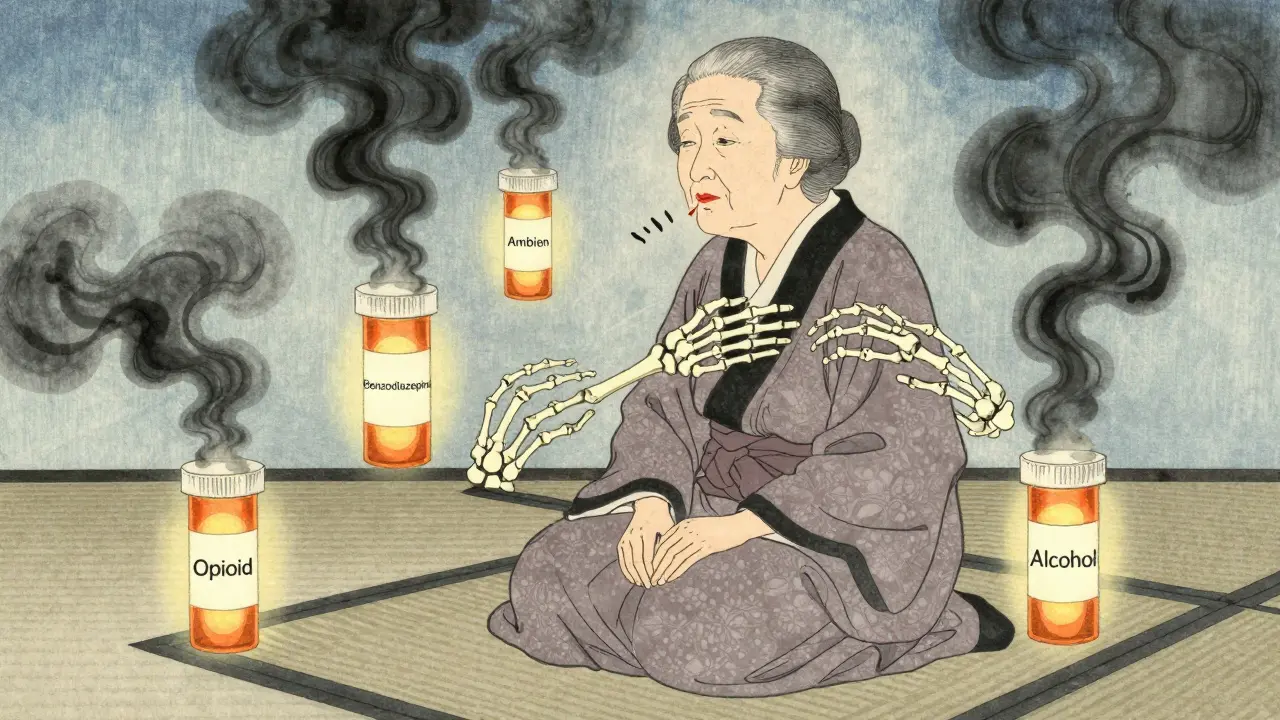
When you take more than one sedating medication at the same time, the effects don’t just add up-they multiply. This isn’t just a theoretical concern. Every year, over 1.3 million people in the U.S. end up in the emergency room because of dangerous drug combinations. And nearly 128,000 die from prescription drug-related causes, many of them from overlapping sedatives. The most common culprits? Opioids, benzodiazepines, sleep aids, alcohol, and even some antidepressants. These aren’t rare or extreme cases. They’re happening to people who are simply following their prescriptions-until something goes wrong.
How Sedating Medications Work Together
Sedating medications, also called CNS depressants, work by boosting the effect of GABA, a brain chemical that slows down brain activity. Individually, they make you drowsy, calm, or help you sleep. But when you combine them, the brain’s ability to stay alert and control vital functions like breathing gets overwhelmed. It’s not a linear effect. Two drugs together can produce three or four times the sedation you’d expect. This is called synergy-and it’s deadly.
For example, opioids like oxycodone or hydrocodone block the brainstem’s drive to breathe. Benzodiazepines like Xanax or Valium enhance GABA, further quieting brain activity. When taken together, they create a perfect storm: your breathing slows, your oxygen levels drop, and your body loses the ability to wake up. A 2017 study in JAMA Internal Medicine found people taking both opioids and benzodiazepines had a 154% higher risk of overdose than those taking opioids alone. The odds of dying from an overdose jumped to more than 2.5 times higher.
The Most Dangerous Combinations
Not all drug mixes are equally risky. Some are far more lethal than others. Here are the top three combinations that cause the most harm:
- Opioids + Benzodiazepines: This is the deadliest combo. The CDC reports that in 2020, 16% of opioid-related overdose deaths also involved benzodiazepines. UCLA Health found these combinations account for 30% of all prescription drug-related deaths. Even low doses can be fatal-especially in older adults.
- Alcohol + Sleep Medications: Alcohol is a sedative, and so are drugs like Ambien (zolpidem), Lunesta, or zaleplon. Mixing them doesn’t just make you sleepy-it wipes out your reflexes. American Addiction Centers found that just two drinks with a standard dose of Ambien can reduce reaction time by 70%. That’s the same as being legally drunk. People wake up with bruises, cuts, or broken bones and have no memory of how it happened.
- SSRIs + MAOIs: This one doesn’t cause breathing problems-it causes serotonin syndrome. When too much serotonin builds up in the brain, your body overheats, your muscles spasm, and your heart races. Symptoms can show up in hours. A 2018 review in CNS Drugs found serotonin syndrome occurs in 14-16% of cases where these two antidepressants are combined. It’s rare, but it can kill within hours if not treated.
Warning Signs You Can’t Ignore
Most people don’t realize something’s wrong until it’s too late. But there are clear, physical signs that mean you need help right now:
- Respiratory rate below 12 breaths per minute (count your breaths for 60 seconds-normal is 12-20)
- Unresponsiveness: You can’t wake someone up with loud voice or shaking their shoulder
- Blue lips or fingertips: This means your blood isn’t getting enough oxygen
- Gurgling or snoring sounds: This isn’t sleep-it’s airway collapse
- Confusion or slurred speech that’s worse than usual
If you see even one of these signs in yourself or someone else, call 911 immediately. Don’t wait. Don’t try to “sleep it off.” This isn’t intoxication-it’s respiratory failure.
Who’s Most at Risk?
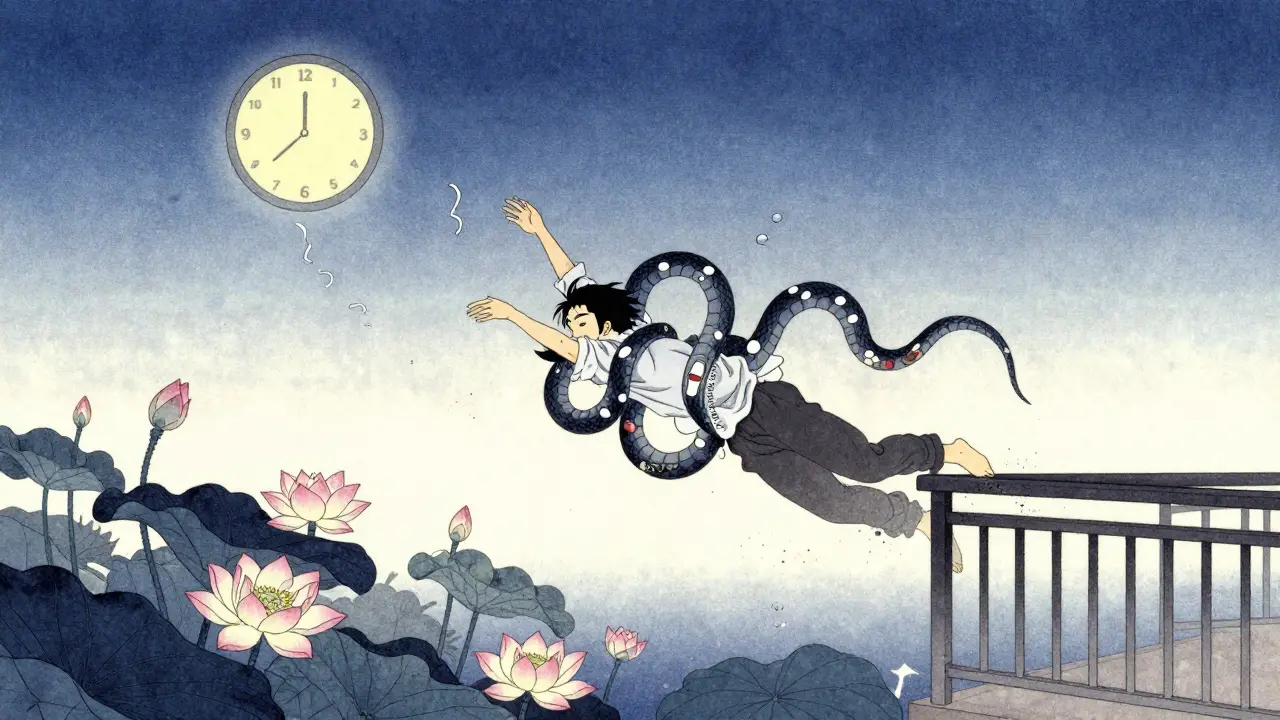
It’s not just people who misuse drugs. The biggest danger zone is older adults. The American Geriatrics Society Beers Criteria® lists 19 sedating medication combinations that should be avoided in people over 65. Why? Because aging changes how the body processes drugs. Liver and kidney function slow down. Brain sensitivity increases. And the risk of falling skyrockets.
Studies show that combining just two sedatives in older adults increases fall risk by 50%. A single fall can mean a hip fracture, long-term disability, or death. Yet, 35% of older adults still take at least one medication on the Beers Criteria list. Women are even more likely-41% vs. 27% of men.
Another high-risk group? People who see multiple doctors. Recovery Village data from 2022 found that 42% of overdose victims had gotten prescriptions from three or more providers in just six months. They didn’t realize they were being prescribed overlapping sedatives. One doctor gave them an opioid for pain. Another gave them Xanax for anxiety. A third gave them Ambien for sleep. No one connected the dots.
Why Do These Combinations Keep Happening?
It’s not just about patient behavior. The system is broken.
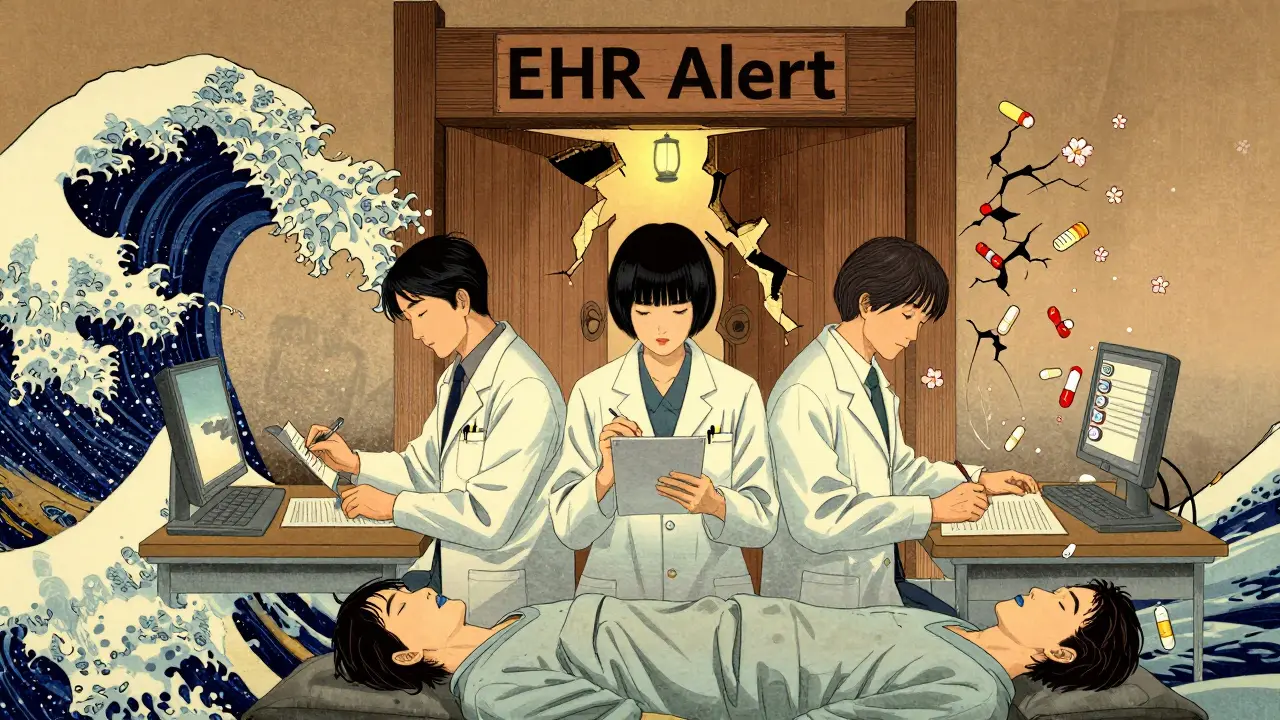
Electronic health records (EHRs) are supposed to flag dangerous combinations. But a 2020 study in JAMA Network Open found that only 17.3% of risky sedative pairs triggered alerts. Most systems don’t even check for alcohol use, OTC sleep aids, or herbal supplements like melatonin or valerian root-both of which can add to sedation.
And prescriptions? Many are written without checking what else the patient is taking. A 2023 Government Accountability Office report found that only 28% of primary care providers routinely screen for dangerous drug combinations. Most don’t ask about alcohol. They don’t ask about OTC meds. They don’t ask about supplements.
Even when doctors know the risks, they’re stuck. Non-sedating alternatives for anxiety, insomnia, or chronic pain often cost $450-$600 a month. Sedatives? $15-$30. For people on tight budgets, the cheaper option wins-even if it’s more dangerous.
How to Protect Yourself
There are practical steps you can take-today-to avoid a life-threatening interaction.
- Keep a full list of every medication, supplement, and OTC product you take-including what you take and when. Include things like NyQuil, Benadryl, melatonin, or CBD oil. Bring this list to every appointment.
- Ask your doctor: “Is this medication safe to take with what I’m already on?” Don’t assume they know. Many don’t.
- Never mix alcohol with any sedative-even if it’s “just one drink.”
- Get a medication review every 3 months if you’re over 65, or if you take three or more sedating drugs. The START criteria say you should be reviewed within 30 days if you’re on three or more.
- Know your opioid dose in morphine milligram equivalents (MME). If your total MME is above 50 per day, your risk of overdose jumps significantly. Ask your pharmacist to calculate it.
- Use one pharmacy for all your prescriptions. Pharmacists can spot dangerous overlaps before you take them.
What’s Being Done?
Change is happening-but slowly.
The FDA now requires a boxed warning on all opioid and benzodiazepine labels-the strongest possible warning. All 50 states now require electronic prescribing for controlled substances, which includes automatic checks for dangerous combinations. The CDC’s 2022 guidelines say opioids and benzodiazepines should never be prescribed together unless absolutely necessary-and even then, with close monitoring.
There’s also new technology. The FDA-approved DETERMINE platform, launched in 2022, uses AI to predict individual risk for sedative interactions with 87.4% accuracy. In the future, genetic testing may tell you whether you’re more sensitive to certain drugs-something the NIH is investing $127 million to research.
But technology alone won’t fix this. The real fix is awareness. It’s asking the right questions. It’s refusing to accept “it’s just a sleep pill” as harmless. It’s knowing that when sedatives stack up, the danger isn’t just increased-it’s exponential.
Final Thought
You don’t have to choose between pain relief, anxiety control, and sleep. But you can’t safely get all three from sedating drugs at once. There are alternatives-therapy, physical therapy, non-addictive medications, lifestyle changes. They take more time. They require more effort. But they don’t kill you.
Don’t wait for a warning sign to act. If you’re taking more than one sedating medication, talk to your doctor today. Not tomorrow. Today. Because the next time you feel drowsy, it might not be the medication-it might be your body shutting down.
Can combining sedating medications cause death even if I take them as prescribed?
Yes. Even when taken exactly as directed, combining sedating medications like opioids and benzodiazepines can cause fatal respiratory depression. The risk isn’t about misuse-it’s about the biological interaction between the drugs. A 2017 study found patients on both drugs had more than double the risk of overdose compared to those on opioids alone. This is why the FDA and CDC now warn against prescribing them together.
What should I do if I’m already taking multiple sedating medications?
Don’t stop any medication suddenly. Contact your doctor or pharmacist to review your entire list. Ask if any combinations are risky. Request a medication reconciliation-this is a formal review of all your drugs, including supplements and OTC products. You may be able to switch to safer alternatives or reduce doses gradually under supervision. The Beers Criteria recommends no more than 5mg daily of diazepam equivalent for older adults.
Are over-the-counter sleep aids safe to combine with prescription sedatives?
No. OTC sleep aids like diphenhydramine (Benadryl, ZzzQuil) or doxylamine (Unisom) are sedating antihistamines. They work the same way as prescription sleep drugs-by slowing brain activity. Combining them with benzodiazepines, opioids, or alcohol can dangerously increase drowsiness and breathing problems. A single dose of Benadryl with Ambien can push your respiratory rate below safe levels. These combinations are responsible for many unexplained falls and ER visits.
Why don’t my doctors warn me about these risks?
Many doctors simply don’t have the time, tools, or training to catch every dangerous combination. A 2023 report found only 28% of primary care providers consistently screen for sedative interactions. Electronic health records often miss OTC drugs, alcohol, or supplements. Plus, prescribing multiple sedatives is common because they’re cheap and fast-acting. It’s not negligence-it’s systemic failure. That’s why you need to be your own advocate. Always ask: “Could this interact with what I’m already taking?”
Is it safe to take sedatives only occasionally, like once a week?
No. Sedating medications don’t need to be taken daily to be dangerous. Their effects linger in your body. A benzodiazepine can stay active for 12-24 hours. Alcohol stays in your system for hours after you stop drinking. Even taking one sedative once a week and another on a different day can still cause cumulative effects. The risk isn’t about frequency-it’s about the total drug load on your brain and lungs. There’s no safe threshold for mixing them.
14 Comments
Just wanted to say this post saved my dad’s life. He was on oxycodone and Xanax for years-doc never warned him about the combo. Then he passed out in the shower one night. Took him 3 weeks to recover. Now he’s off both, doing physical therapy and CBT for pain and anxiety. It’s not easy, but way better than the ER.
lol sedatives kill u? shocker
I’m 68 and on 3 meds that do this. My pharmacist flagged it last month. We switched me to gabapentin and melatonin. No more dizziness. I feel like a new person. Just talk to your pharmacist-they know more than your doctor sometimes.
Been a pharmacist for 22 years. Every day I see someone on Ambien + Benadryl + alcohol. They think it’s 'just helping them sleep.' Nope. It’s a slow suicide. One guy came in with a busted collarbone and no memory of falling. Said he 'just took a little something' to sleep. That 'little something' was 3 drugs and 2 beers. I told him: if you’re gonna mix, you’re not sleeping-you’re gambling with your brainstem.
Also, melatonin? Harmless? Nah. It’s not regulated. Some pills have 10x the dose they say. I’ve seen people overdose on 'natural' sleep aids. Don’t trust 'natural'-trust data.
Why is this even a debate? We have studies. We have stats. We have FDA warnings. Yet doctors still prescribe these combos like they’re candy. My aunt died last year from this exact thing. Her cardiologist gave her Xanax. Her pain doc gave her hydrocodone. Her sleep doc gave her Lunesta. No one talked to each other. No one asked about alcohol. She was 72. She didn’t even know she was at risk. This isn’t about patient error-it’s about broken systems. And nobody’s fixing it.
While I appreciate the thoroughness of this analysis, I must emphasize the importance of adhering strictly to clinical guidelines when evaluating polypharmacy in elderly populations. The Beers Criteria, while not infallible, remains a cornerstone of geriatric pharmacotherapy. It is imperative that clinicians engage in comprehensive medication reconciliation, particularly in light of age-related pharmacokinetic alterations. Furthermore, the role of pharmacists in identifying potential drug-drug interactions cannot be overstated. A multidisciplinary approach is not merely beneficial-it is ethically obligatory.
India has same problem. Grandpa on painkiller + sleeping pill. No one told him. Fell. Broke hip. Now he can't walk. Doctors here don't ask about OTC meds. People think 'natural' means safe. Not true. Talk to your family. Ask questions. Don't wait.
I used to think 'just one more pill' was harmless. I was wrong. I took Klonopin for anxiety, oxycodone for back pain, and melatonin because I 'couldn’t sleep.' I thought melatonin was just a vitamin. Turns out it’s a potent CNS depressant. One night, I woke up gasping. My husband had to slap me awake. That was my wake-up call. I didn’t quit cold turkey-I worked with my doctor. We switched to mindfulness, acupuncture, and a low-dose SNRI. It took months. But now I sleep without fear. I’m alive. And I’m not alone. If you’re reading this, you’re one step closer to safety. Don’t wait for a crisis. Start today.
Oh wow, so now we're scaring people with '1.3 million ER visits' like it's a horror movie? People have been mixing meds since the 60s. You think we didn't know? This is just fearmongering for clickbait. My cousin takes 4 meds and still runs marathons. Stop infantilizing adults.
Y’all act like this is news. I work in a pharmacy. Every Tuesday, a guy comes in with 6 different bottles. One says 'for sleep,' one says 'for anxiety,' one says 'for pain,' one says 'for depression,' one says 'for allergies,' and one says 'for stomach.' I ask him if he knows what he’s taking. He says 'nah, doc said take 'em all.' I tell him he’s one bad night away from a coroner’s report. He laughs. Then he asks if I have a discount on NyQuil. We’re not fixing this. We’re just documenting it.
i had a friend who took xanax and oxy. said it helped him chill. one day he just… didn’t wake up. they found him on the floor. no signs of struggle. no note. just gone. i still think about it. don’t let it happen to you. talk to someone. even if it’s just a pharmacist. they’ll tell you the truth.
As a nurse from Nigeria, I’ve seen this too. In my village, people take traditional herbs with painkillers because they believe it 'cures faster.' One woman took a herbal tea for fever with her morphine-she stopped breathing in the night. Her family didn’t know the tea had sedative properties. We had to teach them: 'Not everything natural is safe. Not everything prescribed is safe either.' We now have a community board where people list their meds. We write them down. We check them together. It’s simple. It’s human. And it saves lives. You don’t need fancy tech. You just need to ask: 'What else are you taking?' And then listen.
More government fear crap. People should be free to take what they want. If you’re dumb enough to mix drugs, you deserve what you get. Stop coddling adults.
Winnipeg here. I used to think this was an American problem. Then my buddy from Saskatoon ended up in ICU after mixing his prescription sleep med with a bottle of whiskey and a handful of ‘natural’ sleep gummies. He said, ‘I just wanted to sleep through the winter.’ We’re all in this together. The cold, the stress, the loneliness-it makes us reach for easy fixes. But we gotta do better. Talk to your people. Check in. Ask before you assume. And for god’s sake, don’t let someone die because you thought ‘it’s just one drink.’