

Medication & Fortified Juice Timing Checker
Enter your details and click check to see the absorption risk analysis.
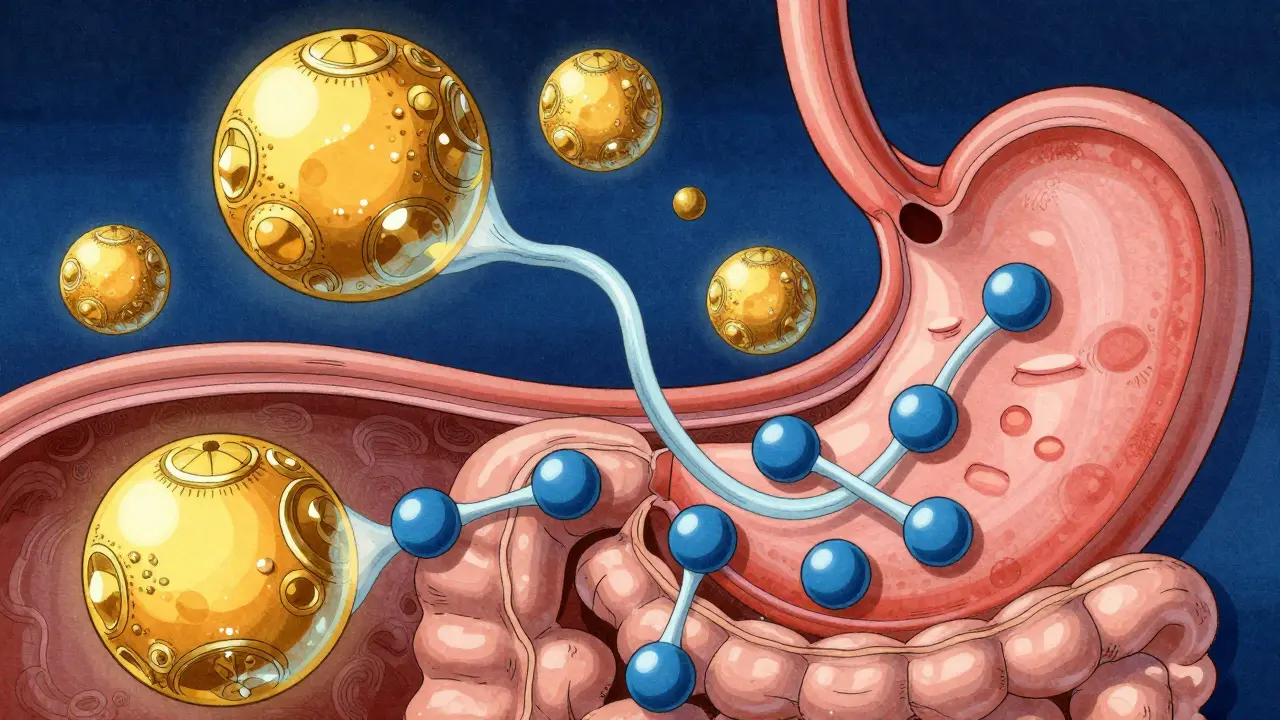
You might think drinking a glass of calcium-fortified orange juice is a healthy way to start your day, especially if you avoid milk. But if you take certain medications, that morning habit could be quietly sabotaging your treatment. Many people assume that only dairy products interfere with their pills, but fortified juices can be just as problematic-and sometimes even worse. When you mix high levels of calcium with specific drugs, they don't just sit side-by-side in your stomach; they physically bind together, creating a complex that your body simply cannot absorb.
Quick Guide: The Risks of Calcium-Fortified Juices
- The Problem: Calcium ions bind to drug molecules, creating insoluble complexes that pass through your system without being absorbed.
- The Risk: This leads to "therapeutic failure," meaning your medication doesn't work, even if you take every dose.
- The Danger Zone: Juices with over 200 mg of calcium per serving are considered high-risk for major interactions.
- The Solution: Timing is everything. Separating your juice and medication by several hours usually solves the problem.
What Exactly Is Happening in Your Gut?
To understand the issue, we need to look at Calcium-fortified juices is a type of beverage, like orange or apple juice, supplemented with calcium salts such as calcium carbonate or calcium citrate to mimic the nutritional value of milk. While this is great for bone health, it creates a pharmacokinetic nightmare when paired with certain drugs.
The core mechanism is a process called chelation. Calcium ions are chemically "sticky." When they encounter certain medication molecules, they form strong electrostatic bonds. This creates a large molecular complex that is too bulky to pass through the intestinal epithelium-the lining of your gut. Instead of entering your bloodstream, the drug stays trapped in this calcium complex and is eventually flushed out of your body. In laboratory settings, researchers have seen up to an 80% drop in drug dissolution when calcium concentrations reach 300 mg/L.
Interestingly, orange juice adds a second layer of risk. Because it contains citric acid, it changes the pH level in your stomach. This acidic environment can further complicate how a drug dissolves, making the absorption drop even more significant than it would be with plain calcium-fortified water.
Which Medications Are Most at Risk?
Not every pill is affected by calcium, but several critical classes of medication are highly sensitive to this binding effect. If you are taking any of the following, you need to be extremely careful with your juice choices.
Tetracycline is a class of broad-spectrum antibiotics, including doxycycline and minocycline, used to treat various bacterial infections. These are notorious for binding with calcium. If you take a tetracycline antibiotic with a fortified juice, the drug may never reach the site of infection.
Similarly, Fluoroquinolones is a group of powerful antibiotics, such as ciprofloxacin, often prescribed for urinary tract infections (UTIs). Evidence shows that patients taking ciprofloxacin with calcium-fortified orange juice face a treatment failure rate of 25-30%, compared to only 8-10% for those who separate the two. That is a massive difference in whether an infection clears up or lingers.
For those managing thyroid issues, Levothyroxine is a synthetic thyroid hormone used to treat hypothyroidism. This medication is incredibly sensitive. Consuming calcium-fortified juice can slash its absorption by 35-55%. In some cases, doctors have to increase the dose by 25-50 mcg just to compensate for the calcium interference, which can lead to unstable thyroid levels.
Other medications prone to binding include Bisphosphonates (like alendronate used for osteoporosis) and certain antifungal medications like ketoconazole.
| Medication Class | Example Drug | Absorption Risk | Required Gap (Juice/Pill) |
|---|---|---|---|
| Fluoroquinolones | Ciprofloxacin | High (up to 42% reduction) | 2-4 Hours |
| Tetracyclines | Doxycycline | Very High | 2-3 Hours |
| Thyroid Hormones | Levothyroxine | Severe (35-55% reduction) | 4 Hours |
| Bisphosphonates | Alendronate | High | 30 Min to 2 Hours |
The Real-World Consequences of "Healthy" Habits
The danger here is that most people think they are doing something good for their health. A survey by the National Community Pharmacists Association found that 68% of patients believe fortified juices are "safe" to take with medication. This lack of awareness has real consequences. In one retrospective study of nearly 1,900 patients, those taking levothyroxine who drank calcium-fortified juices were 2.3 times more likely to have thyroid levels outside the healthy range.
We see this play out in online health forums frequently. One woman reported drinking two glasses of calcium-fortified orange juice daily with her thyroid medication for six months, only to find her TSH levels were "sky-high" because the medication wasn't actually getting into her system. It's a frustrating experience: you follow your prescription perfectly, but the food-drug interaction makes the medicine useless.
The economic toll is also staggering. It is estimated that these types of therapeutic failures cost the U.S. healthcare system about $417 million annually due to the need for additional tests, longer hospital stays, and corrective treatments for infections that wouldn't have cleared up the first time.
How to Protect Your Treatment
You don't have to give up your favorite fortified juice, but you do have to change when you drink it. The goal is to ensure that the calcium is long gone from your upper digestive tract before your medication arrives, or vice versa.
If you are on antibiotics or thyroid medication, the safest bet is a four-hour window. For example, if you take your thyroid pill at 7:00 AM on an empty stomach, wait until 11:00 AM before having that calcium-fortified juice. This gives the medication enough time to be absorbed by the intestinal lining without any "sticky" calcium ions getting in the way.
Always read the label on your juice. Look for "Calcium Carbonate" or "Calcium Citrate" in the ingredients. If the juice contains 300 mg or more of calcium per serving, treat it the same way you would treat a calcium supplement or a large glass of milk.

What to Watch Out For: The Labeling Gap
One of the biggest frustrations for patients is that the juice bottles don't warn you. A study of 47 popular fortified juices found that 92% had zero warnings about medication interactions. They tell you all about the vitamins and minerals, but nothing about how those minerals can block your medicine.
Since you can't rely on the packaging, the responsibility falls on the patient and the provider. However, pharmacy surveys show that only 28% of patients recall being told about this specific interaction. When you pick up a new prescription, don't just ask "Can I take this with food?" Ask specifically: "Does this medication interact with calcium or fortified beverages?"
Why doesn't regular orange juice cause this problem?
Regular orange juice has a small amount of naturally occurring calcium, but not nearly enough to cause significant binding. The problem arises with "fortified" juices, where manufacturers add large amounts of calcium salts (often 300mg or more) to make the drink a milk substitute. It's the concentrated dose of added calcium that blocks the medication.
Can I just take a calcium pill later in the day?
Yes, taking calcium supplements or drinking fortified juices at a completely different time of day than your medication is the recommended strategy. As long as there is a sufficient gap (usually 2-4 hours depending on the drug), the calcium will not be in the gut at the same time as the medication, allowing for normal absorption.
What happens if I've already been drinking fortified juice with my meds?
If you suspect your medication hasn't been working, contact your doctor immediately. Do not change your dose on your own. For thyroid patients, this might mean needing a blood test to check TSH levels. For those on antibiotics, you might need a follow-up culture to ensure the infection is actually gone.
Are there any fortified juices that are safe?
Any juice fortified with calcium carries the risk of binding with the affected drug classes. The "safety" isn't about the brand of juice, but about the timing. If you are taking a medication sensitive to calcium, no calcium-fortified beverage is safe to consume simultaneously.
Does this apply to all antibiotics?
No, it specifically affects certain classes like tetracyclines and fluoroquinolones. Other antibiotics may not have the same chemical structure that allows them to bind with calcium. Always check the specific prescribing information for your medication or ask your pharmacist.
Next Steps and Troubleshooting
If you're unsure about your current routine, start by auditing your pantry. Look for any beverage labeled "High Calcium" or "Fortified." Once you identify them, map out your medication schedule. If there is less than a four-hour gap between your sensitive meds and your fortified drinks, shift your juice time to the afternoon or evening.
For those who struggle with lactose intolerance and rely on these juices for calcium, consider talking to your doctor about non-binding calcium alternatives or taking your calcium supplement at the furthest possible point from your medication window (e.g., meds at 7 AM, calcium at 7 PM).
12 Comments
Funny how we're told to drink these "fortified" concoctions for bone health while they're simultaneously neutralizing the very meds we need to survive. Typical corporate health racket. Why is this not on the label? Oh wait, because they want you buying more juice and more meds. Follow the money, people. The whole system is designed to keep us in a cycle of dependency while the real science is buried under marketing fluff. It's all a game of chelation and profit margins.
Absolutely cracker of a post! It's a total minefield out there with these health drinks, isn't it? Proper eye-opener for anyone trying to stay on top of their game while managing their meds. Keep the info flowing!
Obviously, anyone with a basic grasp of biochemistry knew this. It's common sense.
I've seen so many patients struggle with medication adherence when the real culprit was actually a dietary habit they thought was beneficial. This is a prime example of why we need to look at the whole picture. It's not just about taking the pill, but the environment in which that pill is absorbed. We really need better education at the pharmacy level to prevent these gaps in care. I wonder how many people are currently fighting a "stubborn" infection that's actually just a binding issue.
Very useful data. The pharmacokinetic interaction here is a classic case of ligand binding causing reduced bioavailability. Total game changer for my morning routine!
Honestly, I'm just shook that some of you still aren't reading your labels. Like, it's literally right there in the ingredients list! But I guess we all need a little help sometimes, right? Stay blessed and stay informed, darlings!
They are poisoning us with these "fortified" lies! First it's vitamins, now it's calcium traps! Absolute madness! They want our bodies weak and our minds clouded!
It is so important to maintain these boundaries with our health... and our schedules!!! This is a great way to ensure we are respecting our bodies' needs!!!
True wisdom is knowing the hidden gaps... the silent spaces between a drink and a cure... a fragile balance...
Cheers for the heads up. Simple fix, just move the juice to lunchtime.
This is a wonderful reminder that we must be mindful of our choices. May everyone find health and harmony in their daily routines! :)
My goodness, the thought of my meds just floating away because of a bit of orange juice is absolutely wild! I'm definitely checking my fridge right now.